A mini robotic tractor lawn mower represents a major step forward in automated lawn care. These compact, self-driving machines combine tractor-like power with robotic precision to maintain grass without constant human oversight.
Unlike traditional push or ride-on mowers, a tiny tractor shaped lawnmower navigates independently, adjusts cutting height on the fly, and optimizes paths using advanced technology.
This article explains exactly how sensors, GPS, and AI enable a robotic tractor lawn mower to operate efficiently and safely.
What Is a Mini Robotic Tractor Lawn Mower?
A tiny tractor shaped lawnmower is a compact autonomous vehicle designed specifically for cutting grass on residential and small commercial lawns. It features a low-profile body, multiple cutting decks, large drive wheels for traction, and a suite of onboard computers. Most units weigh between 30 and 80 kg and can handle slopes up to 20–30 degrees depending on the model.
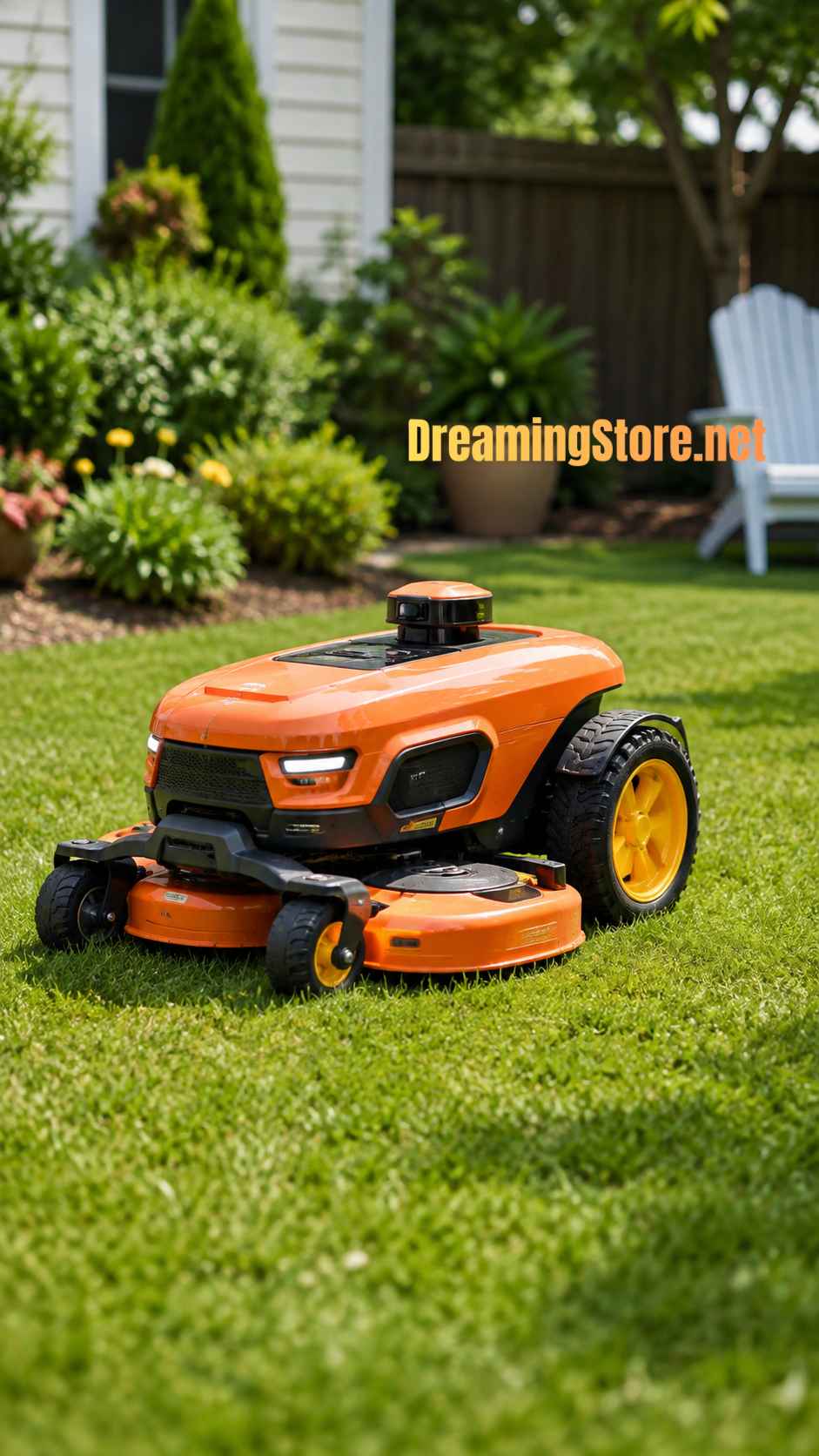
Key characteristics include:
- Battery-electric or hybrid power for quiet operation
- Multiple rotating blades under floating decks
- Ability to return to a charging station automatically
- Weather-resistant construction for outdoor use
The defining advantage of a tractor shaped lawnmower is its ability to work without boundary wires in many modern versions, relying instead on precise positioning and real-time mapping.
Core Components of a Mini Robotic Tractor Lawn Mower
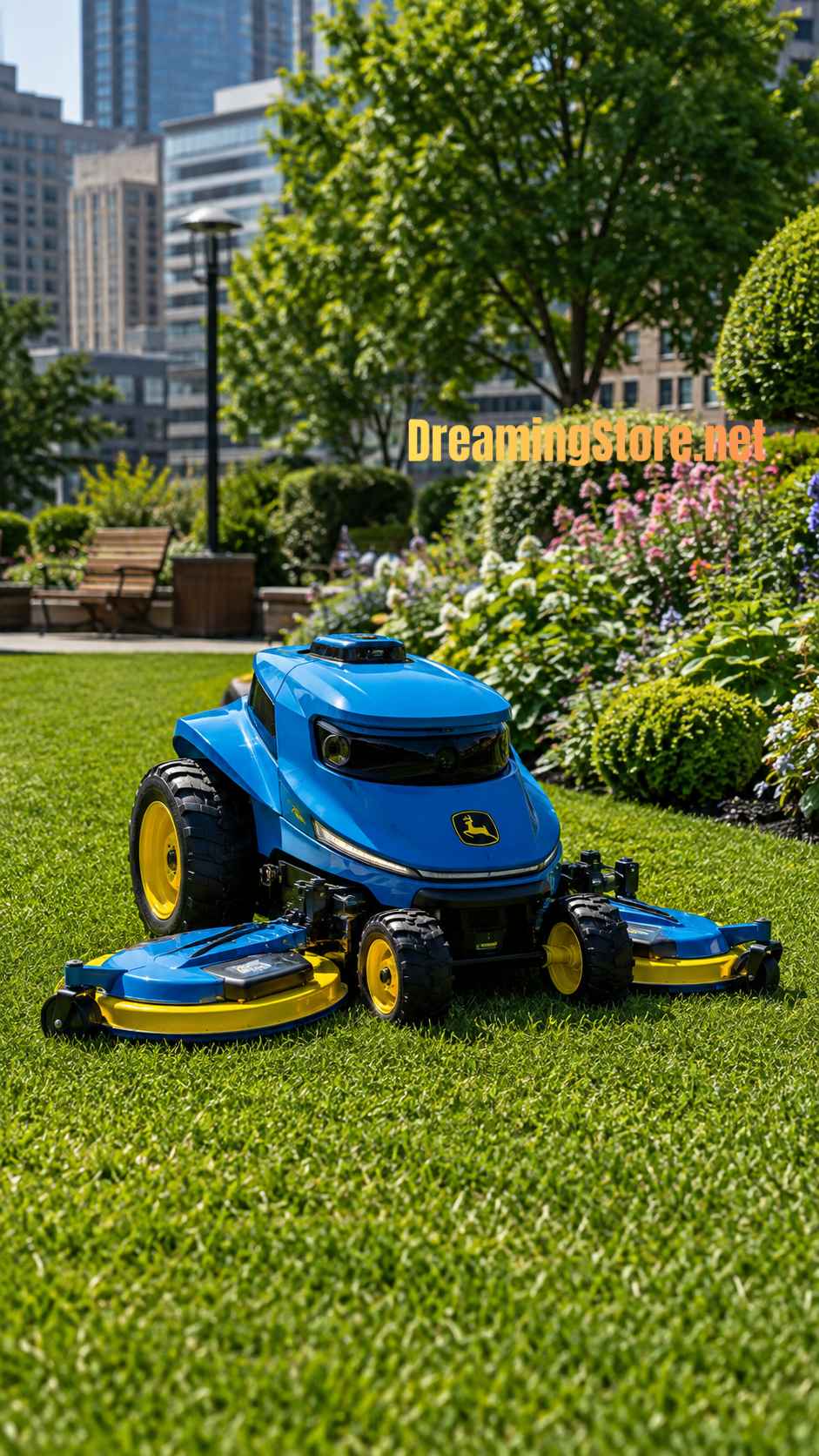
Before examining sensors, GPS, and AI, it helps to understand the physical layout. A typical tiny tractor shaped lawnmower consists of:
- Chassis and drive system with differential steering or independent wheel motors
- Cutting system with one or more rotary decks that raise and lower
- Power source (usually lithium-ion batteries)
- Control unit housing the main computer
- Sensor array mounted on the body and mast
- Communication modules for app control and updates
These elements work together so the mini robotic tractor lawn mower can move, cut, and make decisions continuously.
How Sensors Enable Safe and Accurate Operation
Sensors form the foundation of every tiny tractor shaped lawnmower. They provide the machine with constant awareness of its surroundings, allowing it to avoid obstacles, detect boundaries, and adjust cutting behavior.
Ultrasonic and Infrared Sensors
Ultrasonic sensors emit high-frequency sound waves and measure the time required for the echo to return. This distance data helps a mini robotic tractor lawn mower detect objects such as garden furniture, tree trunks, or pets within a range of roughly 0.2 to 3 meters. Infrared sensors complement this by detecting heat signatures or abrupt changes in surface reflectivity.
Together these sensors allow the machine to:
- Slow down or stop when an object enters the path
- Navigate around fixed obstacles without collision
- Reduce blade speed near people or animals for safety
Bumper and Contact Sensors
Physical bumper sensors act as a final safety layer. When the tiny tractor shaped lawnmower makes contact with an unexpected object, the bumper compresses and triggers an immediate stop or reverse maneuver. Some models also use pressure-sensitive skirts around the cutting decks to lift the blades if resistance is detected, reducing the risk of damage or injury.
Find related products to buy: Click here
Rain, Tilt, and Lift Sensors
Rain sensors detect moisture on the housing or in the air. Many units pause operation or return to the charging station when rain is detected to protect electronics and prevent tracking mud. Tilt sensors monitor the angle of the chassis. If the mini robotic tractor lawn mower exceeds a safe incline, it stops cutting and may reverse to a flatter area. Lift sensors detect when the machine is picked up, automatically shutting off the blades within milliseconds.
Camera and Vision Systems
Higher-end models of the tiny tractor shaped lawnmower incorporate cameras. These can be simple monochrome units for edge detection or full-color stereo cameras that create depth maps. Vision systems help identify grass versus non-grass surfaces, recognize garden beds, and improve obstacle classification beyond what ultrasonic sensors alone can achieve.
The Role of GPS in Navigation and Mapping
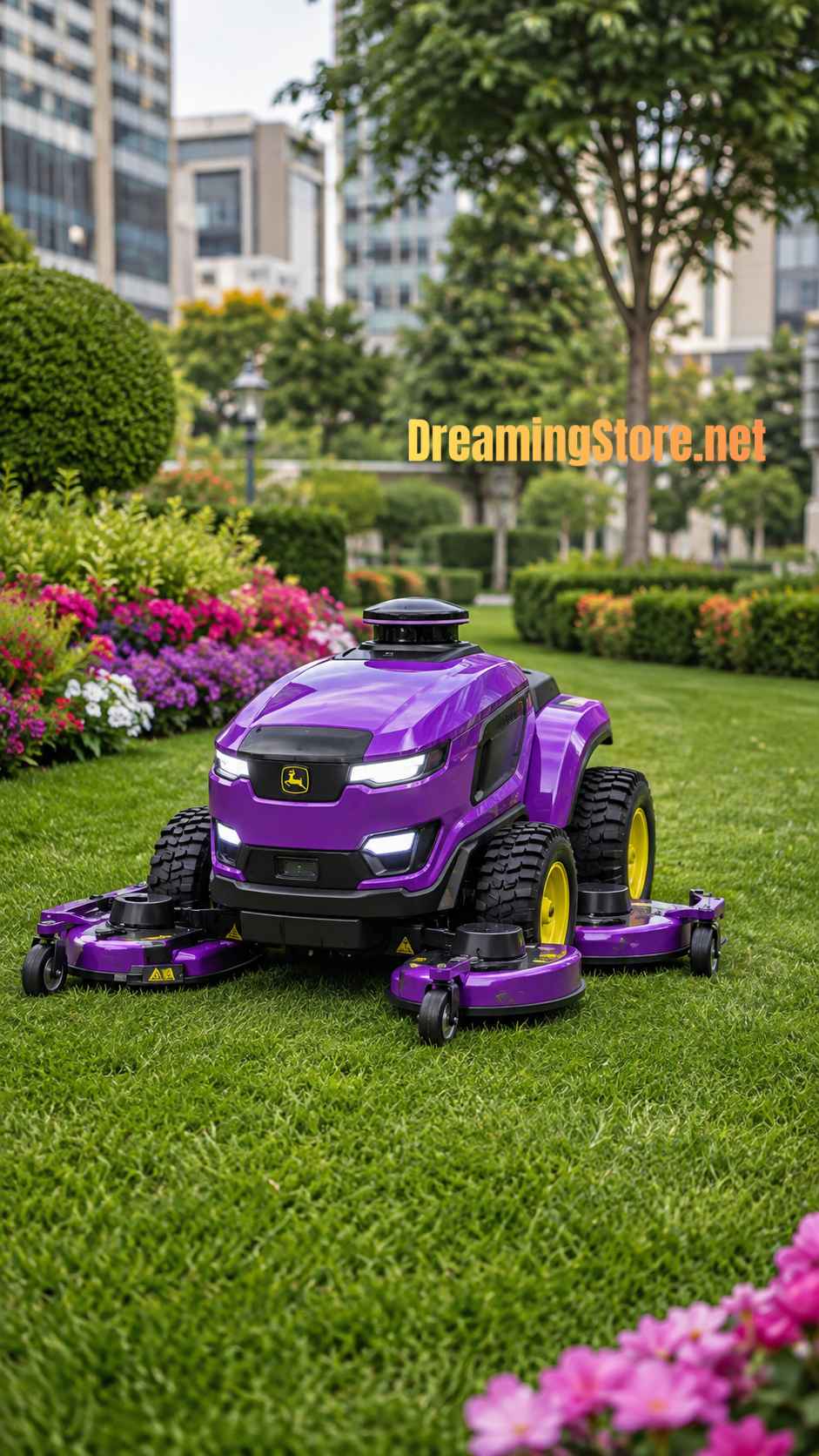
Global Positioning System technology gives a mini robotic tractor lawn mower the ability to know its exact location and plan efficient routes across the lawn.
RTK-GPS and High-Precision Positioning
Standard GPS offers accuracy of several meters, which is insufficient for lawn mowing. Many modern units therefore use Real-Time Kinematic (RTK) GPS. An RTK system receives correction data from a fixed base station or cellular network, improving positional accuracy to within 1–2 centimeters. This precision allows a tiny tractor shaped lawnmower to follow virtual boundaries and create clean, overlapping cutting paths without leaving uncut strips.
Boundary Definition Without Physical Wires
Older robotic mowers required buried boundary wires. A GPS-equipped mini robotic tractor lawn mower can instead use virtual perimeters set through a smartphone app. The owner walks the lawn perimeter once while the machine records GPS coordinates, or draws the boundary on a digital map. The tiny tractor shaped lawnmower then treats that polygon as its working area and stays inside it automatically.
Mapping and Path Planning
Once the boundary is established, the machine builds an internal map. It records areas already cut, identifies obstacles that appear consistently, and plans systematic patterns—often parallel tracks or spiral patterns—to cover the entire lawn with minimal overlap. GPS data also enables the mini robotic tractor lawn mower to resume work exactly where it left off after charging or after being interrupted by rain.
Multi-Zone Management
Larger properties can be divided into zones. The tiny tractor shaped lawnmower receives schedules for each zone and moves between them according to priority or time of day. GPS ensures accurate transitions without the machine wandering into flower beds or neighboring properties.
Artificial Intelligence and Decision-Making Systems
Sensors and GPS supply raw data. Artificial intelligence turns that data into intelligent actions. The AI software running on a mini robotic tractor lawn mower continuously evaluates conditions and chooses the best response.
Obstacle Recognition and Avoidance Algorithms
Machine-learning models trained on thousands of images and sensor readings allow the tiny tractor shaped lawnmower to classify objects. A stationary rock is treated differently from a moving pet or a child. The AI calculates a safe avoidance path that keeps the cutting decks engaged when possible or lifts them when necessary. Over time, the system learns the layout of a specific lawn and reduces unnecessary stops.
Adaptive Cutting Strategies
AI monitors grass height, density, and moisture through a combination of sensors and vision. If the lawn is longer than usual after a period of rain, the mini robotic tractor lawn mower may reduce forward speed and make multiple passes. In dry conditions it can increase speed and raise the cutting height slightly to reduce stress on the grass. Some systems also adjust blade RPM to balance cut quality against battery life.
Learning and Optimization Over Time
Each time a tiny tractor shaped lawnmower completes a session, it stores data about path efficiency, battery consumption, and any interruptions. The AI analyzes this history to refine future routes. After several weeks the machine typically covers the same lawn with fewer detours and lower energy use. Owners can further improve performance by marking permanent obstacles or preferred no-go zones in the companion app.
Safety and Fail-Safe Logic
AI continuously cross-checks sensor data. If GPS signal is lost, the machine switches to relative positioning using wheel odometry and inertial sensors until the signal returns. If multiple sensors report conflicting information, the system defaults to a safe stop. These layered decision rules ensure that a mini robotic tractor lawn mower prioritizes safety even when individual components temporarily fail.
Integration of Sensors, GPS, and AI in Daily Operation
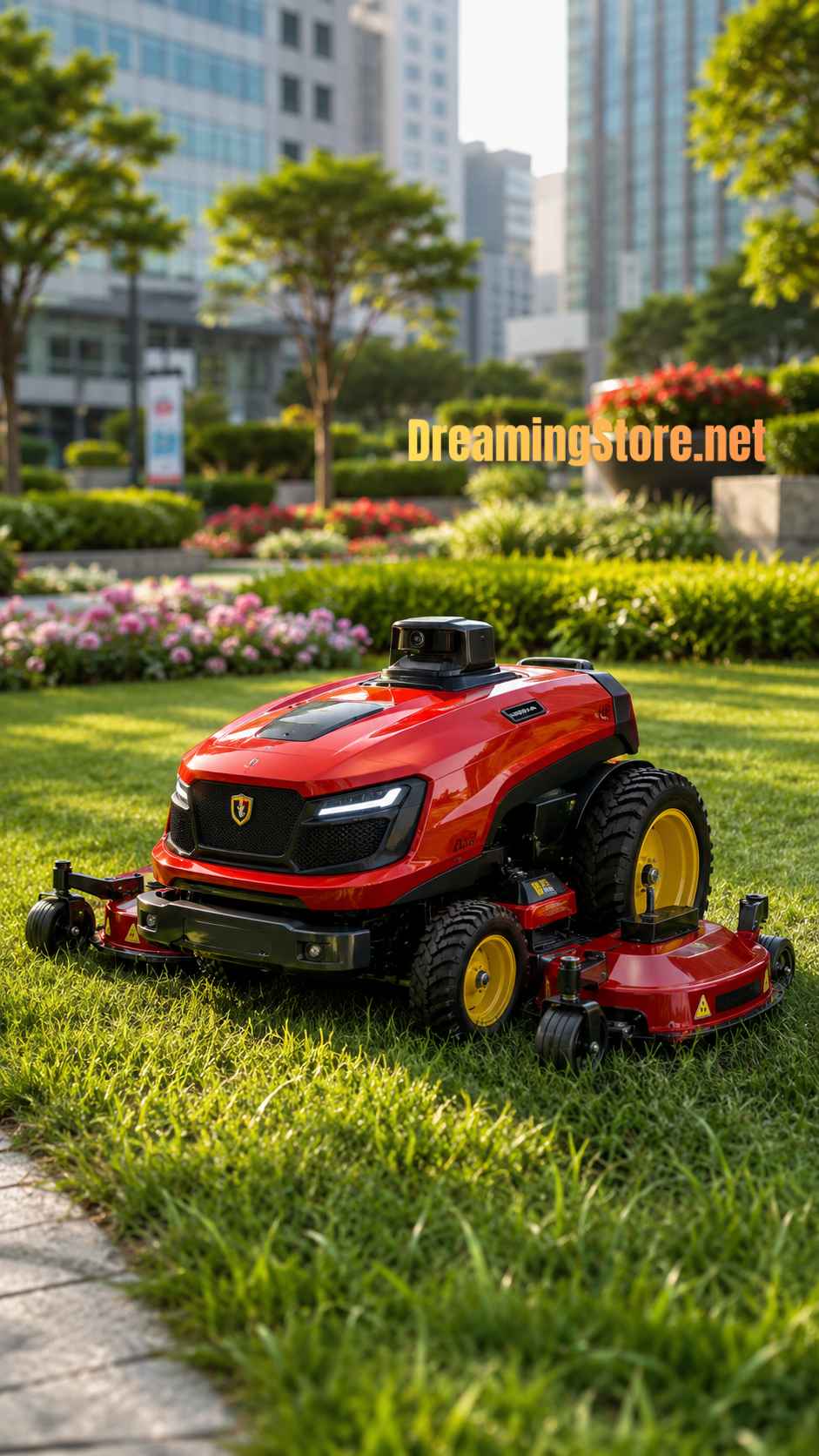
A typical work cycle of a mini robotic tractor lawn mower illustrates how the three technologies cooperate.
- The machine leaves its charging station at the scheduled time.
- GPS confirms its starting position and loads the current map.
- Sensors scan the immediate surroundings while AI selects the first path segment.
- As the tiny tractor shaped lawnmower moves, ultrasonic and camera data update the local obstacle map in real time.
- GPS tracks progress against the planned route and corrects any drift.
- When battery level drops to a preset threshold, the AI calculates the shortest safe return path to the charger.
- After recharging, the machine resumes from the exact point it left using GPS coordinates.
This closed-loop process repeats until the entire designated area meets the desired cut quality.
Discover comparable items here: Click here
Future Developments in Mini Robotic Tractor Lawn Mower Technology
Manufacturers continue to improve the core systems. Expected advances include:
- Higher-resolution cameras with better night or low-light performance
- Integration of additional satellite systems (Galileo, BeiDou) for even more robust positioning
- Onboard edge AI chips that process vision data faster and with lower power
- Swarm coordination allowing multiple units to divide a large property efficiently
- Predictive maintenance alerts based on vibration and current-draw patterns
These improvements will further reduce the already minimal human involvement required to keep a lawn well maintained with a tiny tractor shaped lawnmower.
A mini robotic tractor lawn mower achieves reliable autonomous operation through the tight integration of sensors, GPS, and AI. Sensors provide real-time awareness of the immediate environment. GPS delivers precise location and mapping data.
AI interprets both streams of information and makes continuous decisions about movement, cutting, and safety. Together these systems allow the machine to maintain lawns with minimal supervision while adapting to changing conditions.
As the technology matures, the tiny tractor shaped lawnmower is becoming a practical everyday tool rather than a novelty. Understanding how its sensors, GPS, and AI components function helps owners set realistic expectations and extract maximum value from their investment.