Whether you are looking to turn heads in the neighborhood or simply want a reliable, high-torque robotic mower that tackles thick turf like a grazing hippopotamus, choosing a Hippo-Shaped Lawnmower Robot is one of the most exciting lawn-care decisions you can make.
In this comprehensive buying guide, we will explore everything you need to know about purchasing, configuring, operating, and maintaining a robot hippopotamus lawn mower for your yard.
1. Introduction to the Hippo-Shaped Lawnmower Robot
When you think of hippopotamuses in nature, you imagine powerful, herbivorous creatures that spend hours meticulously consuming thick grass along riverbanks. It is only fitting that robotic lawn mower engineers took inspiration from these magnificent animals to craft the ultimate lawn maintenance device. The Hippo-Shaped Lawnmower Robot takes the aggressive grazing concept of the hippopotamus and converts it into automated home efficiency.
Unlike traditional robotic lawnmowers, which often look like utilitarian gray boxes or miniature race cars, the robot hippopotamus lawn mower adds character and charm to your yard. It functions as both a high-tech garden utility and an engaging outdoor feature.
Check the end of this article to discover where you can buy similar products!
2. Why Choose a Hippo-Shaped Design?
You might wonder why a homeowner would choose a Hippo-Shaped Lawnmower Robot over a standard rectangular robotic mower. Beyond the obvious delight it brings to family members, neighbors, and visitors, the hippo body form offers several distinct engineering advantages:
A. Aerodynamic & Heavy-Set Stability
Hippos are built close to the ground with broad bases. Translating this structure to robotics provides an extremely low center of gravity. A robot hippopotamus lawn mower is naturally balanced, making it far less prone to tipping over on steep hills, uneven turf, or sudden embankment drop-offs compared to taller, sleeker mowers.
B. High Internal Volume for Larger Batteries
The bulky, rounded torso of a hippopotamus shape allows manufacturers to pack massive lithium-ion battery packs and dual high-torque motors into the frame without creating an eyesore. This extra internal volume allows a Hippo-Shaped Lawnmower Robot to run significantly longer on a single charge than slimmer robotic competitors.
C. Wide-Mouth Intake Efficiency
A hippo’s most famous physical trait is its wide jaw. In lawnmower architecture, the broad snout of a robot hippopotamus lawn mower houses wide suction baffles and multi-blade rotors right at the front leading edge, ensuring maximum grass contact per pass.
3. Key Features & Innovations
Modern robotic mowers are loaded with sensors, artificial intelligence, and mobile connectivity. The Hippo-Shaped Lawnmower Robot takes these core technologies and enhances them with unique physical features inspired by its animal namesake.
High-Torque Cutting Systems
Underneath the charming exterior, every robot hippopotamus lawn mower houses a commercial-grade cutting motor. The blade assembly typically features razor-sharp, steel-alloy blades mounted on a rotating disc that spins at up to 3,200 RPM. This configuration finely shreds grass blades into fine mulch, returning valuable nitrogen directly back into your soil.
Tail-Mounted Grass Ejection Chutes
One of the most eye-catching design hallmarks of top-tier Hippo-Shaped Lawnmower Robot models is the rear tail-pipe ejection chute. As the mower consumes grass along its path, finely chopped clippings are propelled upward and outward through the rear tail assembly. This prevents grass buildup under the deck and creates an even distribution of mulch across the lawn.
Advanced Terrain Traction & All-Terrain Wheels
Hippopotamuses are known for moving through thick mud and challenging riverbanks. Similarly, a quality robot hippopotamus lawn mower comes equipped with heavy-duty, deeply treaded rubber tires or articulated leg-suspension modules. These enable the unit to climb inclines of up to 35 degrees (70% grade) without losing traction or tearing up wet grass.
Smart Navigation & Obstacle Avoidance
Equipped with LiDAR, camera vision, and ultrasonic bumper sensors (often cleverly disguised inside the hippo’s nostrils and eye sockets), a robot hippopotamus lawn mower easily identifies garden hose reels, patio furniture, pet toys, and flower beds, gently steering clear to avoid collisions.
4. Selecting the Right Model & Color
When shopping for your new Hippo-Shaped Lawnmower Robot, design aesthetics play a major role alongside mechanical specifications. Manufacturers offer several distinct finishes to match different garden styles and homeowner preferences.
Classic Wildlife Grey
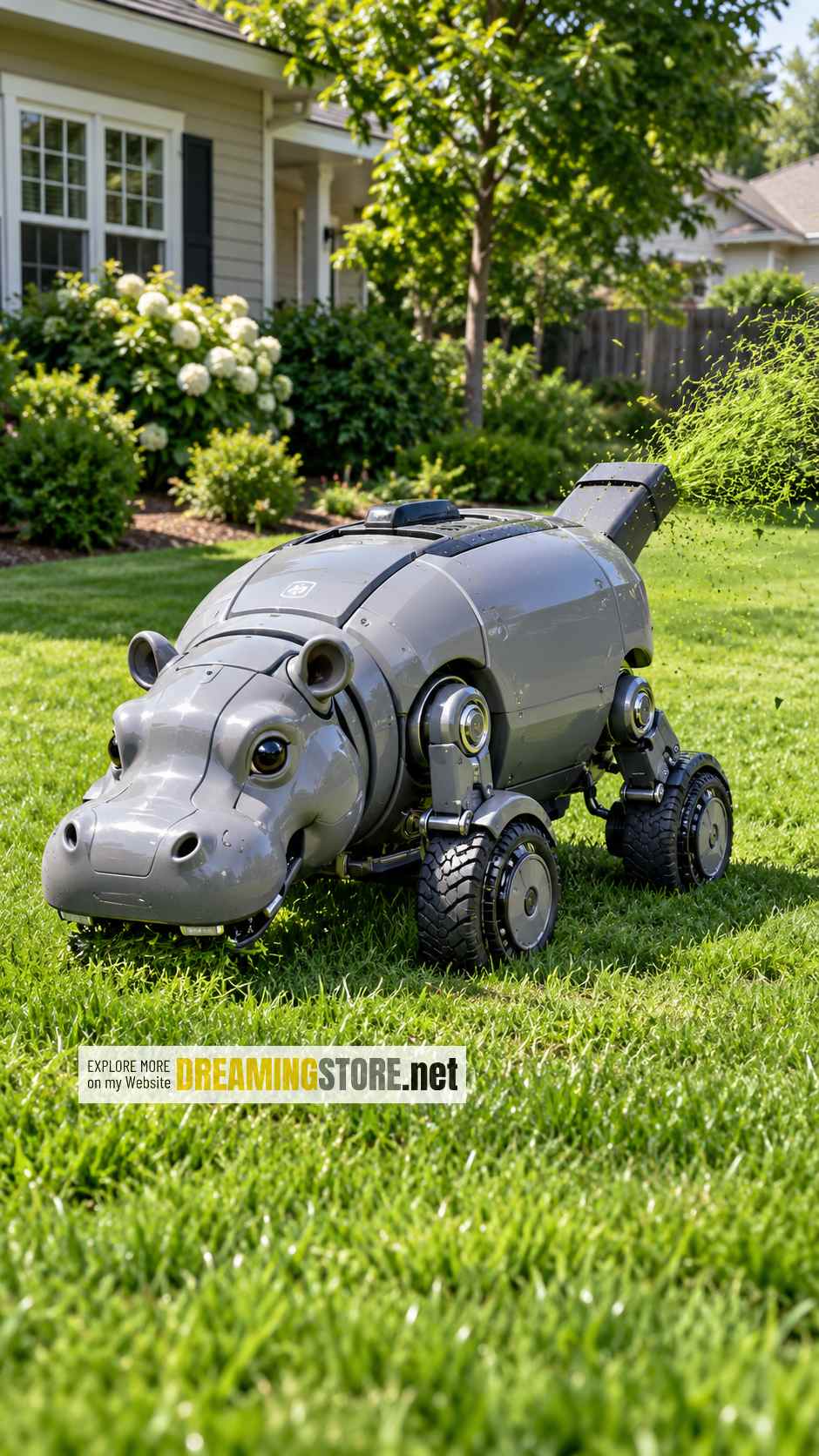
The classic grey robot hippopotamus lawn mower closely resembles a real hippopotamus. Finished in a rugged, matte graphite or slate shade, this model blends naturally into garden landscapes while maintaining a tough, industrial appearance that resists sun-fading and dirt stains.
Cherry Red & Vibrant Tones
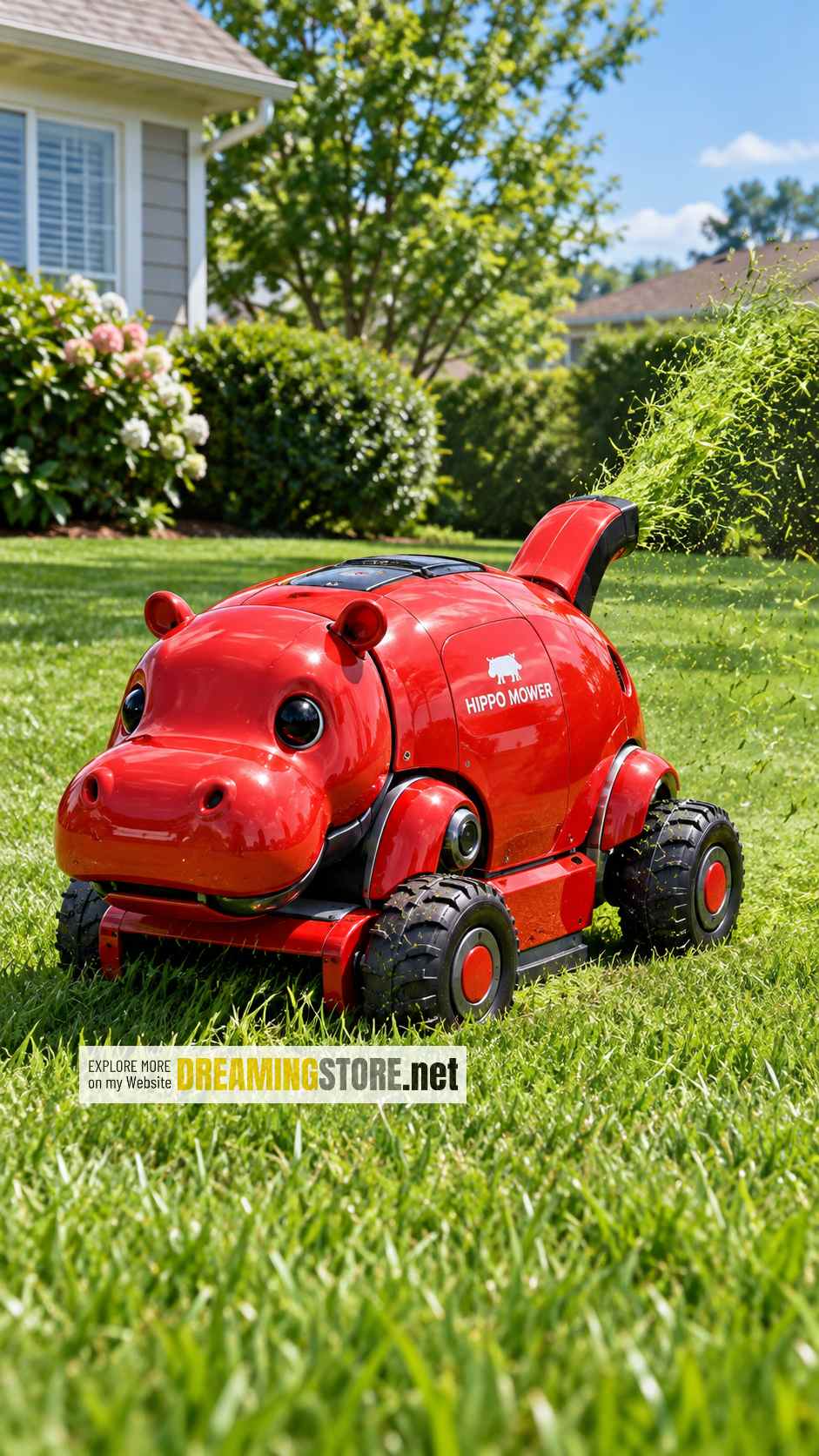
For homeowners who prefer a striking, playful focal point, high-visibility red or yellow models are ideal. A vivid red Hippo-Shaped Lawnmower Robot adds a pop of modern pop-art color to lush green lawns and makes it simple to spot from across the property.
Muddy Brown Naturalist Edition
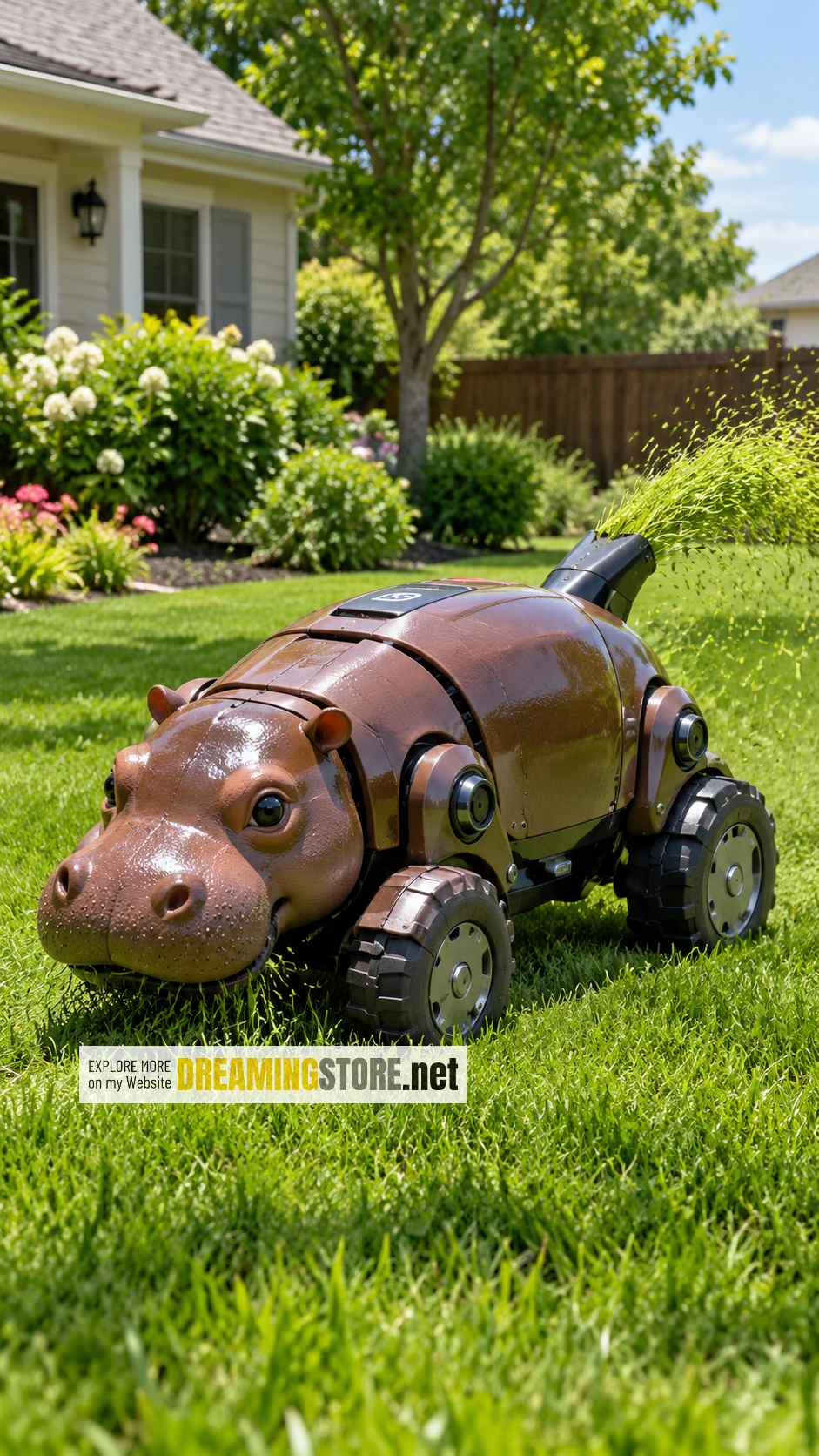
Designed for rustic landscapes, stone gardens, or properties with heavy tree cover, the brown finish offers a subtle, earthy aesthetic. The textured composite shell on this variant effectively hides mud splashes and dust after heavy rainfall.
Futuristic Pearl White
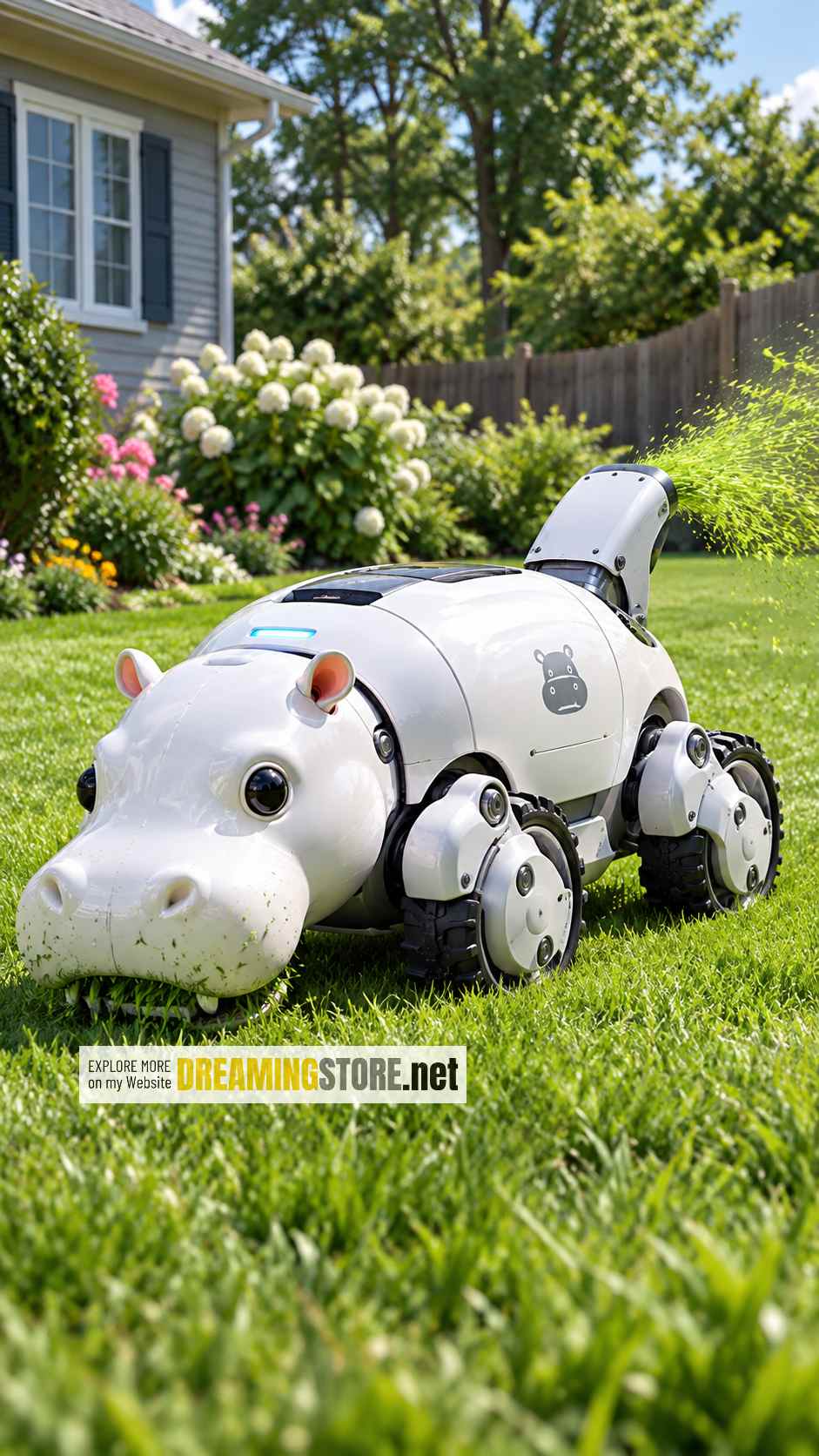
Featuring metallic white plating, glossy chrome accents, and vibrant blue LED eyes, the pearl white robot hippopotamus lawn mower looks like something straight out of a high-tech sci-fi film. It is popular among tech enthusiasts with modern, minimalist architectural homes.
5. How a Hippo-Shaped Lawnmower Robot Works
Understanding the operational workflow of a robot hippopotamus lawn mower helps you maximize its efficiency and longevity.
- Autonomous Docking & Charging: The robot resides in a outdoor base station connected to a low-voltage power supply. When low on power or finished with a job, it autonomously docks to recharge.
- Precision Navigation Mapping: Utilizing either perimeter wire, RTK (Real-Time Kinematic) satellite positioning, or AI vision mapping, the mower establishes virtual boundaries for your property.
- Continuous Micro-Clipping: Rather than cutting grass once a week like a standard push mower, the unit operates daily or every second day. It cuts only a few millimeters at a time, keeping the grass perfectly manicured and healthily dense.
- Directional Mulch Spreading: Clippings pass through high-speed internal impellers and are blown out through the tail chute in a fine mist, fertilizing the root system naturally.
6. Buyer’s Checklist: Factors to Consider Before Purchasing
Before making an investment in a Hippo-Shaped Lawnmower Robot, carefully review these critical parameters to ensure you select the model best suited for your property layout.
A. Lawn Size & Capacity
A primary consideration is the total cutting surface area of your yard.
- Small Lawns (Up to 0.25 Acres / 1,000 sq m): Entry-level models with smaller battery modules (2.0 Ah – 4.0 Ah) are sufficient.
- Medium Lawns (0.25 to 0.75 Acres / 1,000 to 3,000 sq m): Mid-tier mowers equipped with 5.0 Ah to 8.0 Ah batteries and fast-charging docks are required.
- Large Estates (0.75+ Acres / 3,000+ sq m): Flagship models featuring dual batteries, expanded cutting deck widths, and multi-zone mapping capabilities are essential.
B. Terrain & Incline Capabilities
If your lawn features rolling hills, steep slopes, or rough patches, check the motor wattage and wheel tread design. Look for a Hippo-Shaped Lawnmower Robot with all-wheel drive (AWD) capabilities and articulated wheel suspensions designed for 30° to 35° slopes.
Explore more options like this: Click here
C. Boundary System: Perimeter Wire vs. Wire-Free RTK-GPS
- Perimeter Wire Systems: Require installing a low-voltage wire along your lawn perimeter and around flower beds. Extremely reliable, cost-effective, and immune to tree canopy signal loss.
- Wire-Free (RTK-GPS & Vision AI): Uses satellite signaling and camera sensors to create virtual boundaries in a smartphone app. Perfect for complex lawns, though dense tree cover can occasionally disrupt GPS locks.
D. Smart Home Integration & App Control
Check for models offering iOS and Android companion apps with Wi-Fi, Bluetooth, or 4G/5G connectivity. App features should include:
- Real-time GPS tracking and anti-theft geofencing.
- Customizable cutting height adjustments (typically 0.8 in to 3.5 in / 20 mm to 90 mm).
- Rain sensor activation (automatically commanding the robot to return to its shelter during heavy rain).
- Custom cutting schedules and multi-zone assignment.
7. Step-by-Step Installation & Setup Guide
Setting up your Hippo-Shaped Lawnmower Robot properly guarantees years of hassle-free performance. Follow this structured setup protocol:
Step 1: Base Station Placement
Position the charging dock on a level patch of grass close to an outdoor GFCI electrical outlet. Ensure there is at least 3 feet (1 meter) of clear, unobstructed grass directly in front of the dock so your Hippo-Shaped Lawnmower Robot can maneuver smoothly when entering or exiting.
Step 2: Boundary Definition
- For Perimeter Systems: Secure the boundary wire to the ground using plastic lawn pegs spaced roughly 2 to 3 feet apart. Run the wire around off-limits areas like garden beds or swimming pools.
- For Wire-Free Systems: Open the companion smartphone app and guide the robot manually along your property boundaries using the on-screen joystick controller to create a virtual map.
Step 3: Battery Initialization
Place your Hippo-Shaped Lawnmower Robot onto its charging pins. Allow the internal battery to charge completely to 100% before starting its inaugural cutting session.
Step 4: Firmware Updates & Connectivity
Connect the robot to your home Wi-Fi network via the smartphone app and check for available firmware updates. Installing the latest software ensures peak navigation accuracy and optimal battery efficiency.
Step 5: Test Run & Fine-Tuning
Set the initial cutting deck height to a higher setting (e.g., 3.0 inches) for the first run. Launch the test cycle and monitor the unit as it navigates corners, trees, and sloped borders. Adjust virtual boundaries or boundary wire tension if the mower approaches obstacles too closely.
Investing in a Hippo-Shaped Lawnmower Robot offers the perfect balance of robust engineering, advanced automation, and delightful garden aesthetics. By eliminating weekend mowing chores, restoring precious free time, and delivering a perfectly manicured lawn, this unique robotic mower proves that home power equipment can be both highly functional and visually engaging.
Upgrade your lawn care setup today, sit back on your patio, and enjoy watching your tireless, automated robot hippopotamus lawn mower keep your yard looking vibrant and beautifully trimmed!