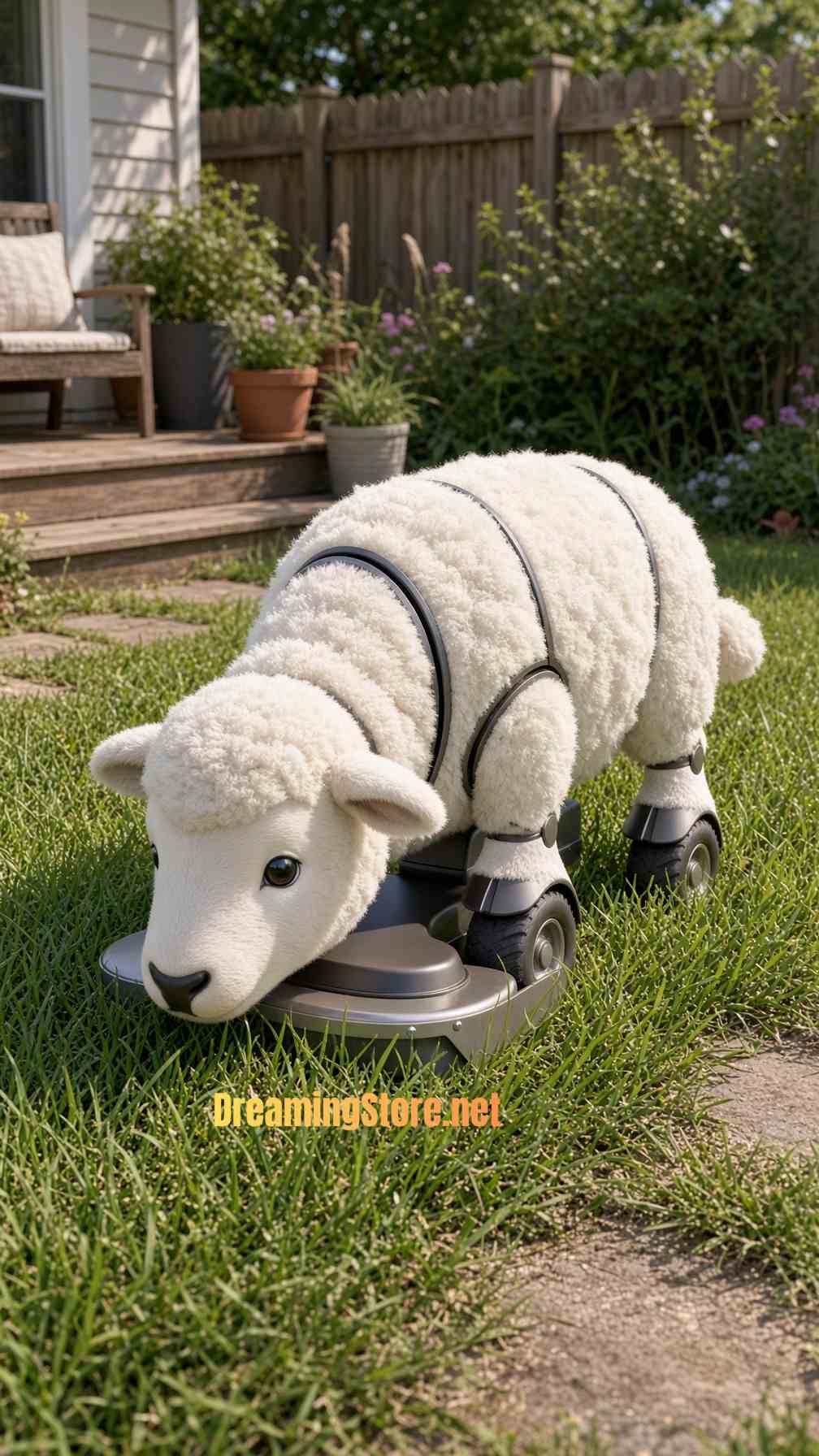
Unlike traditional robotic mowers that resemble industrial plastic pods, Robot Sheep Lawn Mowers blend state-of-the-art autonomous technology with charming, livestock-inspired aesthetics and eco-conscious engineering.
Whether you manage a sprawling suburban estate, a multi-tiered hillside lawn, or a compact suburban backyard, choosing the right autonomous mower requires an understanding of navigation systems, battery technology, cutting mechanisms, and terrain capabilities.
This comprehensive guide serves as the definitive resource for understanding, evaluating, and purchasing Robot Sheep Lawn Mowers in 2026.
What Are Robot Sheep Lawn Mowers?
At their core, sheep-shaped robotic lawnmowers represent the intersection of bio-mimetic design, robotics, and smart agronomy. While functional robotic mowers have existed for decades, early models often struggled with harsh terrain, complex perimeter setups, and cold, mechanical visual appeal.
Modern Robot Sheep Lawn Mowers address these shortcomings by combining high-performance mowing systems with animal-inspired designs, silent electric powertrains, and soft-touch weather-resistant synthetic fleece or durable composite shells.
The Grazing Philosophy
Traditional lawn mowing relies on high-shear blades cutting grass once every week or two. This removes large portions of the grass blade at once, stressing the plant, requiring significant energy, and leaving behind thick clumping clippings that often yellow the turf.
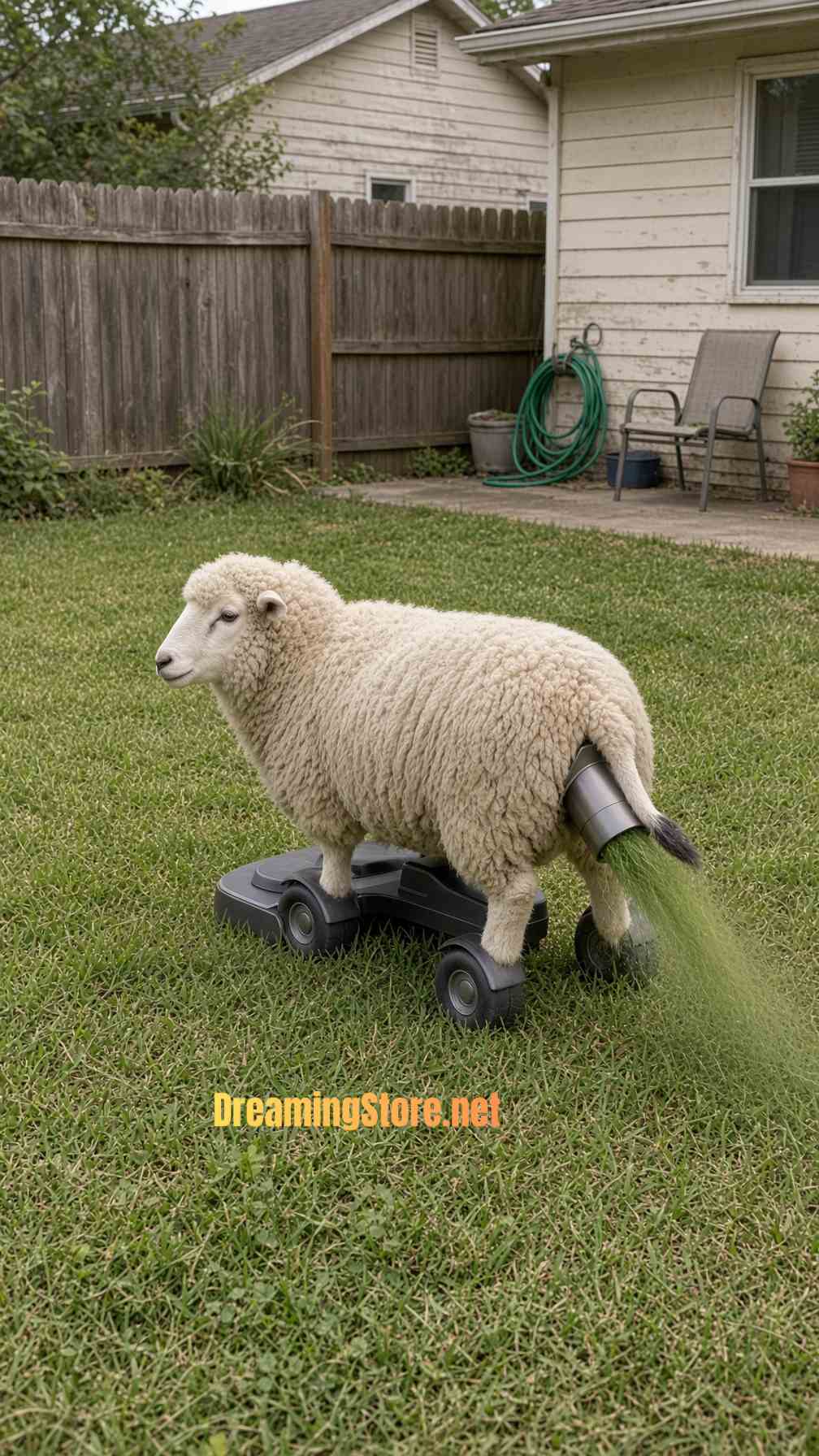
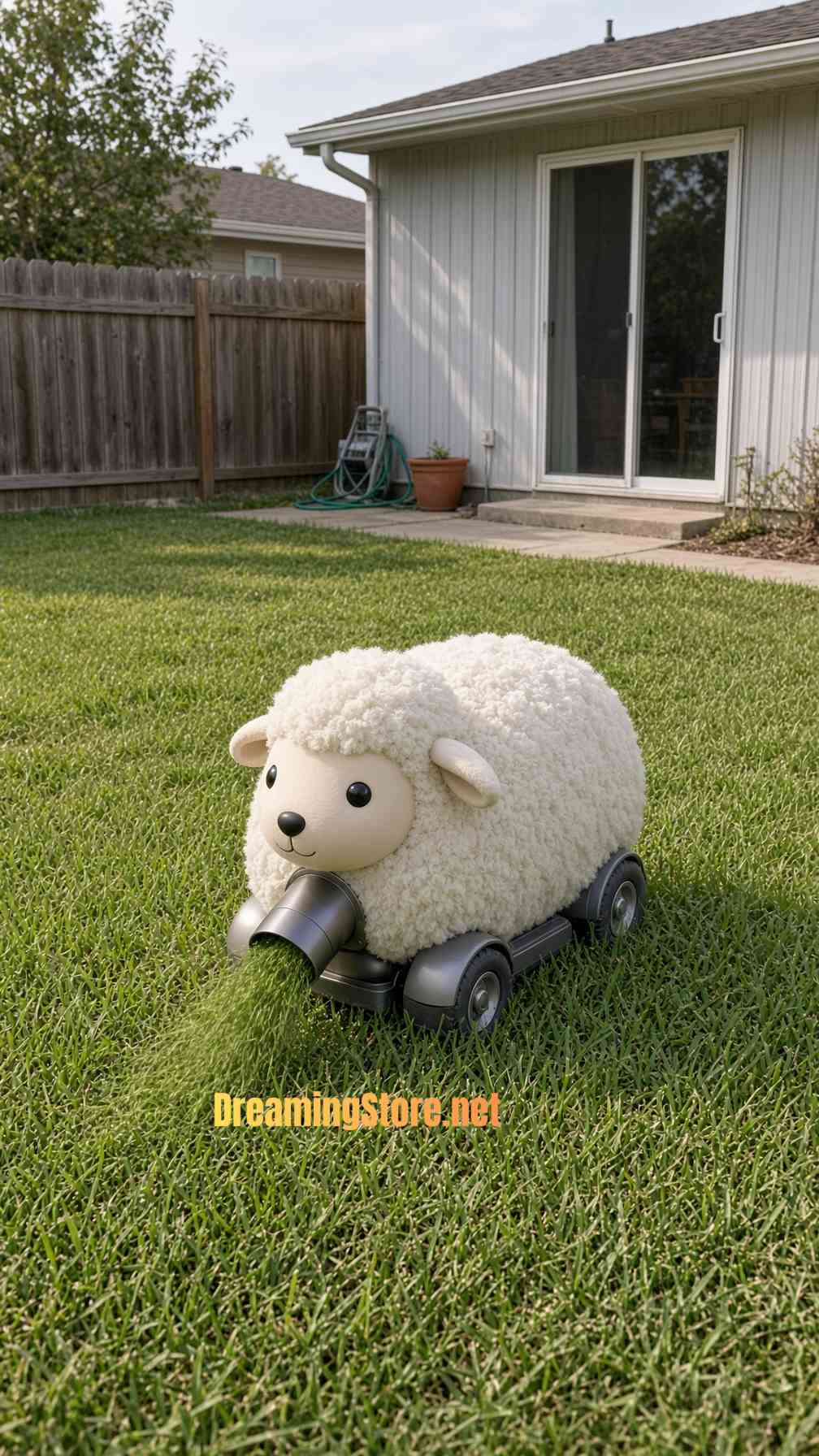
In contrast, Robot Sheep Lawn Mowers operate on a continuous grazing philosophy. By trimming just a few millimeters of grass every day or two, these devices keep turf in a state of perpetual optimum growth. The micro-clippings fall immediately into the root zone, acting as natural fertilizer (mulching) and reducing the need for chemical turf additives.
Want something similar? Find out where to shop for these products at the end of the article!
Key Anatomical & Design Features
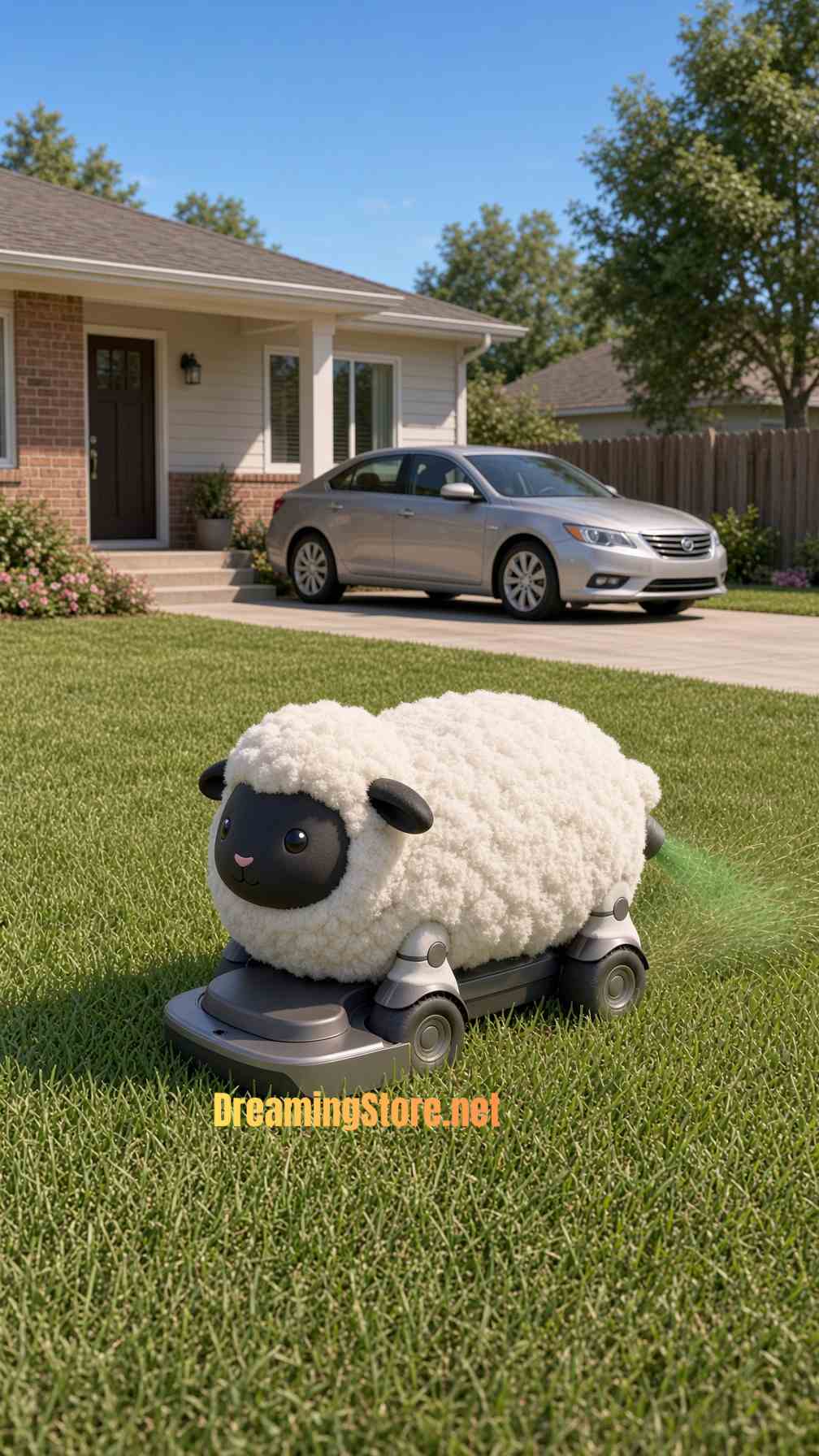
Bio-Inspired Outer Shell: Crafted from UV-resistant, hydrophobic synthetic fibers or sleek matte polymers, these units match natural yard aesthetics while protecting internal electronics from rain, sun, and debris.
Multi-Directional All-Terrain Drivetrain: Equipped with heavy-duty rubber treads or soft-terrain wheels, allowing them to navigate mud, wet grass, and inclines without damaging roots.
Integrated Cutting Decks: Hidden underneath the “body” of the robot, floating blade decks dynamically adjust height to match uneven ground contours.
Sensory Array: Cameras, LiDAR units, sonic sensors, and collision bumpers are subtly integrated into the eyes, snout, and frame of the unit for unobtrusive 360-degree awareness.
Why Choose a Robot Sheep Lawn Mower in 2026?
The smart yard technology market has matured significantly by 2026. When comparing standard robotic mowers, manual push mowers, and professional landscaping services, Robot Sheep Lawn Mowers stand out across several critical performance categories:
Environmental Sustainability
Gas-powered lawn equipment produces significant greenhouse emissions and small particulate matter. Robot Sheep Lawn Mowers run entirely on high-density lithium-ion or solid-state battery cells, producing zero direct emissions. When paired with residential solar setups, your lawn maintenance can become entirely carbon-neutral.
Silence and Neighborhood Harmony
Operating at sound levels below 58 decibels, these machines are virtually whisper-quiet. You can program sheep-shaped robotic lawnmowers to run during the middle of the night or early morning without disturbing sleeping family members or next-door neighbors.
Superior Turf Health
Continuous trimming produces micro-clippings that decompose rapidly, returning nitrogen and organic matter directly to the soil. Over a single season, yards maintained by Robot Sheep Lawn Mowers demonstrate denser root structures, improved drought tolerance, and significantly fewer weeds due to consistent canopy shade.
Core Technologies Powering 2026 Models
The leap in autonomous reliability in 2026 is driven by massive advancements in sensor fusion, battery power, and artificial intelligence. Understanding these core technologies will help you select the ideal model for your property’s layout.
Wire-Free Boundary Navigation (RTK-GPS & VSLAM)
Gone are the days of spending weekends burying thousands of feet of plastic perimeter wire. 2026 sheep-shaped robotic lawnmowers utilize Real-Time Kinematic (RTK) global navigation satellite systems combined with Visual Simultaneous Localization and Mapping (VSLAM).
- RTK-GPS: Delivers location accuracy down to 1–2 centimeters by connecting to local base stations or satellite constellation signals.
- VSLAM Vision Systems: Dual or quad high-definition cameras analyze visual landmarks, sidewalk edges, garden beds, and trees to maintain precise mapping even when satellite signals are momentarily blocked by dense tree canopies.
AI Object Recognition & Obstacle Avoidance
Safety is a paramount concern for homeowners with pets, children, or yard furniture. Modern Robot Sheep Lawn Mowers employ deep-learning neural networks trained on millions of yard images. They can instantaneously detect and navigate around:
- Domestic pets (dogs, cats, rabbits)
- Garden hoses, toys, and sports equipment
- Fallen branches and fruit
- Wildlife such as hedgehogs, birds, and squirrels
Dynamic Floating Cutting Decks
Ground is rarely completely flat. Floating cutting decks move independently of the main chassis, rising and falling with bumps, hummocks, and roots. This prevents scalping (cutting grass too short on high spots) and ensures a uniform aesthetic across uneven terrain.
Solar-Assist Charging & Smart Docking
Selected premium Robot Sheep Lawn Mowers now incorporate micro-solar arrays integrated into their synthetic top coats or charging station canopies. When low on power, the robot autonomously returns to its docking station, reverses into the charging port, and recharges before resuming its schedule.
Key Factors to Consider Before Buying
Selecting from the wide variety of Robot Sheep Lawn Mowers on the market requires matching machine specifications to your yard’s physical characteristics.
1. Lawn Size and Coverage Rating
Robotic mowers are rated by maximum lawn area capacity (e.g., 0.25 acres, 0.75 acres, 1.5+ acres). Always choose a model rated slightly higher than your actual turf area, especially if your yard features steep slopes or complex sub-zones.
2. Slope Handling & Terrain Capabilities
If your lawn includes steep hills, terraced landscaping, or drainage ditches, check the maximum incline rating:
- Standard Models: 20% to 35% grade (11° to 19°)
- All-Wheel Drive (AWD) Models: Up to 70% grade (35°), designed specifically for mountain estates and severe embankments.
3. Multi-Zone Management
Does your yard have separate front, side, and back lawns connected by narrow concrete walkways or gates? Ensure your preferred model supports multi-zone routing and automatic passage navigation, allowing the mower to cross paved paths safely without engaging its blades.
4. App Integration & Smart Home Ecosystems
Look for models featuring intuitive iOS/Android applications with Wi-Fi, Cellular, or Bluetooth connectivity. Key software features include:
- Customizable mowing schedules and height adjustments
- No-go zone creation (protecting temporary flower beds or garden parties)
- Integration with Apple Home, Google Home, or Amazon Alexa
- GPS theft-tracking and geo-fencing security alerts
Find and buy similar products: Click here
Installation & Initial Setup Guide
Transitioning your yard care routine to Robot Sheep Lawn Mowers is straightforward thanks to modern wire-free installation workflows. Follow this step-by-step guide for a seamless setup experience.
Step 1: Base Station Placement
- Choose a flat, level area near an outdoor weatherproof electrical outlet.
- Ensure the docking station has a clear overhead view of the sky (away from tall overhangs) to maintain strong satellite locking signals.
- Leave at least 3 feet of clear space in front of the dock to allow smooth entry and exit maneuvers.
Step 2: Installing the Navigation Antenna (For RTK-GPS Models)
- Mount the small RTK reference antenna on a fence post, roof fascia, or ground spike.
- The antenna serves as a fixed reference point to correct satellite drift, ensuring sub-inch trimming accuracy.
Step 3: Digital Property Mapping
- Open the manufacturer’s companion smartphone app.
- Use the virtual joystick to manually guide your mower around the outer edge of your property.
- The machine records precise GPS and visual waypoints to establish digital boundaries without physical wires.
Step 4: Establishing No-Go Zones and Passages
- Drive or draw boundaries around non-mowable features such as swimming pools, flower beds, outdoor fire pits, or exposed tree roots.
- Create designated passage corridors so your mower can cross stone walkways or driveways without lowering its cutting blades.
Step 5: Test Run & Schedule Creation
- Initiate a supervised test run to verify obstacle detection and boundary responses.
- Set your preferred mowing schedule (e.g., 2 hours every Monday, Wednesday, and Friday night).
Frequently Asked Questions (FAQ)
Are Robot Sheep Lawn Mowers safe for dogs and cats?
Yes. Modern models utilize active camera vision and ultrasonic sensors trained to recognize common domestic pets. If a dog or cat approaches the unit, the machine halts movement, stops its blades, and reverses direction away from the animal.
How do Robot Sheep Lawn Mowers handle wet grass and heavy rain?
While most units are IPX6 waterproof and capable of operating in light drizzle, cutting soaking wet grass can cause clumping under the deck. Nearly all models include integrated digital rain sensors that instruct the unit to return to its sheltered dock during heavy storms, resuming work once the turf dries.
What happens if someone tries to steal my robot lawn mower?
Security features are robust across 2026 models. If a unit is moved out of its designated geofenced boundary, it disables its motor, triggers an onboard audible alarm, sends immediate push notifications to your phone, and broadcasts live GPS tracking coordinates via satellite or cellular connections.
How long do the batteries last before needing replacement?
Lithium-ion and solid-state battery packs in premium Robot Sheep Lawn Mowers typically last between 3,000 to 5,000 charge cycles, translating to 5 to 8 years of regular seasonal use. Battery modules are user-replaceable with standard tools.
The lawn care landscape has irrevocably shifted toward smart, sustainable automation. Robot Sheep Lawn Mowers offer the ideal combination of eco-friendly mulching performance, wire-free navigation convenience, quiet operation, and charming visual appeal.
By selecting the right model for your property’s layout and terrain, you can reclaim your weekends, reduce your carbon footprint, and enjoy a perfectly manicured lawn every single day of the year.
Investing in one of these top-rated sheep-shaped robotic lawnmowers ensures your lawn remains healthy, green, and effortlessly maintained throughout 2026 and beyond.