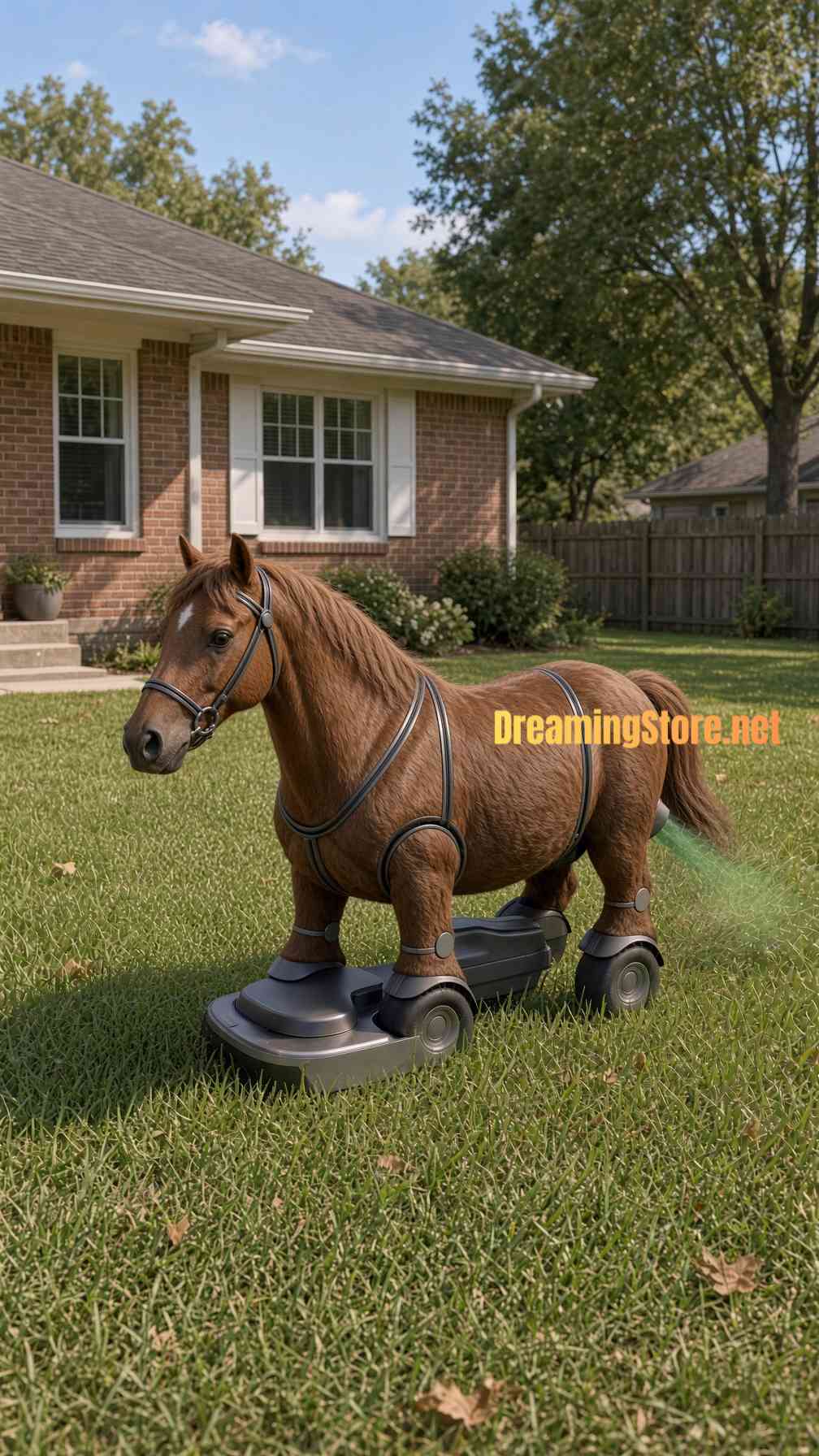
Combining horse-like aesthetics, quad-legged or hybrid rolling-gait locomotion, advanced artificial intelligence, and eco-friendly robotic engineering, the Robot Horse Lawn Mower represents a dramatic shift in how we approach residential and commercial turf management.
In this comprehensive guide, we will analyze the upfront costs, operational expenses, performance efficiency, and long-term economic value of investing in a horse-shaped robot lawnmower to help you decide if this groundbreaking machinery is right for your property.
The Origin & Architecture of the Robot Horse Lawn Mower
To understand the economics of the Robot Horse Lawn Mower, one must first examine the engineering principles that distinguish it from conventional lawn maintenance equipment. Standard robotic mowers are essentially motorized disc cutters mounted on small wheels. While efficient on flat, enclosed lawns, they frequently struggle with steep inclines, mud, thick brush, pinecones, and complex natural obstacles.
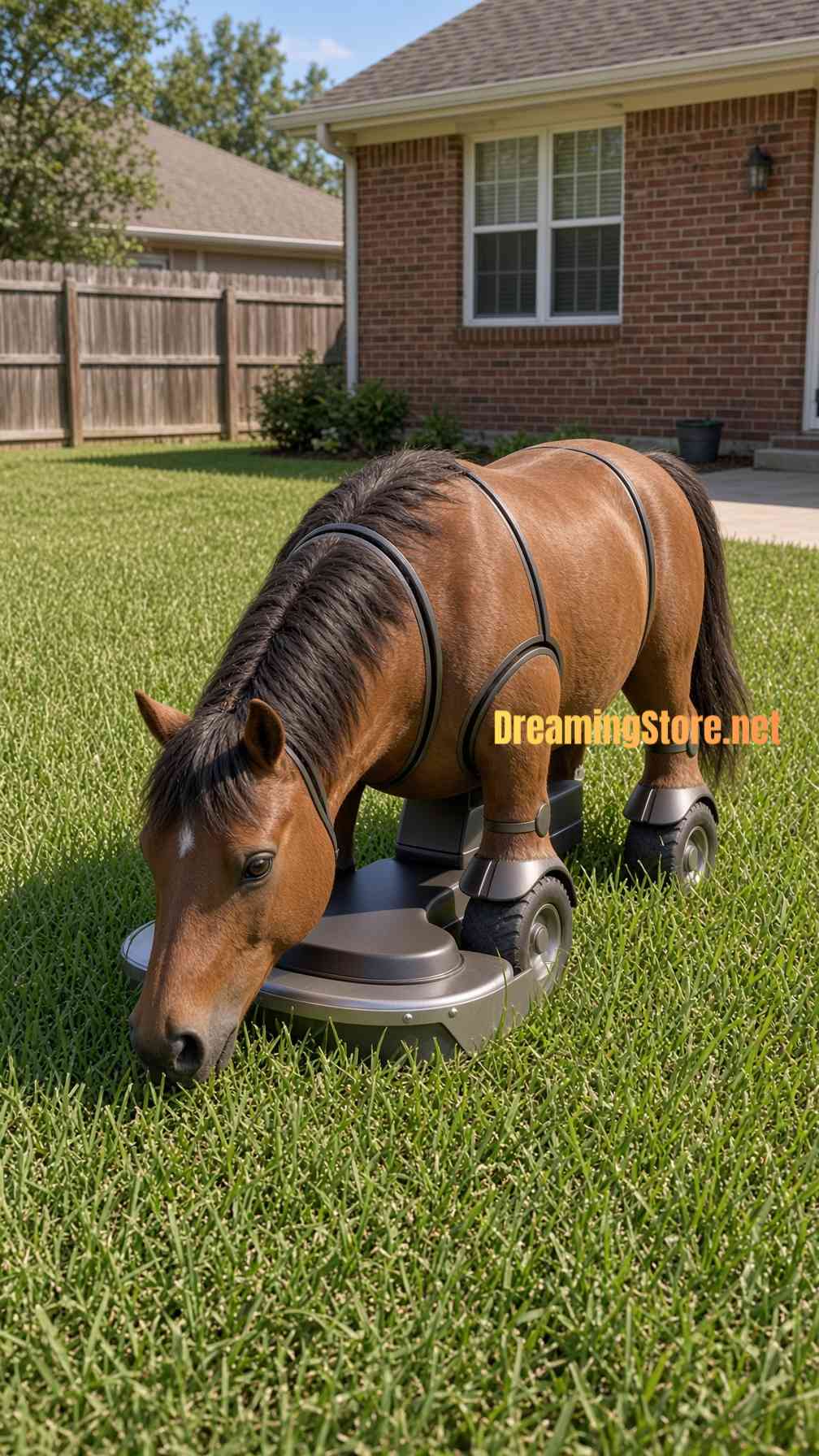
The horse-shaped robot lawnmower bridges the gap between robotic agility and heavy-duty turf management. By taking inspiration from equine bio-mechanics, engineers have built a machine capable of navigating uneven terrain with high stability and precision.
When you purchase a Robot Horse Lawn Mower, you are not simply buying a grass cutter; you are investing in an autonomous outdoor robotics platform engineered for durability, complex terrain navigation, and minimal human intervention.
You’ll find links to similar products at the end of this article!
Initial Purchase Cost and Tier Breakdown
The first major hurdle for any consumer evaluating a Robot Horse Lawn Mower is the upfront investment. Because this technology integrates advanced robotics, equine articulation, and AI-driven navigation, price tags are considerably higher than standard gas push mowers or basic entry-level robotic discs.
Generally, the market for the horse-shaped robot lawnmower is divided into three distinct market tiers:
1. Residential Entry Tier ($2,500 – $4,500)
Designed for suburban homeowners with lawns ranging from 0.25 to 1 acre. Units in this price range typically feature a compact pony-style frame, hybrid wheel-hoof drive systems, basic LiDAR navigation, and standard lithium-ion battery packs. While they offer superior terrain handling compared to low-cost disc mowers, they feature lower cutting deck widths and shorter battery runtimes.
2. Premium Residential & Small Estate Tier ($4,800 – $8,500)
Targeted at properties spanning 1 to 3 acres with variable topography, steep slopes, and complex landscaping elements. A premium Robot Horse Lawn Mower in this category includes dynamic suspension, articulated stepping legs for navigating steps or rock gardens, advanced obstacle avoidance (including live animal detection), fast-charging technology, and customizable aesthetic finishes.
3. Commercial & Commercial Estate Tier ($9,000 – $16,000+)
Built for golf courses, public parks, large horse ranches, and expansive commercial properties. These high-capacity units feature heavy-duty carbon-reinforced frames, multi-blade rotary or reel cutting systems, satellite-assisted RTK-GPS combined with local AI visual positioning, and continuous swappable battery systems.
Understanding these price tiers allows property owners to accurately calculate their starting investment based on total acreage and terrain difficulty.

Installation, Setup, and Infrastructure Expenses
Beyond the base sticker price of the unit itself, adopting a Robot Horse Lawn Mower involves initial setup and infrastructure expenses. Fortunately, because these units utilize optical, LiDAR, and satellite mapping rather than physical perimeter wires, installation costs are significantly lower than first-generation automated mowers.
Autonomous Charging Dock and Shelter
Every horse-shaped robot lawnmower requires a stable, weather-resistant home base. The docking station serves as both an electrical charging point and a protective shelter during severe weather.
- Standard Charging Base: Included with most units.
- All-Weather Equine Stable/Doghouse Cover: $200 – $600 for premium solar-assisted cover structures that blend into outdoor landscaping.
- Dedicated Electrical Line Installation: $150 – $500 if an exterior weather-proof GFCI outlet needs to be installed near the lawn area.
Boundary Mapping and Calibration
While setting up a Robot Horse Lawn Mower is largely user-friendly via companion smartphone applications, larger estates often opt for professional calibration.
- DIY Setup: Free. Users walk or remotely steer the unit along the perimeter once to establish digital boundary maps, keep-out zones, and travel paths.
- Professional Installer Setup: $300 – $700. Technicians configure optimal cutting schedules, fine-tune AI obstacle detection parameters, and optimize docking station placement.
Total initial setup expenses usually add an extra $200 to $1,000 to the total investment, depending on self-installation preferences and electrical accessibility.
Ongoing Operating and Maintenance Costs
Evaluating the true financial footprint of a horse-shaped robot lawnmower requires looking beyond the initial hardware purchase. Long-term operating and routine maintenance costs dictate whether the machine provides real financial efficiency over its lifespan.
Electricity Consumption vs. Gas Fuel Costs
One of the most immediate economic benefits of switching to a Robot Horse Lawn Mower is the radical reduction in fuel costs. Gas-powered riding mowers and lawn tractors consume expensive gasoline, require oil changes, and generate substantial carbon emissions.
- Gasoline Mower Costs: An average 2-acre lawn requires roughly 1.5 to 2 gallons of gasoline per cut. Cutting twice a week across a 30-week season totals approximately 90 to 120 gallons. At $3.50 per gallon, seasonal fuel expenses range from $315 to $420 per year.
- Robot Horse Lawn Mower Costs: Powered by high-density lithium-iron-phosphate (LiFePO4) or lithium-ion batteries, a horse-shaped robot lawnmower draws minimal electrical power from the grid. Average electricity consumption for a 2-acre yard runs between $25 and $45 per season, representing a 90% reduction in direct fuel expenditures.
Blade Replacement and Sharpening
Mulching blades on the Robot Horse Lawn Mower operate at high RPMs to ensure micro-clippings that naturally fertilize the lawn.
- Replacement Blade Sets: $30 – $70 per set.
- Frequency: Blades should be replaced or sharpened 1 to 2 times per season depending on lawn size and soil grit conditions.
Battery Lifespan and Replacement
The battery pack is the heart of the machine’s powertrain. Modern LiFePO4 batteries used in modern units are rated for 2,000 to 3,000 complete charge cycles.
- Average Battery Lifespan: 5 to 8 years under normal residential usage.
- Battery Replacement Cost: $400 – $900 depending on total kilowatt-hour capacity.
General Wear and Tear
Because a Robot Horse Lawn Mower utilizes dynamic leg articulation or hybrid rolling joints, mechanical seals, bushings, and tire tread will experience natural wear over time. Annual tune-up kits containing replacement tread belts, joint lubricant, and sensor cleaning wipes typically cost between $80 and $150 annually.
Discover comparable items here: Click here
Long-Term Value Drivers Beyond Direct Dollar Savings
While direct monetary savings provide a compelling argument, the overall return on investment of a Robot Horse Lawn Mower extends into intangible benefits, time recovery, property value enhancement, and ecological advantages.
1. Reclaiming Personal Time
Time is an unrecoverable resource. Mowing a 1.5-acre lawn with a traditional mower takes approximately 1.5 to 2 hours per session, including setup, refueling, edge work, and cleanup. Over a 30-week mowing season, a homeowner spends between 45 and 60 hours behind handlebars or steering wheels.
By delegating this labor to a Robot Horse Lawn Mower, you gain back nearly a full work week every single year. For busy professionals, business owners, and families, the monetary value of those reclaimed hours often far exceeds the purchase price of the machine.
2. Superior Lawn Health and Turf Aesthetics
Traditional gas mowers cut grass once every 7 to 10 days, taking off large portions of the grass blade at once. This practice stresses the grass plant, leaving it vulnerable to weed invasion, disease, and drought.
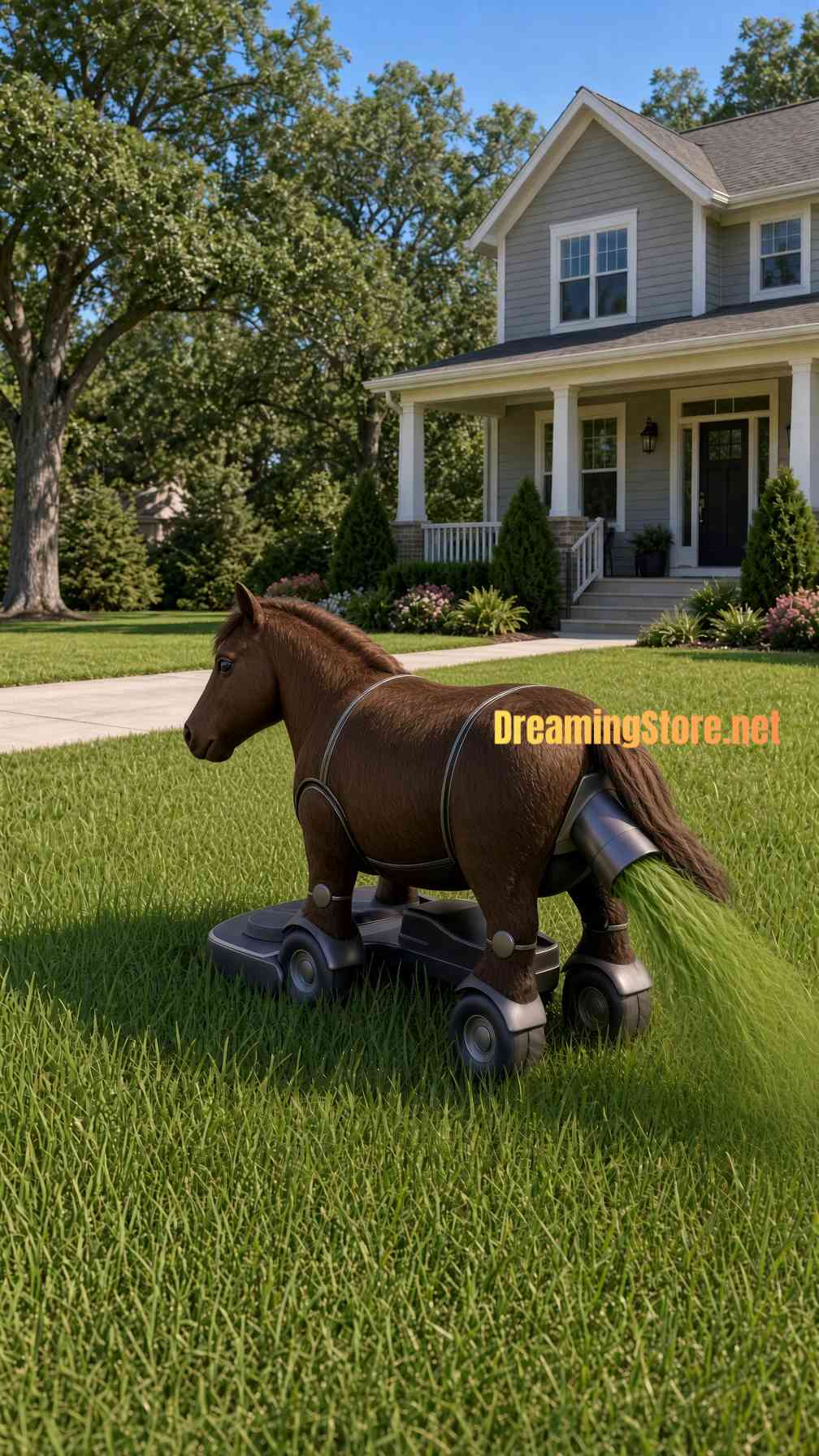
Conversely, a horse-shaped robot lawnmower operates continuously or semi-daily. It removes only millimeters of grass tissue during each cycle. These micro-clippings quickly decompose at the root level, returning valuable nitrogen and organic material directly into the soil.
Lawn Benefits Include:
- Natural Fertilization: Reduces external chemical fertilizer needs by up to 30%.
- Weed Suppression: Constant light trimming prevents weeds from flowering and spreading seeds.
- Denser Turf Root Growth: Frequent light cutting encourages lateral grass root expansion rather than stress recovery.
A healthier, greener, golf-course-quality lawn directly enhances curb appeal and can positively influence residential property values.
3. Noise Reduction and Peaceful Living
Gas lawn tractors generate high acoustic levels, often reaching 90 to 105 decibels (dB), requiring hearing protection and disrupting neighbors, sleeping infants, and work-from-home schedules.
The electric powertrain of the horse-shaped robot lawnmower produces a remarkably low noise output of just 52 to 58 decibels—roughly equivalent to quiet rainfall or a soft indoor conversation. You can schedule your Robot Horse Lawn Mower to operate early in the morning, late at night, or while you relax on the patio without experiencing any acoustic disturbance.
4. Eco-Friendly Zero-Emission Operation
Small off-road gas engines found in conventional lawn mowers are notoriously inefficient polluters. According to environmental research, operating a standard gas lawn mower for one hour produces as much smog-forming pollution as driving a modern automobile for hundreds of miles.
Transitioning to a horse-shaped robot lawnmower completely eliminates point-of-use carbon emissions. When paired with residential solar panels, your lawn maintenance footprint drops to absolute zero, aligning your home with modern sustainable living practices.
The emergence of the Robot Horse Lawn Mower marks a major leap forward in residential and commercial land management. By marrying biomimetic equine design with cutting-edge artificial intelligence, sensor fusion, and electric drive systems, it overcomes the severe terrain limitations that plagued earlier generations of robotic mowers.
If you are ready to reclaim your weekends, reduce your environmental impact, and elevate your lawn care into the modern era, adopting a horse-shaped robot lawnmower is a forward-thinking choice that delivers lasting value for years to come.