Interior design in 2027 moves decisively away from sterile minimalism toward bold, sculptural statement fixtures that anchor a room. An Octopus Ceiling Fan sits at the exact intersection of functional climate control and gallery-grade marine art.
Whether you are outfitting a modern coastal home, an eclectic loft, or a covered outdoor lanai, selecting the right dimensions and finish ensures your fixture elevates the architecture rather than overwhelming it!
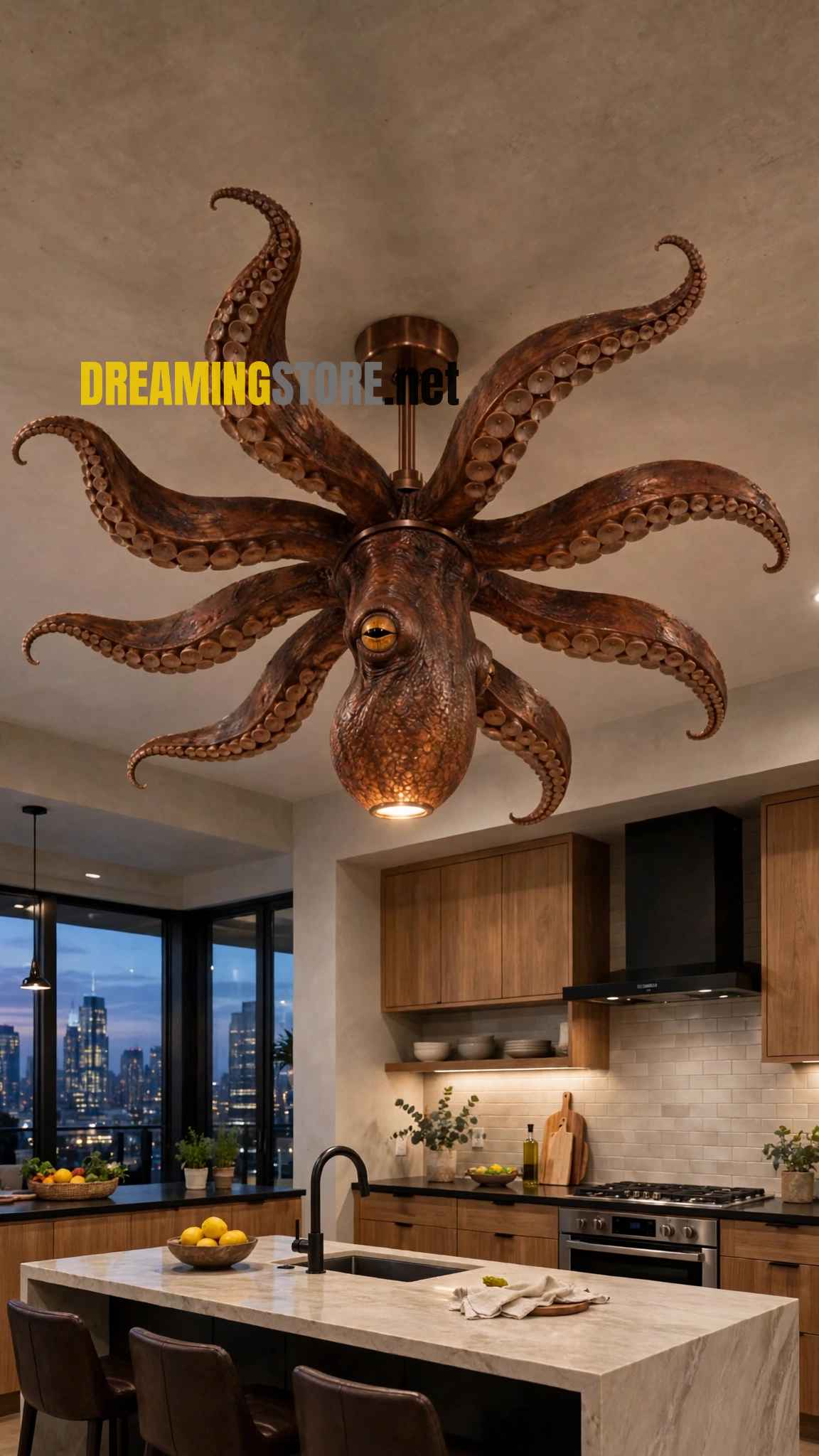
Why Sculptural Ceiling Fixtures Define 2027 Interiors?
Homeowners and interior designers are increasingly treating the ceiling—often called the fifth wall—as a primary canvas for artistic expression. Rather than hiding utilitarian hardware, 2027 trends celebrate organic silhouettes, tactile finishes, and multi-functional centerpieces.
-
Biophilic and Marine Influences: Sculpted tentacles introduce fluid, asymmetrical curves that soften the rigid geometry of flat drywall, concrete slabs, and square cabinetry.
-
Dual-Purpose Engineering: Integrating high-efficiency air circulation with warm ambient illumination eliminates visual clutter by combining a chandelier and a fan into a single focal point.
-
Conversation-Starting Craftsmanship: Detailed textures, from realistic suction cups to hand-rubbed metallic patinas, transform everyday household appliances into bespoke sculptures.
“Want something similar? Find out where to shop for these products at the end of the article!”
Understanding the Anatomy of an Octopus Ceiling Fan
Before measuring your room or picking a finish, it helps to understand how an Octopus Ceiling Fan differs structurally from a standard paddle-blade model. Because the eight sculpted tentacles act as both the visual body and the aerodynamic sweep, proportions behave differently in three-dimensional space.
-
The Central Mantle (Motor Housing): Houses the whisper-quiet DC motor and often features a downward-facing integrated LED light module at the base of the head, casting a warm, focused glow onto tables or islands below.
-
The Eight Sculpted Tentacles: Extend outward in dynamic, curling arcs. Unlike flat wooden blades, curved tentacles occupy vertical volume as well as horizontal diameter.
-
The Downrod and Canopy: Connects the mantle to the ceiling junction box. In sculptural designs, the downrod is usually finished in brushed brass, antique copper, or oil-rubbed bronze to complement the primary body color.
-
Integrated Lighting Optics: Most contemporary models utilize dimmable warm-white LEDs (2700K–3000K) tucked into the lower mantle, eliminating the need for bulky glass shades that would disrupt the creature’s silhouette.
How to Choose the Right Size for Your Space
Sizing a sculptural fixture requires balancing airflow performance with visual scale. Because the curling arms have more visual weight than thin flat blades, picking a diameter that matches your square footage and ceiling height is essential.
Step 1: Match Diameter to Room Square Footage
Measure the length and width of your room to determine total square footage, then align your space with standard aerodynamic span guidelines:
-
Compact Rooms (Up to 100 sq. ft. / 9 m²): Choose a compact span between 36 and 42 inches. Ideal for breakfast nooks, cozy dens, or boutique powder rooms where a massive tentacle spread would feel claustrophobic.
-
Medium Bedrooms and Offices (100 to 150 sq. ft. / 9–14 m²): Select a 42- to 48-inch model. This provides gentle, quiet air movement without dominating the ceiling plane over a queen bed.
-
Standard Living Rooms and Kitchens (150 to 250 sq. ft. / 15–23 m²): Opt for a 48- to 54-inch Octopus Ceiling Fan. This versatile mid-large scale balances comfortably above kitchen islands and standard sectional sofas.
-
Great Rooms and Open-Concept Spaces (250 to 400+ sq. ft. / 24–37+ m²): Step up to a 54- to 60-inch span. In expansive rooms with high ceilings, a larger tentacle sweep ensures air reaches the seating zone while maintaining bold architectural presence.
Step 2: Calculate Ceiling Height and Downrod Length
Vertical clearance is even more critical for an Octopus Ceiling Fan than for a traditional fixture because the central mantle hangs lower than a flat motor housing.
-
Optimal Floor-to-Tentacle Clearance: Position the lowest points of the tentacles and mantle between 8 and 9 feet above the finished floor for safe headroom and maximum airflow efficiency.
-
Ceiling-to-Tentacle Breathing Room: Keep the upper curves of the arms at least 10 to 12 inches below the ceiling surface so air can intake freely from above without creating turbulence.
-
8-Foot Ceilings: Sculptural octopus models are generally not recommended for 8-foot ceilings unless installed directly over a fixed obstruction like a dining table or kitchen island where nobody walks underneath.
-
9-Foot Ceilings: Use a short 6-inch downrod to maintain safe walking clearance while giving the upper tentacles room to breathe.
-
10-Foot Ceilings: Pair the fixture with a 12- to 18-inch downrod to drop the mantle into the optimal visual zone.
-
12-Foot and Vaulted Ceilings: Use a 24- to 36-inch downrod (plus an angled ceiling adapter if sloped) so the sculpture does not appear lost high overhead.
Step 3: Check Wall and Obstacle Clearances
Proper spacing prevents air-flow dead zones and protects the detailed tips of the tentacles from accidental contact:
-
Wall Distance: Maintain at least 18 to 24 inches between the outermost tentacle tips and any surrounding walls, tall bookshelves, or upper kitchen cabinets.
-
Cabinet Doors and Hoods: In kitchens, verify that swinging upper cabinet doors or tall range hoods do not intersect the rotation radius.
-
Recessed Lighting Placement: Avoid placing recessed can lights directly above the spinning arms, which creates a distracting strobe effect across the room.
Choosing the Right Color and Finish for 2027
Color selection dictates whether your Octopus Ceiling Fan reads as a moody antique artifact, a warm luxury accent, or a playful pop-art centerpiece. Drawing inspiration from top 2027 interior palettes, four distinct finish directions stand out.
Aged Bronze and Patina Brown (Earthy Industrial & Modern Organic)
Deep, weathered bronze with warm copper undertones remains a staple for spaces grounded in natural wood, concrete, and stone.
-
Visual Impact: Blends steampunk craftsmanship with organic warmth, allowing the textured skin and pale interior suction cups to stand out in rich relief.
-
Best Room Pairings: Modern kitchens with walnut cabinetry, white marble islands, matte black plumbing fixtures, and raw concrete ceilings.
-
Lighting Synergy: Pairs best with 2700K warm incandescent-style LEDs that bring out the golden-brown highlights in the textured patina.
Vibrant Crimson Red (Dramatic Sanctuary & Maximalist Luxury)
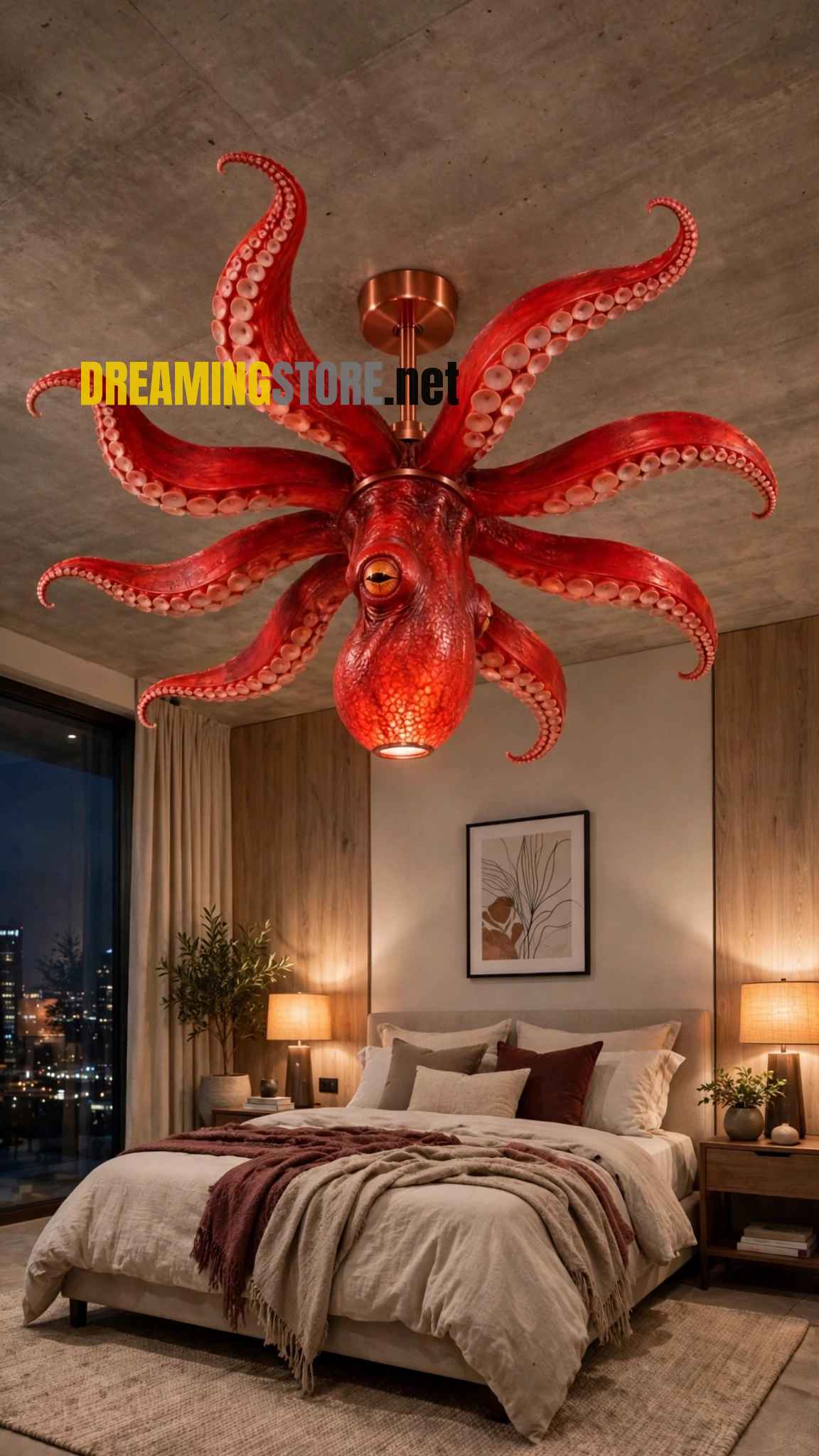
Bold, saturated reds are surging in 2027 as homeowners embrace expressive, cocooning bedrooms and moody lounges.
-
Visual Impact: A crimson Octopus Ceiling Fan commands immediate attention, creating a dramatic contrast against neutral plaster, linen, and light oak paneling.
-
Best Room Pairings: Primary bedrooms with cream bedding, terracotta or rust throw blankets, warm wood accent walls, and soft bedside lamps.
-
Design Tip: Keep surrounding furniture tones muted—such as oatmeal, taupe, and charcoal—so the red sculpture serves as the undisputed hero piece.
Luminous Gold and Burnished Ochre (Warm Quiet Luxury)
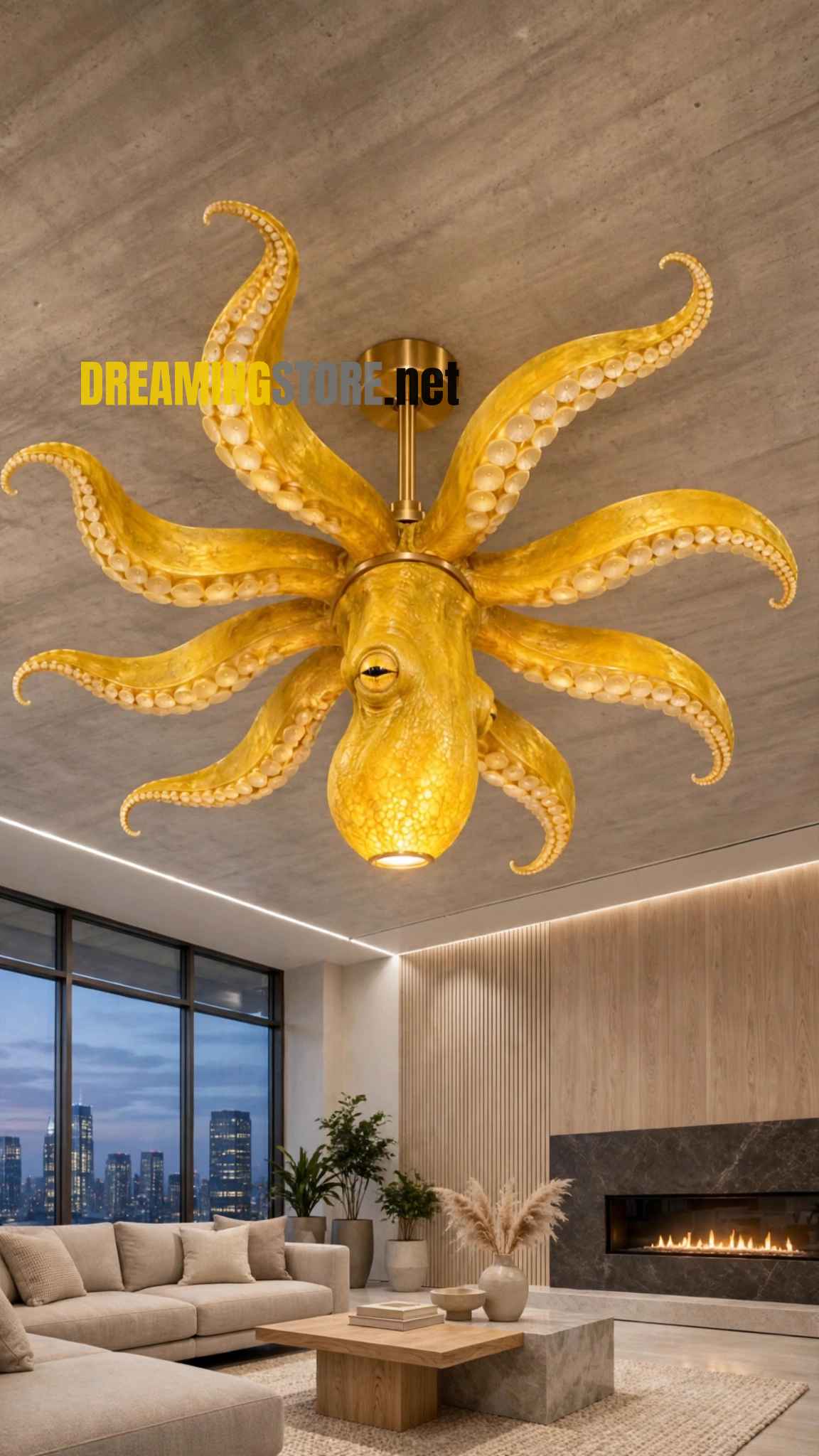
Metallic gold and sunlit ochre finishes tap directly into 2027’s preference for warm, inviting interiors that glow after sunset.
-
Visual Impact: Reflects ambient room light across every sculpted ridge, giving the fixture the presence of fine gilded bronze art.
-
Best Room Pairings: Contemporary living rooms with beige modular sofas, fluted wood wall panels, travertine coffee tables, and linear perimeter LED strip lighting.
-
Hardware Coordination: Match the canopy and downrod in brushed brass to tie seamlessly into fireplace surrounds or brass picture frames.
Iridescent Rainbow Polychrome (Coastal Resort & Covered Outdoor Living)
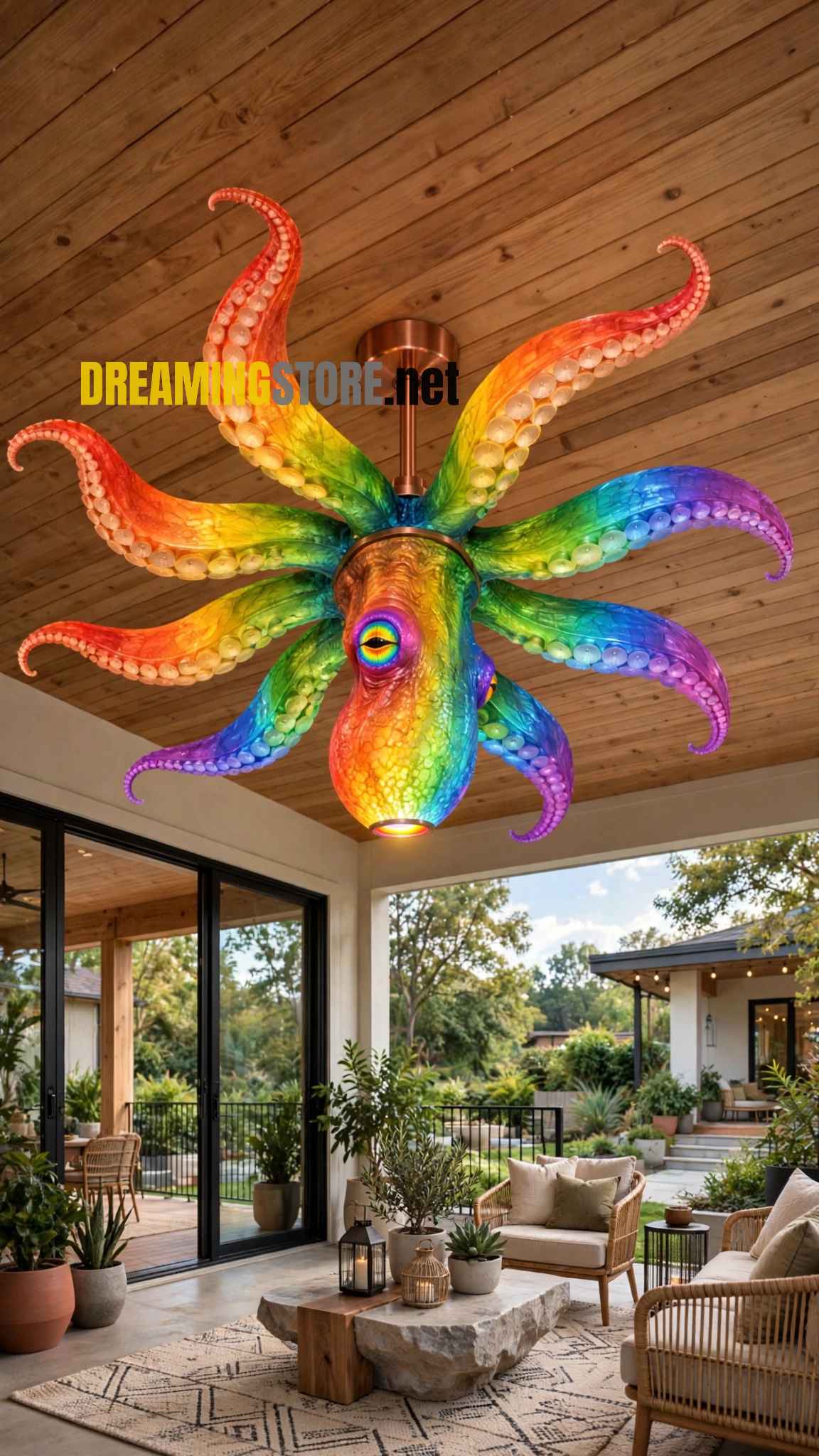
Multi-hued gradient finishes—transitioning from fiery coral and sunny yellow through emerald green into deep violet—bring joyful energy to indoor-outdoor spaces.
-
Visual Impact: Celebrates the natural bioluminescent beauty of marine life, turning a covered patio or sunroom into a resort-style retreat.
-
Best Room Pairings: Covered outdoor lanais with cedar tongue-and-groove ceilings, woven rattan lounge chairs, live-edge stone tables, and lush potted greenery.
-
Durability Check: When installing a colorful Octopus Ceiling Fan outdoors, verify that the finish carries a UV-resistant clear coat and a damp-location UL rating so humidity and indirect sunlight never fade the pigments.
Find and buy similar products: Click here
Technical Features to Prioritize Before Buying
A showstopping exterior means little without reliable modern engineering inside the mantle. Look for these essential specifications when comparing models for 2027:
Reversible DC Motor: Consumes up to 70% less energy than legacy AC motors, runs silently, and reverses direction in winter to push trapped warm air down from the ceiling.
6-Speed Remote and Smart App Control: Allows fine-tuned breeze adjustment—from a barely perceptible whisper to brisk cooling—plus voice integration with smart home ecosystems.
Dimmable Integrated LED Module: Look for high CRI (90+) lighting with adjustable color temperature (2700K to 4000K) so you can shift from crisp task light to cozy evening ambiance.
Heavy-Duty Fan-Rated Junction Box: Sculptural resin and composite tentacles weigh more than hollow plastic blades; always mount the bracket to a UL-listed fan brace rated for at least 70 pounds.
Precision Factory Balancing: Because asymmetrical tentacles require exact counterweight distribution, verify that the manufacturer pre-balances the assembly to prevent wobbling at higher speeds.
Before placing your order for an Octopus Ceiling Fan, confirm these five essentials:
-
Span: Matches your room’s square footage with at least 18 inches of wall clearance on all sides.
-
Height: Downrod length places the lowest tentacle tips 8 to 9 feet above the floor.
-
Finish: Complements your room’s primary wood, metal, or textile tones—whether aged bronze, crimson red, burnished gold, or rainbow polychrome.
-
Location Rating: Matches indoor dry or covered outdoor damp conditions.
-
Electrical Support: Ceiling box is structurally reinforced for a heavy sculptural fixture.
By pairing accurate spatial proportions with a finish tailored to your room’s palette, an Octopus Ceiling Fan becomes an unforgettable centerpiece that delivers year-round comfort and unmistakable character throughout 2027 and beyond!