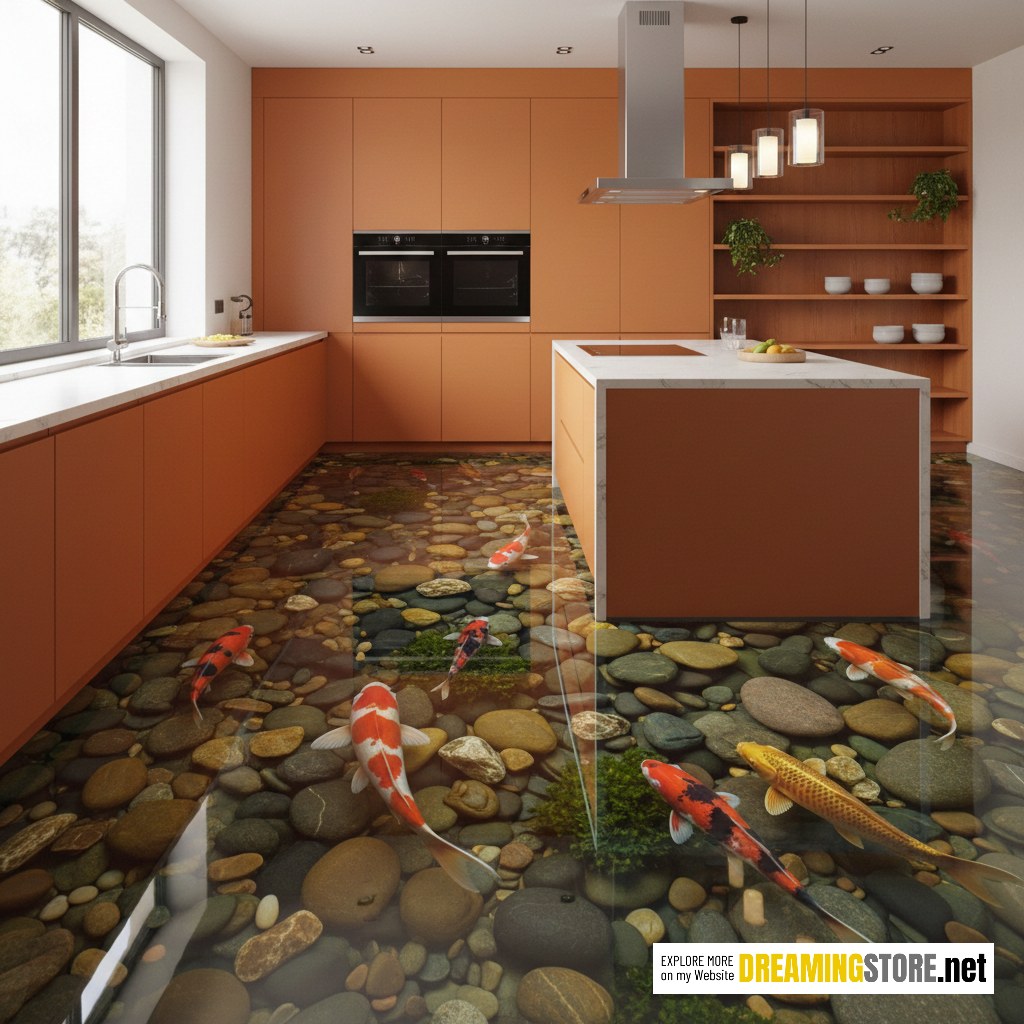
Imagine stepping into your kitchen and feeling like you’re walking over a serene koi pond. Beneath your feet, glistening pebbles shimmer through crystal-clear resin, and vibrant fish seem to swim naturally across the floor. This is the enchanting reality made possible by Aquarium Flooring — an innovative design movement that merges artistic illusion with modern interior functionality.
For homeowners seeking a unique fusion of tranquility, creativity, and sophistication, Koi Pond Aquarium Floor offers an extraordinary way to transform everyday cooking spaces into immersive environments inspired by aquatic life. In this article, we’ll dive into how this design innovation is redefining the concept of kitchen flooring, exploring its materials, installation techniques, customization options, and why it’s quickly becoming a must-have trend for luxury interiors in 2026.
Understanding Aquarium Flooring: A 3D Experience Underfoot
At its core, Aquarium Flooring is a high-gloss epoxy resin surface embedded with 3D imagery — often featuring koi fish, coral reefs, or underwater stones. Using advanced layering technology, it creates the illusion of depth and motion, giving the floor a life-like aquatic effect. The top layer is transparent and polished to perfection, producing a durable, mirror-like finish that reflects light beautifully throughout the kitchen.
Why It’s Different from Traditional Flooring? – Unlike tiles, hardwood, or vinyl, Koi Pond Aquarium Floor isn’t just a surface — it’s an optical experience. It engages sight and emotion, allowing homeowners to feel connected to nature while cooking or entertaining. The epoxy coating not only preserves the 3D design beneath but also provides superior water resistance, scratch protection, and long-term shine.
This visual immersion gives kitchens a spa-like calmness, combining the organic beauty of water with the precision of modern craftsmanship.
The Evolution of Aquarium Flooring in Interior Design
Over the last decade, Aquarium Flooring has evolved from niche art installations to mainstream luxury design. Initially popularized in boutique restaurants and ocean-themed hotels, it is now embraced by homeowners who want to personalize their living spaces in creative, nature-inspired ways.
-
Early 2010s: Introduction of 3D epoxy floors in commercial showrooms.
-
2015–2018: Rising popularity of koi and coral motifs in home interiors.
-
2020s: Technological advancements allow photorealistic prints sealed with transparent resin for realistic aquatic visuals.
-
2025: Integration with smart lighting systems that simulate moving reflections of water on walls and ceilings.
Today, Koi Pond Aquarium Floor represents more than a design statement — it’s a lifestyle choice symbolizing calmness, prosperity, and creativity, perfectly aligned with the mindfulness movement in home design.
The Art and Science Behind Aquarium Flooring
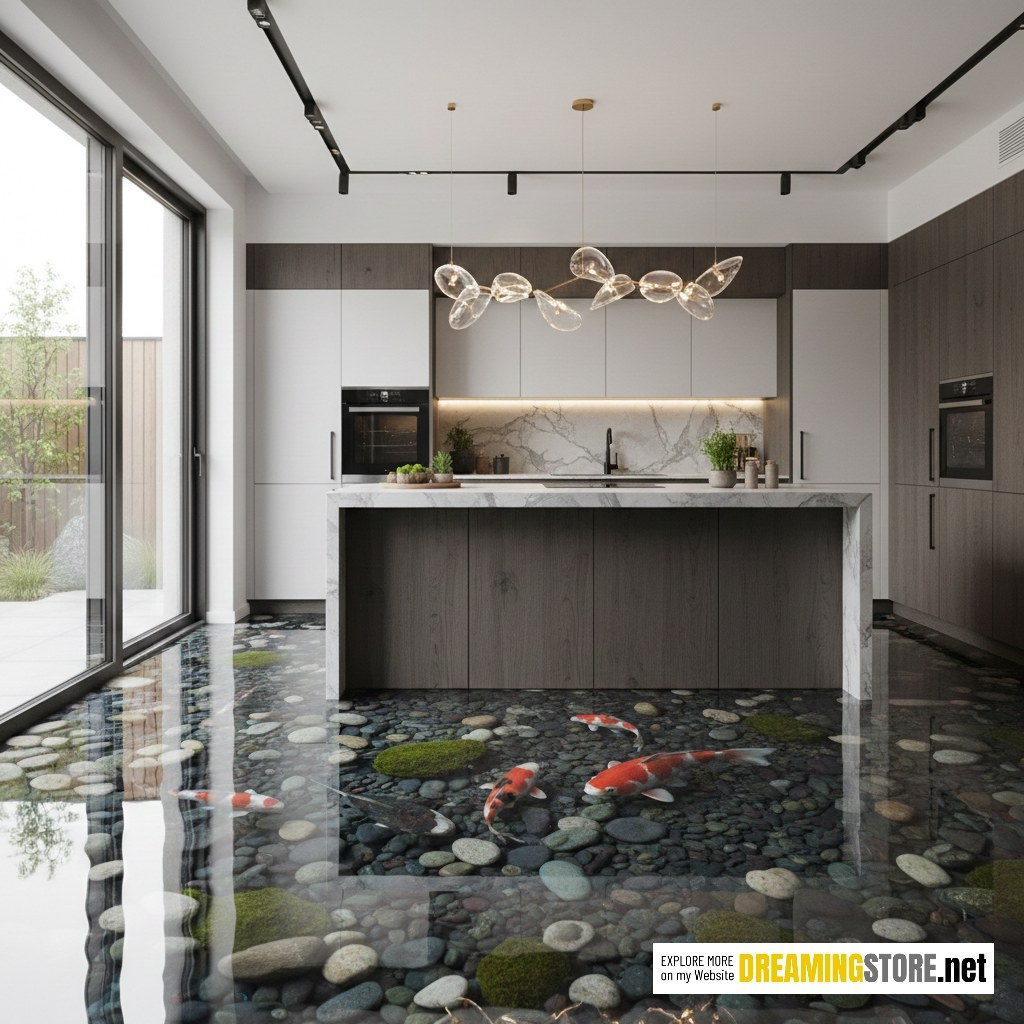
The magic of Koi Pond Aquarium Floor lies in its meticulous layering technique. Each installation involves multiple stages of preparation, digital design, and epoxy application.
- Base Preparation: The subfloor is cleaned, leveled, and primed for adhesion.
- Image Placement: A high-resolution 3D print (often depicting water, stones, or koi fish) is carefully applied.
- Epoxy Layering: Several transparent layers of epoxy resin are poured over the image to create depth.
- Curing and Polishing: Once cured, the surface is polished to a glass-like finish, producing the signature aquarium effect.
The combination of artistic design and industrial precision ensures every Aquarium Flooring installation feels like a unique underwater world frozen beneath your feet.
Refer to similar product models: Click here
Materials Used in Aquarium Flooring
Epoxy Resin — The Transparent Hero
Epoxy resin is the backbone of Aquarium Flooring. It’s known for its crystal clarity, high durability, and resistance to stains, moisture, and chemical spills — all essential qualities for kitchen environments.
3D Printed Imagery
Using UV-resistant ink, the 3D images are printed on specialized sheets to maintain color vibrancy even after years of exposure to light. Popular visuals include koi ponds, coral reefs, ocean waves, and even fantasy sea creatures for themed designs.
Pebbles, Shells, and Real Elements
For an ultra-realistic touch, designers often embed real stones, crushed glass, or seashells beneath the resin layer. This creates tactile beauty and texture variation that enhances the natural illusion of depth.
Why Choose Aquarium Flooring for Kitchens?
Aesthetics That Inspire
The mesmerizing 3D visuals instantly make the kitchen the heart of the home. The shimmering water illusion adds tranquility, turning ordinary meal prep into a relaxing experience.
Easy Maintenance
Unlike traditional flooring that can trap dirt or warp with moisture, Koi Pond Aquarium Floor is completely sealed. A quick mop and mild cleaner are all you need to keep it spotless and glossy.
Durability and Longevity
Epoxy floors can last up to 20 years with proper care. Their impact-resistant surface is ideal for high-traffic kitchen areas.
Customization Possibilities
Whether you prefer minimalist pebble ponds or colorful koi schools, Aquarium Flooring can be tailored to your imagination — even matching your cabinetry or lighting color palette.
Design Inspirations: Koi, Coral, and Beyond
Every homeowner has a unique story to tell through design. Aquarium Flooring becomes that storytelling medium, transforming your kitchen into an art piece.
Koi Pond Designs
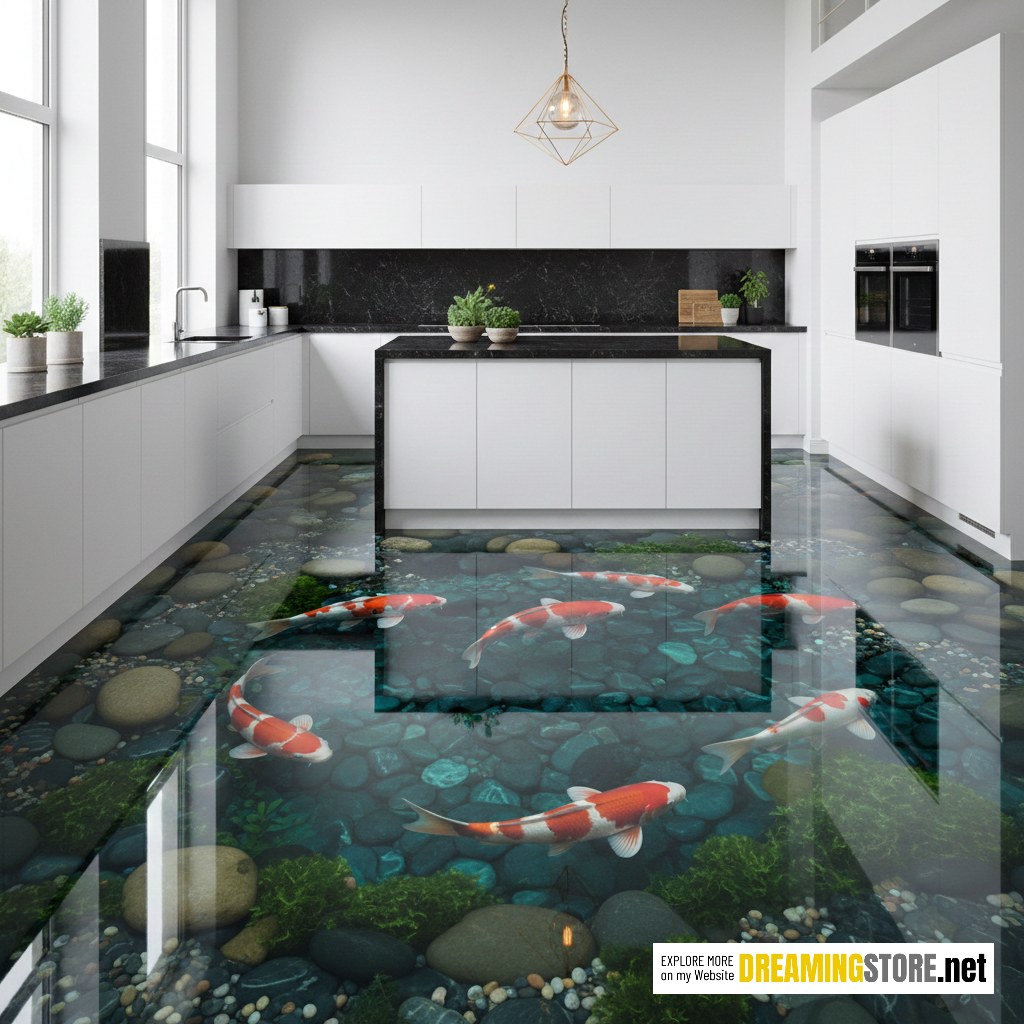
Koi fish are symbols of strength, prosperity, and serenity in Asian culture. Their flowing movements and vivid colors give the floor an ethereal beauty. Designers often use koi in circular motion patterns to represent harmony.
Ocean Reef Designs
For beach lovers, coral reef visuals bring tropical vibes indoors. Blues, greens, and subtle sandy hues create a coastal sanctuary right in your kitchen.
Modern Minimalist Designs
If you prefer sleek simplicity, clear pebble bases or gentle wave textures pair beautifully with neutral cabinetry, giving a modern spa-like appeal.
Installation Overview: What to Expect
Installing Koi Pond Aquarium Floor is both an art and a technical process, typically requiring skilled professionals.
Preparation
-
Surface Inspection: Check for cracks or uneven levels.
-
Cleaning: Remove dust and oil to ensure adhesion.
-
Priming: Apply a bonding layer for epoxy grip.
3D Image Placement and Pouring
Once the design image is perfectly positioned, epoxy resin is mixed and poured evenly in layers. Each coat must dry before adding the next, creating a transparent visual depth that feels almost holographic.
Curing Time
The complete curing process takes between 48–72 hours, depending on humidity and temperature. During this period, no one should walk on the surface to prevent imperfections.
Lighting: Enhancing the Underwater Illusion
Lighting plays a crucial role in bringing Koi Pond Aquarium Floor to life. LED strips or spotlights can be strategically positioned to mimic sunlight filtering through water.
-
Edge LEDs: Add illumination around kitchen islands for depth.
-
Soft Ceiling Glow: Reflect gentle blue tones across the floor.
-
Smart Light Sync: Program lighting changes to simulate fish movement or water shimmer.
This dynamic interplay of light and design transforms your kitchen into a living art installation.
Maintenance and Longevity Tips
While Aquarium Flooring is highly durable, proper maintenance ensures it remains stunning for decades.
-
Avoid abrasive cleaners; use mild soap and microfiber mops.
-
Place felt pads under furniture to prevent scratches.
-
Reapply a clear topcoat every 5–7 years to maintain gloss.
-
Keep humidity balanced to protect the resin’s integrity.
With these simple habits, your kitchen floor will stay as breathtaking as the day it was installed.
Customization & Personalization Ideas
The beauty of Koi Pond Aquarium Floor lies in how deeply personal it can be. Here are some creative directions homeowners often explore:
-
Family Symbolism: Incorporate koi in colors representing family members.
-
Personal Photography: Some designers can embed custom underwater photos or artwork.
-
Seasonal Lighting Themes: Pair floor lighting with holiday or seasonal décor.
-
Luxury Embeds: Crystals, gold flakes, or mother-of-pearl pieces for premium finishes.
Each project becomes an exclusive design statement reflecting the homeowner’s personality and taste.
Cost Breakdown (2026 Guide)
Pricing for Koi Pond Aquarium Floor varies depending on design complexity, materials, and square footage.
| Category | Approximate Cost (USD per sq. ft.) | Details |
|---|---|---|
| Basic 3D Print with Clear Epoxy | $25–$40 | Simple pond or stone visuals |
| Custom Koi or Coral Design | $45–$70 | Personalized graphics & deeper layering |
| Premium Epoxy + Lighting Integration | $75–$110 | Embedded LEDs & high-gloss finish |
| Full Luxury Edition | $120+ | Custom art, shell inlays, metallic epoxy |
While the initial investment may seem high, the visual impact and durability make Aquarium Flooring a valuable long-term addition to your home.
Refer to buy similar products: Click here
Popular Color Palettes for Modern Kitchens
To achieve harmony between cabinetry and Aquarium Flooring, designers often recommend complementary palettes:
-
White & Black Minimalism: Highlights vivid koi designs.
-
Warm Earth Tones: Amber pebbles with terracotta cabinets.
-
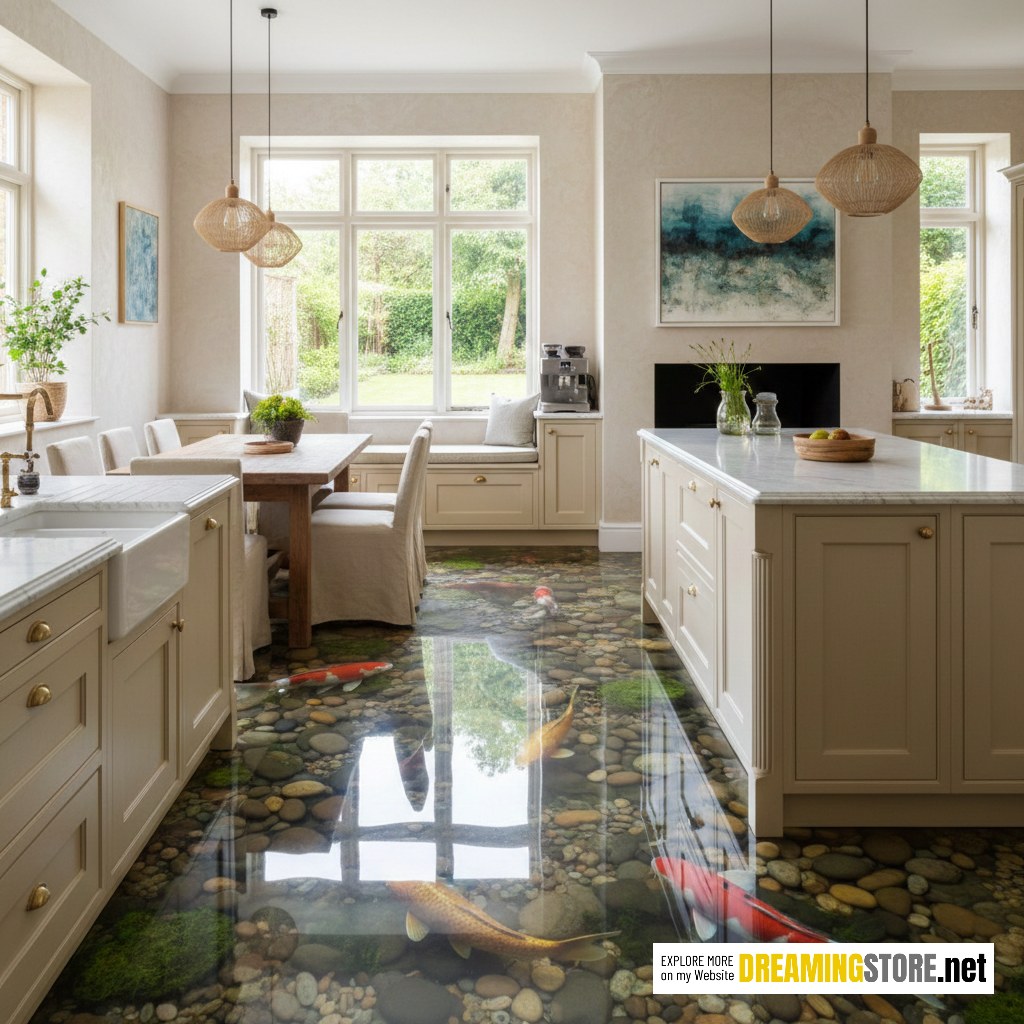
Soft Beige & Cream: Enhances natural riverbed aesthetics.
-
Charcoal & Deep Blue: Creates a sleek, urban aquatic vibe.
These color combinations help balance the flooring’s dynamic design while maintaining visual elegance.
Eco-Friendly Aspects of Aquarium Flooring
Modern epoxy materials are now developed with low-VOC (volatile organic compound) formulas, making Koi Pond Aquarium Floor safer for indoor air quality. Many suppliers also use recyclable 3D print substrates and eco-resins that reduce environmental impact.
Additionally, its long lifespan minimizes the need for frequent replacements — a sustainable advantage compared to disposable flooring options.
The Psychology of Aquarium Design
The reason Aquarium Flooring feels so calming lies in color psychology. Shades of blue, green, and soft neutrals are proven to reduce stress and enhance focus. The sight of koi fish in motion evokes a meditative state, encouraging mindfulness — a rare quality for such a functional room.
In essence, this flooring doesn’t just decorate your home; it uplifts your mood.
Future Trends: Smart and Interactive Flooring
Designers are already experimenting with Aquarium Flooring that includes interactive LED systems. These smart floors mimic gentle ripples or fish movement as you walk, bringing an even more immersive experience. Integration with motion sensors and AR (augmented reality) projection is expected to redefine home interiors in the next few years.
Imagine walking across your kitchen floor while digital koi swim gracefully beneath your feet, reacting to your every step — that’s the next level of design innovation.
Why Aquarium Flooring Is the Future of Kitchen Design?
As modern homeowners seek deeper connections with nature and art, Koi Pond Aquarium Floor stands out as a remarkable innovation. It brings serenity to daily life while showcasing exceptional craftsmanship and technology.
From minimalist koi ponds to elaborate coral ecosystems, each design tells a story — turning kitchens into spaces of inspiration, not just utility. It’s an art form beneath your feet, a daily reminder that design should not only serve the home but also the soul.
In the world of contemporary interiors, few trends capture the imagination like Aquarium Flooring. It’s where art meets engineering — a floor that transcends function to deliver emotion, beauty, and mindfulness. For designers, architects, and homeowners alike, it represents the perfect marriage between creativity and comfort.
If you’re ready to transform your kitchen into an underwater masterpiece, Koi Pond Aquarium Floor is your gateway to living art — one that invites you to walk, cook, and dream above a world of shimmering serenity.