In the world of interior design, creativity knows no boundaries. Among the most innovative trends capturing global attention in 2025 are Fruit Staircases — a mesmerizing blend of functionality, playfulness, and artistic expression. Imagine climbing stairs shaped like slices of apples, glowing pineapples, or rich red strawberries. These imaginative designs bring a refreshing, organic touch to homes and commercial spaces, transforming an ordinary architectural element into a stunning centerpiece.
Whether you’re an architect, designer, or homeowner looking to make a statement, Fruit-inspired Staircases offer an extraordinary way to blend art, nature, and architecture. In this detailed guide, we’ll explore their materials, cost considerations, installation tips, and why this unique design movement is fast becoming a hallmark of luxurious and creative interiors.
The Concept Behind Fruit Staircases
Fruit Staircases are more than just stairs — they are sculptural elements that transform interiors into dynamic art installations. Inspired by nature’s most colorful and textural forms, these staircases often mimic fruits like apples, pineapples, strawberries, and melons. The designs can vary from hyper-realistic to minimalist interpretations, depending on the architectural style of the space.
The core philosophy behind Fruit-inspired Staircases lies in biophilic design — connecting humans with natural aesthetics. Each step becomes a representation of organic beauty, encouraging warmth, creativity, and joy in everyday life. In modern homes or commercial art galleries, they serve both as functional elements and as conversation-starting pieces of art.
Popular Fruit Staircase Designs
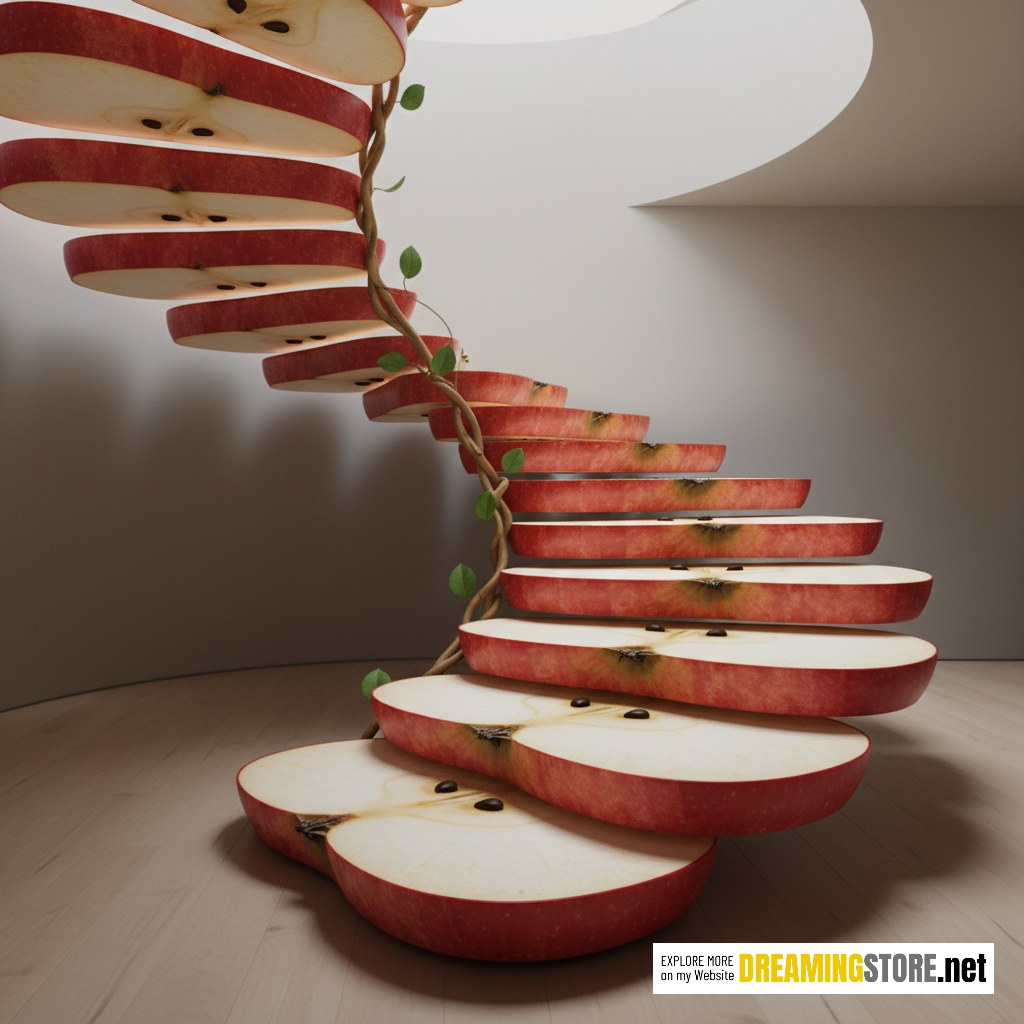
Apple Spiral Staircase – Each step resembles a crisp apple slice, with red exteriors and white interiors. The stem-like central column may even include green leaves winding upward for added realism.
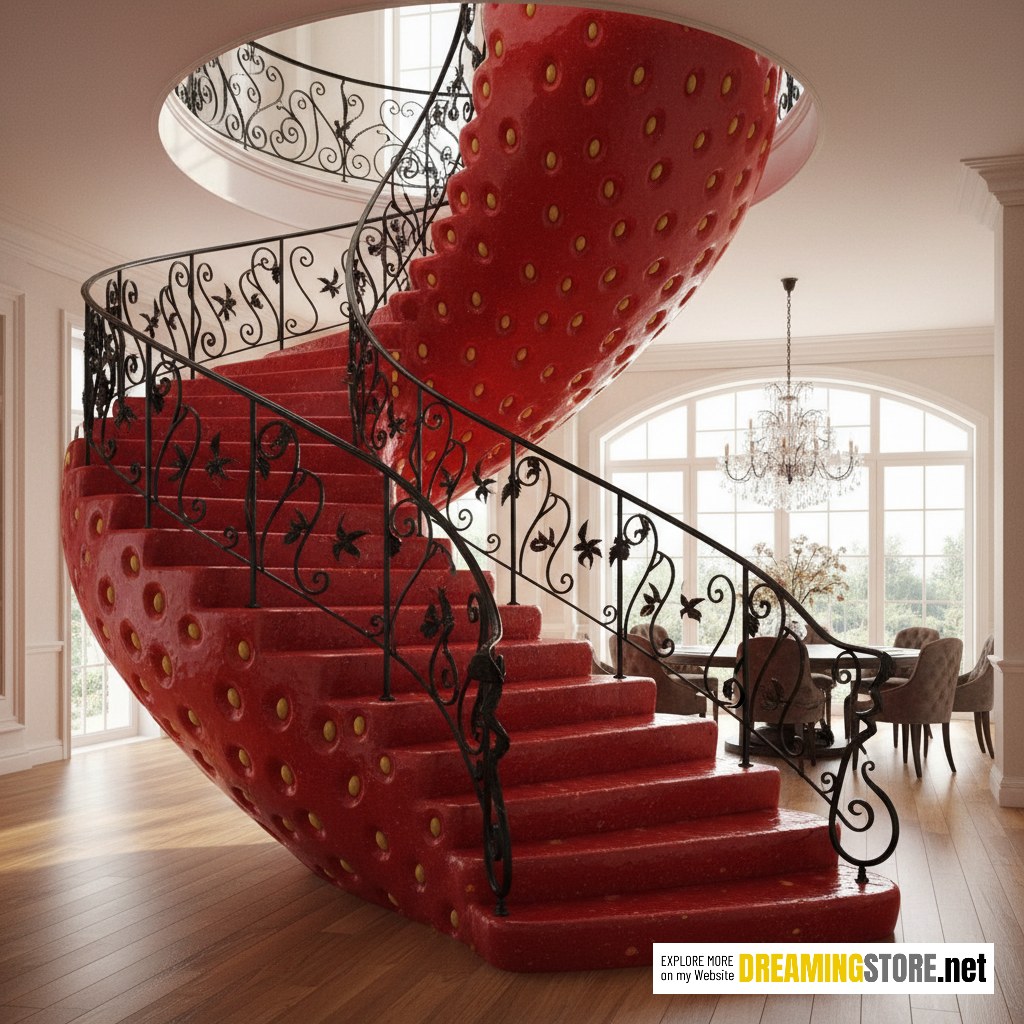
Strawberry Grand Staircase – A luxurious, curved staircase shaped like a giant strawberry with tiny golden seeds embedded into red surfaces. Ideal for opulent living rooms or artistic venues.
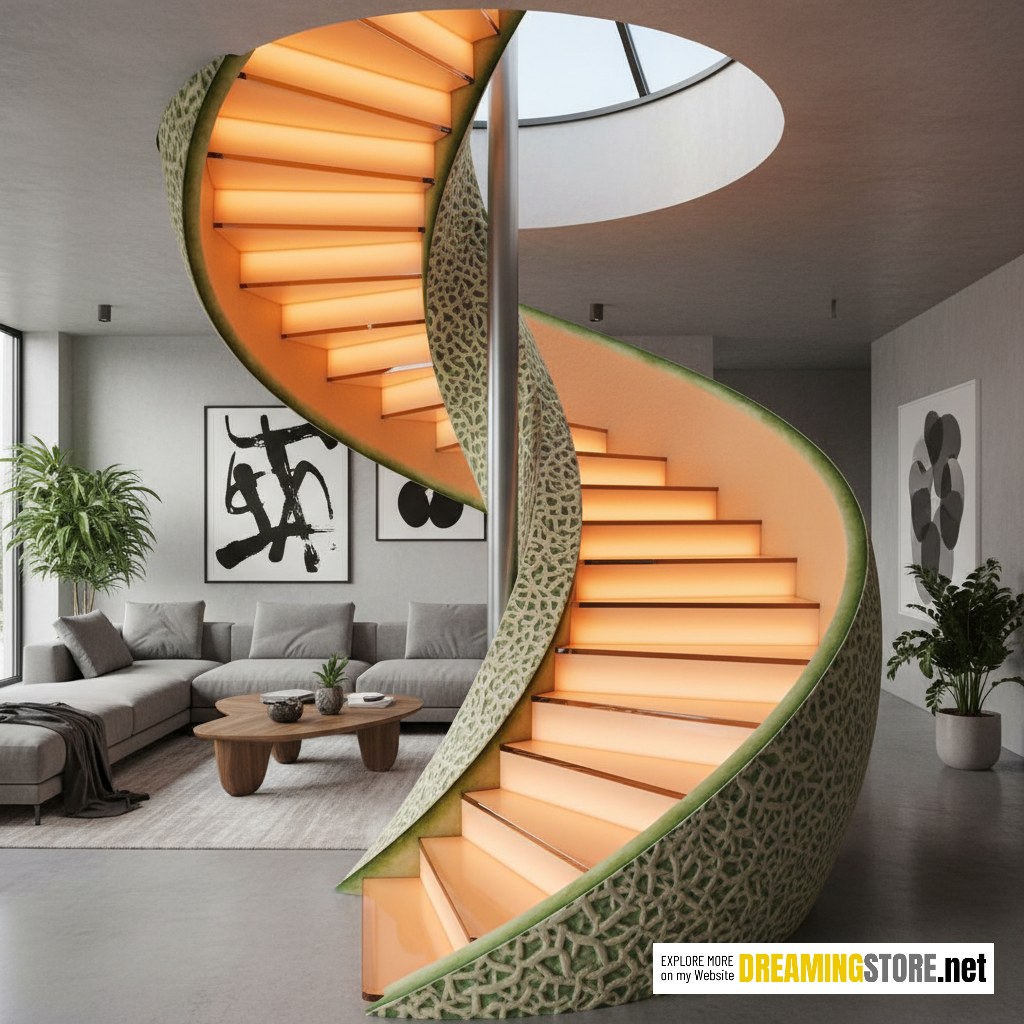
Melon Spiral Staircase – Designed with a smooth, green outer shell and glowing orange treads, creating a soft illuminated path that enhances modern interiors.
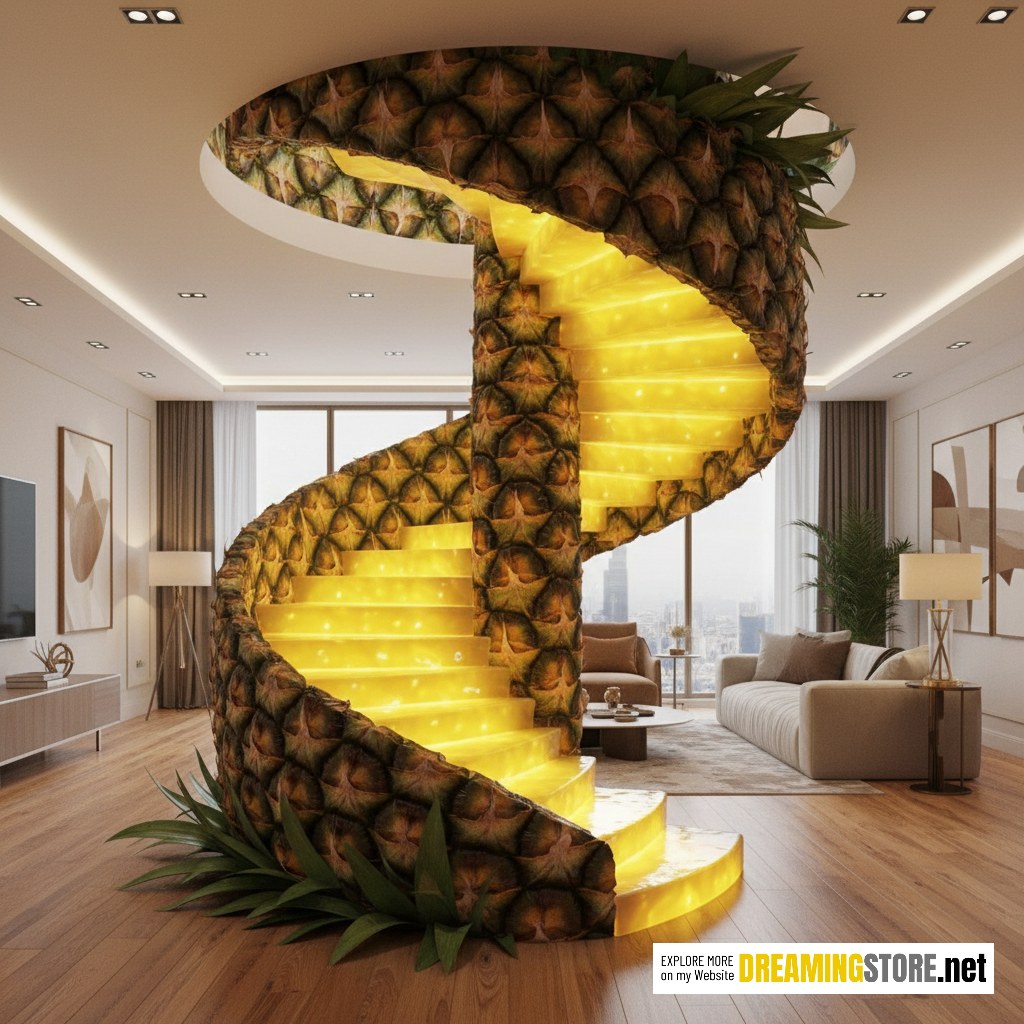
Pineapple Staircase – Featuring textured yellow-gold steps and geometric patterns that replicate pineapple skin, complete with LED lighting for a tropical atmosphere.
Each type of Fruit Staircase tells a different design story, suited to various styles — from tropical modernism to maximalist interiors.
Materials Used in Fruit Staircases
To achieve the realistic yet durable structure of Fruit-inspired Staircases, designers rely on a combination of advanced materials and artistic craftsmanship. Let’s explore the most common ones:
1. Fiberglass Reinforced Polymer (FRP)
Lightweight yet strong, FRP is one of the most common materials for sculptural staircases.
It allows for smooth curvature and intricate fruit-like detailing, especially useful in spiral designs.
Resistant to humidity and temperature changes, making it suitable for both indoor and semi-outdoor installations.
2. Epoxy Resin and Polyurethane Coatings
Epoxy is often used to achieve glossy, fruit-like surfaces that mimic the shine of real fruit skin.
Transparent epoxy layers can also create depth, particularly for apple or citrus staircases.
Polyurethane provides extra durability and protection from scratches or UV fading.
3. Steel Framework and Substructure
Beneath the artistic surface lies a steel or reinforced aluminum skeleton.
This framework provides structural integrity and supports the weight of the fruit-inspired treads.
4. LED Integration and Smart Lighting
Many Fruit-inspired Staircases incorporate built-in LED strips that mimic the inner glow of fruit flesh.
Lighting can be customized for brightness, color temperature, or even seasonal effects.
5. Natural Finishing Materials
Designers may blend synthetic art with natural textures such as real wood veneers, leaf accents, or stone elements.
Eco-friendly resins or plant-based polymers are also gaining popularity among sustainability-conscious homeowners.
Cost Guide: How Much Do Fruit Staircases Cost in 2025?
Building Fruit Staircases is a specialized art-meets-engineering project, and costs can vary significantly depending on complexity, materials, and customization.
1. Basic Design (Conceptual Resin Finish)
Estimated Cost: $8,000 – $15,000
Includes fiberglass construction, simple fruit pattern detailing, and standard LED lighting.
Best for compact homes or art-themed cafés.
2. Mid-Range Design (Custom 3D Modeling & Detailing)
Estimated Cost: $20,000 – $40,000
Features realistic fruit texturing, integrated metal handrails, and ambient lighting.
Ideal for modern homes or boutique interior projects.
3. Premium Design (Architectural & Artistic Installations)
Estimated Cost: $50,000 – $100,000+
Involves full 3D modeling, high-end materials like carbon fiber, digital lighting effects, and custom craftsmanship.
Commonly installed in luxury villas, hotels, art museums, and creative studios.
Cost Factors to Consider
Material Quality: Resin and lighting upgrades add to cost.
Design Complexity: Spiral shapes and realistic detailing increase labor hours.
Installation Space: Multi-story spaces or open atriums may need reinforced substructures.
Location & Logistics: Custom staircases require on-site assembly, which can add 10–20% to total expenses.
Installation Tips for Fruit Staircases
Proper installation ensures safety, stability, and aesthetic harmony. Here are essential tips to follow:
1. Structural Assessment
Before installation, conduct a thorough architectural evaluation. Fruit-inspired Staircases are often heavy due to artistic layers, so ensure your flooring and foundation can handle the load.
2. Modular Construction
For large fruit designs, consider modular sections that can be assembled on-site. This approach reduces transportation risks and simplifies customization.
3. Professional Fabrication
Always hire professionals experienced in sculptural or epoxy-based installations. Specialized artisans understand the balance between art and engineering.
4. Lighting and Wiring
Integrate wiring channels during the design stage. LED lights should be embedded into steps or railings to avoid exposed cables, maintaining a seamless visual effect.
5. Surface Sealing
Apply a protective topcoat — especially for glossy fruit finishes. It preserves shine, prevents fading, and keeps the surface easy to clean.
6. Maintenance Planning
Design with easy cleaning access in mind. High-gloss epoxy and polyurethane surfaces can attract dust, but periodic polishing restores their brilliance.
Customization & Personalization Options
The beauty of Fruit Staircases lies in how easily they can be customized to match your interior vision. Here are a few ideas:
-
Color Variations: From pastel hues to hyper-realistic fruit tones.
-
Material Mix: Combine fruit textures with glass or wood for hybrid designs.
-
Embedded Art: Add vine-like railings, leaf-shaped handrails, or even sculpted fruit cores at landing points.
-
Smart LED Integration: Use RGB lighting to shift between colors — transforming your staircase into a dynamic art piece at night.
-
Scented Coatings (Experimental): Some designers experiment with micro-encapsulated scents, offering a faint fruit aroma.
Maintenance and Durability
Durability depends heavily on materials and environmental conditions. A well-built Fruit-inspired Staircase can last 15–25 years with minimal maintenance.
-
Clean surfaces using microfiber cloths and pH-neutral cleaners.
-
Reapply UV-resistant sealant every 3–5 years.
-
Inspect LED connections annually.
-
Avoid sharp objects that can scratch resin finishes.
Sustainability and Eco-Friendly Options
Modern consumers are increasingly eco-conscious, and Fruit Staircases can align beautifully with green design philosophies.
-
Use biodegradable resins derived from plant oils.
-
Opt for recycled steel or aluminum frameworks.
-
Incorporate natural lighting through skylights to minimize LED usage.
-
Pair fruit designs with indoor plants for a holistic biophilic environment.
Such approaches not only reduce the environmental footprint but also enhance indoor well-being.
Best Spaces to Install Fruit Staircases
Fruit Staircases thrive in environments where design meets creativity. Here are a few placement ideas:
-
Private Homes – Living rooms, lofts, or artistic studios.
-
Boutique Cafés – Perfect centerpiece for Instagram-worthy interiors.
-
Hotels & Resorts – Adds a tropical or luxurious vibe to lobbies.
-
Children’s Play Areas – Fun, imaginative, and educational installations.
-
Art Galleries & Museums – Blurs the line between functional design and sculpture.
Each location can adapt the staircase design to its mood — playful for public spaces, elegant for private homes.
DIY vs. Professional Installation
While some design enthusiasts may attempt DIY, Fruit-inspired Staircases typically require expert precision.
| Aspect | DIY Installation | Professional Installation |
|---|---|---|
| Skill Level | High | Moderate (handled by pros) |
| Cost | Lower initial cost | Higher but includes structural safety |
| Quality Finish | Risk of uneven surfaces | Perfectly polished, artistic finish |
| Durability | May degrade faster | Professionally sealed for longevity |
| Recommended For | Small projects | Homes, villas, hotels, or commercial spaces |
Unless you’re a trained fabricator, professional installation ensures both beauty and safety.
Estimated Timeline for Installation
| Phase | Duration | Description |
|---|---|---|
| Design Consultation | 1–2 weeks | Discuss fruit theme, materials, lighting, and layout. |
| 3D Modeling & Fabrication | 3–6 weeks | Create digital prototypes and cast components. |
| On-Site Installation | 1–2 weeks | Assemble and install the structure. |
| Final Finishing | 1 week | Apply coatings, lighting adjustments, and polishing. |
Total Time Estimate: 6–10 weeks depending on complexity.
Price Range 2025 Guide Summary
| Type | Typical Material | Estimated Cost | Ideal Setting |
|---|---|---|---|
| Apple Slice Spiral | FRP + Resin | $12,000–$25,000 | Small Modern Homes |
| Strawberry Curved Grand | Polyurethane + Metal | $30,000–$55,000 | Luxury Homes |
| Melon LED Spiral | Glass Fiber + LED | $25,000–$40,000 | Minimalist Interiors |
| Pineapple Textured Spiral | Epoxy + Lighting | $45,000–$80,000 | Hotels, Art Spaces |
FAQs About Fruit Staircases
1. Are Fruit-inspired Staircases safe for daily use?
Yes. Each step is structurally reinforced with metal framing, ensuring stability and compliance with safety standards.
2. Can I choose any fruit design I want?
Absolutely! Designers can replicate nearly any fruit — from bananas and oranges to kiwis and dragon fruit — depending on your creative vision.
3. Do they require special maintenance?
No special maintenance, but regular cleaning and sealing help maintain shine and prevent fading.
4. Are Fruit Staircases suitable for outdoor use?
Yes, if coated with weatherproof epoxy and UV-resistant finishes. Perfect for garden decks or tropical resorts.
5. Can lighting effects be customized?
Yes. RGB LED systems can create mood lighting effects — soft, warm, or even pulsing glow patterns.
6. How long do they last?
With proper care, Fruit Staircases can last decades, serving as both a design statement and durable architectural feature.
Refer to similar product models: Click here
Fruit Staircases redefine what it means to walk through art. Each step celebrates creativity, craftsmanship, and nature’s beauty. Whether you prefer the glossy red of a strawberry or the radiant yellow of a pineapple, these designs bring unmatched vitality into architectural spaces.
As 2025 moves toward more nature-inspired and expressive home trends, Fruit-inspired Staircases are poised to become an enduring symbol of imaginative living. They are not just a passage between floors — they are a passage between design and emotion, practicality and wonder.
For those looking to turn their interiors into extraordinary experiences, now is the perfect time to explore the world of Fruit Staircases — where functionality meets fantasy, and design becomes deliciously alive.