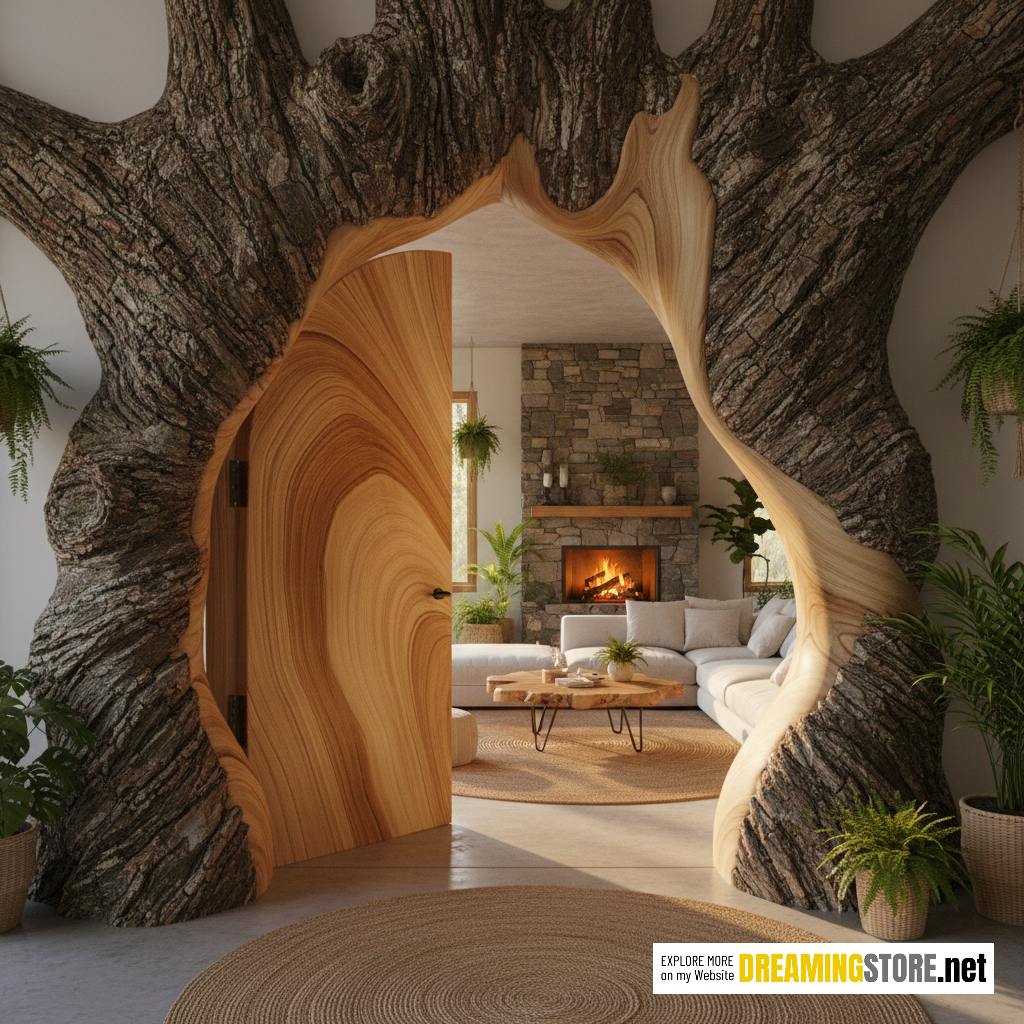
Imagine stepping into your living room through a sculpted passage carved from the heart of a tree. The scent of aged wood, the texture of bark beneath your fingertips, and the way the natural grain flows around you — it’s more than just a doorway; it’s a gateway to another world. A Tree Trunk Doorway transforms the ordinary entrance into a breathtaking architectural statement that connects craftsmanship with the raw beauty of nature.
Whether you’re building a rustic cabin retreat, enhancing a cozy modern home, or designing a fantasy-inspired living space, installing a tree-shaped doorway can be one of the most rewarding design projects you’ll ever undertake. This guide will walk you through every aspect — from planning and materials to installation and finishing — ensuring your own forest-born doorway feels both authentic and timeless.
Why Choose a Tree Trunk Doorway?
A Tree Trunk Doorway is not just about aesthetics; it’s about creating a story. Each ring in the wood, each knot and curve, tells a tale that brings warmth and organic texture into your home. Here are the main reasons homeowners and designers are embracing this natural masterpiece:
1. A Unique Connection to Nature
Wood’s tactile warmth and earthy aroma bring a sense of calm that synthetic materials simply can’t replicate. The tree-shaped doorway invites the outdoors in, turning your home into a living expression of biophilic design — where natural elements reduce stress and inspire tranquility.
2. Artistic and One-of-a-Kind Design
Every Tree Trunk Doorway is distinct. The irregular edges, twisted roots, and natural bark patterns ensure no two are ever alike. Whether the trunk is hollowed, split, or sculpted into a circular Hobbit-style entrance, it instantly becomes a focal point of your interior.
3. Durability and Longevity
Properly treated hardwood species such as oak, cedar, or walnut can last for decades. A Tree Trunk Doorway not only resists time but gains character as it ages — just like fine wine or weathered stone.
4. Adds Property Value
Unique craftsmanship and sustainable natural design are highly desirable in modern architecture. A tree-shaped doorway is a statement of luxury and individuality that increases both aesthetic and market value.
Planning Your Tree Trunk Doorway Installation
Before diving into the construction process, careful planning ensures safety, accuracy, and harmony with the home’s structure.
1. Define the Location
Decide whether your Tree Trunk Doorway will serve as:
-
The main entrance, offering guests a grand first impression.
-
An interior connector, such as between a living room and reading nook.
-
A decorative passage, framing a view or highlighting architectural symmetry.
The placement influences lighting, proportions, and the structural reinforcement needed.
2. Choose the Right Wood
Selecting the right trunk determines both aesthetics and practicality. Popular options include:
-
Oak: Dense, durable, and richly grained.
-
Cedar: Naturally resistant to decay and insects, perfect for humid climates.
-
Walnut: Deep color tones ideal for luxury interiors.
-
Pine: Softer, easier to carve, and more budget-friendly.
For a truly rustic look, retain parts of the bark. For a smoother modern feel, sand and seal the wood to highlight its natural swirls.
3. Measure the Space
A tree-shaped doorway must balance boldness with functionality. Measure:
-
Door width and height relative to ceiling beams and furniture.
-
Wall thickness and structural supports.
-
Clearance for the door swing if you include an operable slab inside the trunk.
Having detailed blueprints ensures your design integrates safely with the building’s load-bearing framework.
Tools and Materials You’ll Need
Installing a Tree Trunk Doorway involves both woodworking artistry and construction precision. Gather these essentials:
Tools
-
Circular or chainsaw (for trimming large trunks)
-
Chisels and carving knives
-
Measuring tape and spirit level
-
Power drill and screws
-
Clamps for alignment
-
Sanding tools or orbital sander
-
Protective gear (gloves, goggles, ear protection)
Materials
-
Chosen tree trunk or reclaimed timber
-
Steel or wooden support frame
-
Wood preservative and sealer
-
High-quality hinges and hardware (if the door is operable)
-
Expanding foam or natural insulation
-
Wood glue and finishing oil or varnish
Step-by-Step Installation Process
Step 1: Selecting and Preparing the Trunk
Start by sourcing a trunk that’s at least 10–12 inches thick and tall enough for your intended opening. Reclaimed or sustainably harvested wood is ideal. Remove any decayed sections and let the trunk air-dry to stabilize the moisture content. If the wood is freshly cut, allow it to season for several months to avoid warping later.
Step 2: Cutting and Shaping the Opening
Using a chainsaw or jigsaw, carefully carve out the passage. Decide whether the shape will be arched, circular, or irregular, depending on your design. Many homeowners prefer a circular or teardrop opening for its organic flow.
Smooth the inner edge with chisels, maintaining some natural texture to preserve authenticity. Sand gradually from coarse to fine grit to achieve a tactile finish that still feels hand-crafted.
Step 3: Building the Support Frame
Even if your Tree Trunk Doorway looks rustic, it needs solid engineering underneath. Construct a sub-frame from steel or hardwood that anchors the trunk to the wall studs or stone façade. This prevents shifting or cracking over time.
Ensure the frame:
-
Fits snugly into the wall cavity.
-
Is anchored with bolts into structural beams.
-
Leaves room for the trunk to expand or contract with seasonal humidity.
Step 4: Installing the Door (Optional)
Some designs feature a door cut directly into the trunk, while others use a separate slab of curved wood. For functional doors:
-
Attach concealed or rustic strap hinges.
-
Align perfectly with the circular or organic shape.
-
Check for smooth operation before sealing the edges.
Step 5: Securing and Sealing
Once positioned, secure the trunk with brackets or hidden steel rods. Apply expanding foam or natural insulation to seal gaps between the wall and trunk. This step also improves energy efficiency by minimizing drafts.
Finish by brushing on a coat of preservative oil followed by polyurethane or eco-friendly varnish for protection against moisture and insects.
Step 6: Finishing Touches
To complete your tree-shaped doorway, integrate small design accents:
-
Moss or greenery at the base for a fairy-tale aesthetic.
-
LED strip lights hidden inside the bark crevices for ambient glow.
-
Carved initials or engraved runes for a personal signature.
-
Natural stone or slate flooring to enhance the forest vibe.
Design Variants & Inspiration
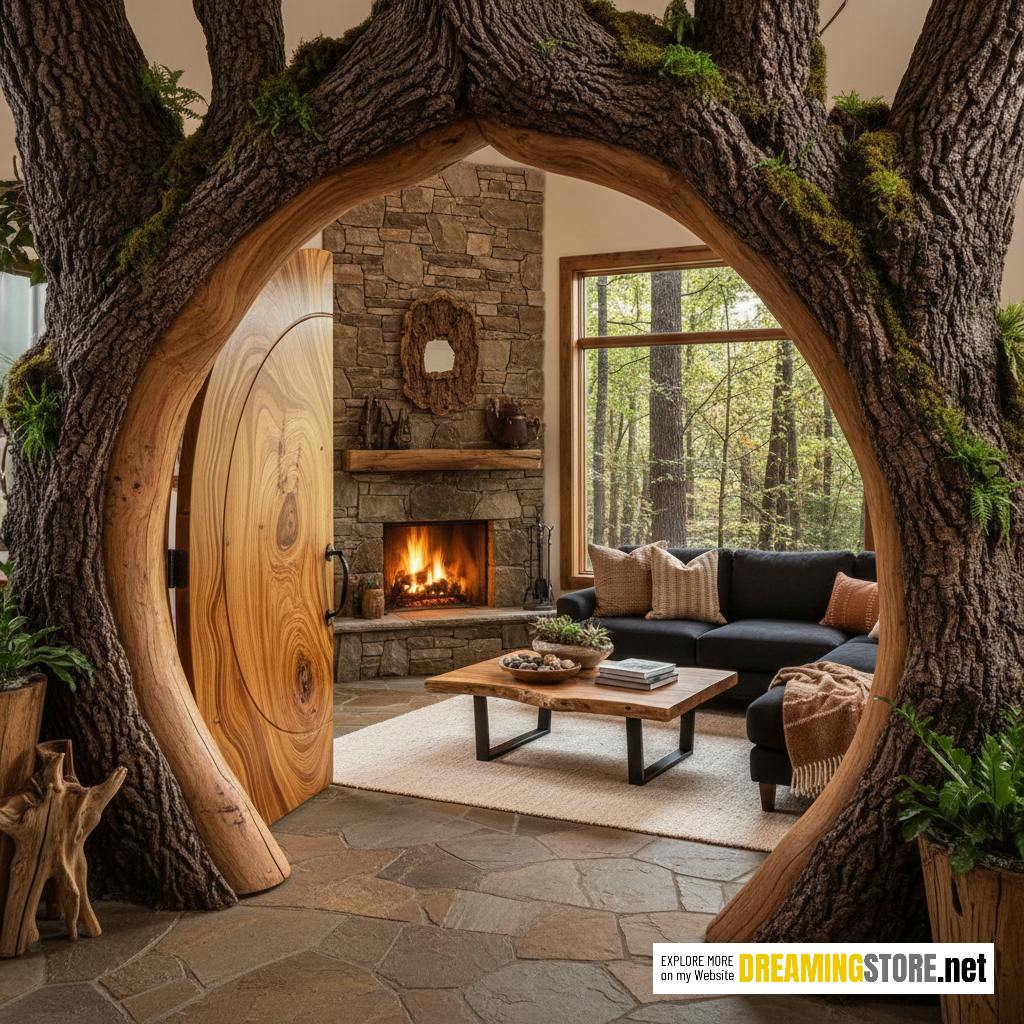
1. The Circular Hobbit-Style Doorway
Perfect for fantasy-themed interiors, this round Tree Trunk Doorway channels the cozy warmth of Tolkien’s Shire. Pair it with brass handles and soft-edged furniture to complete the look.
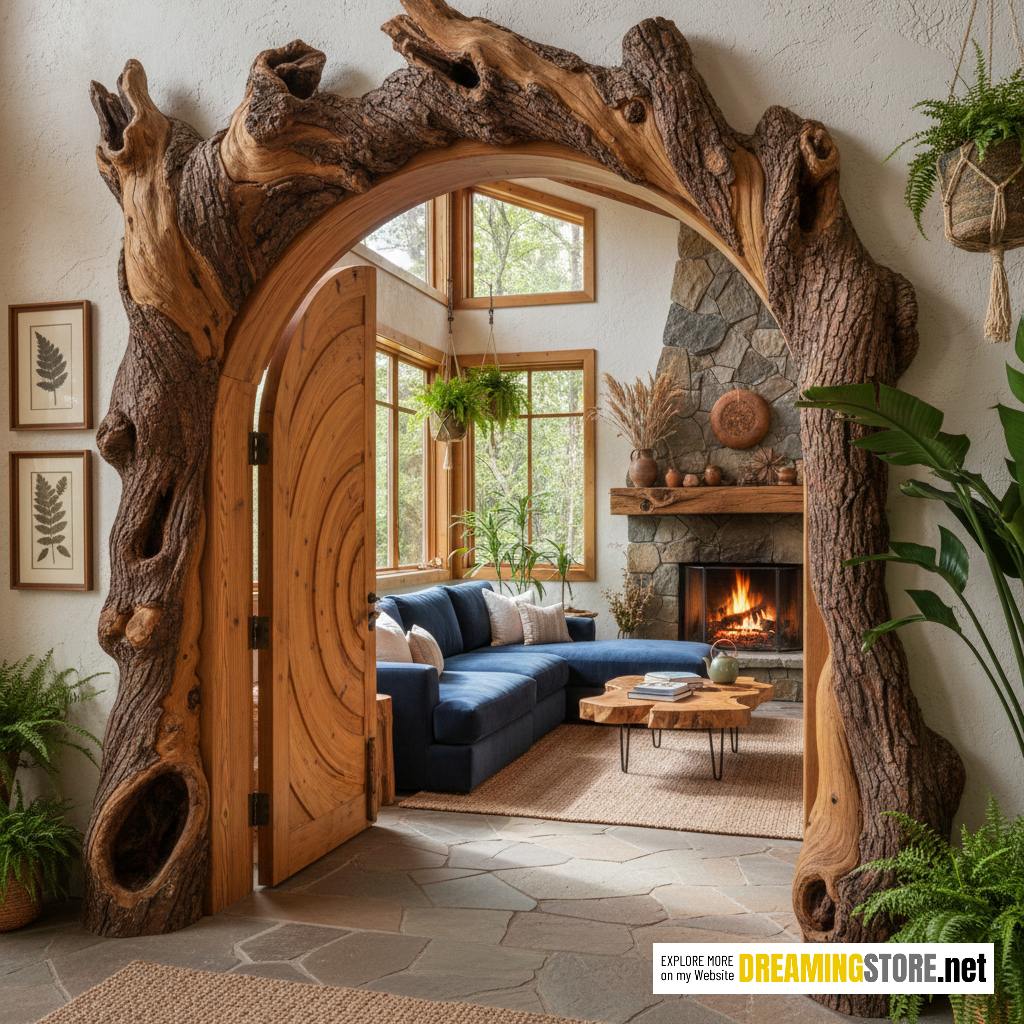
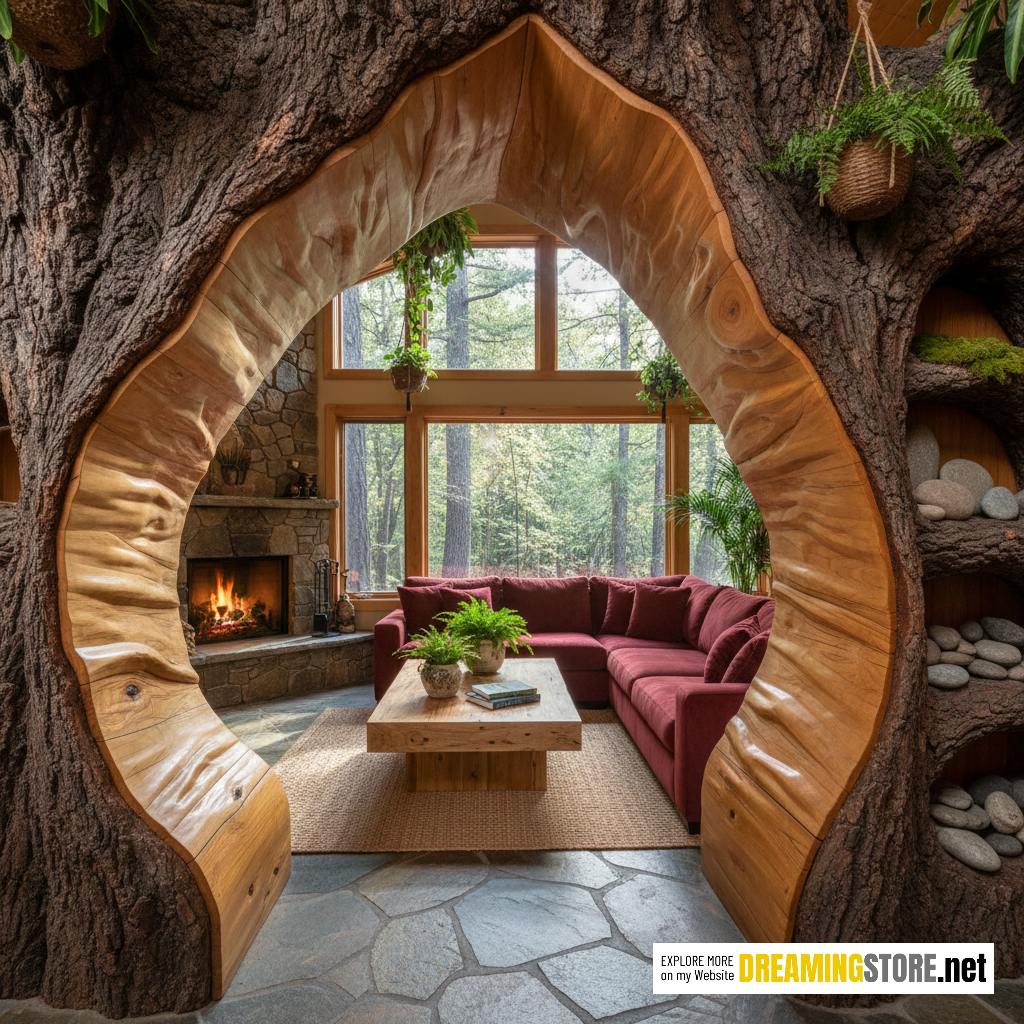
2. Organic Archway with Exposed Bark
This version preserves the rugged outer bark, creating a dramatic contrast between rough exterior and polished inner edges — a favorite among rustic cabin and woodland retreat owners.
3. Split-Log Entrance
A vertical split trunk design reveals concentric growth rings, highlighting the passage of time. This is ideal for modern homes that merge natural art with minimalism.
4. Sculpted Wave Doorway
Curving asymmetrical lines mimic the flow of tree sap or wind-shaped trunks. It’s a showstopper in contemporary settings emphasizing craftsmanship and artistic form.
Materials & Durability
When built correctly, a tree-shaped doorway is not only visually stunning but incredibly strong. Proper treatment ensures longevity against common threats like moisture, termites, and warping.
Preservation Tips
-
Apply borate-based insect repellent before sealing.
-
Use UV-resistant finishes to prevent fading if exposed to sunlight.
-
Reapply protective oils every two years to maintain rich tones.
-
Avoid direct contact with concrete floors — elevate slightly on a moisture barrier.
Expected Lifespan
With maintenance, high-quality hardwood trunks can last 40–70 years indoors. Even softer woods like pine endure for decades when properly sealed.
Installation Costs & 2025 Price Guide
The cost of installing a Tree Trunk Doorway varies by size, wood type, and customization level. Here’s a general breakdown for 2025:
| Type | Approximate Cost (USD) | Description |
|---|---|---|
| DIY Trunk Kit | $1,200 – $2,500 | Pre-cut sections for easy self-installation |
| Custom Hand-Carved Doorway | $4,000 – $9,000 | Artisan-crafted, includes fitting and sealing |
| Large Architectural Feature | $10,000 – $18,000+ | Integrated lighting, full arch frame, or reclaimed timber build |
Labor costs range between $60–$120 per hour depending on complexity and region.
Refer to similar product models: Click here
DIY vs. Professional Installation
DIY Installation
If you’re experienced with woodworking and construction tools, installing a tree-shaped doorway yourself can be an incredibly rewarding project. It allows for full customization and a hands-on connection with the craft. However, DIY projects require:
-
Advanced cutting precision.
-
Knowledge of structural reinforcement.
-
Patience for drying, sanding, and finishing phases.
Professional Installation
Hiring a professional carpenter or artisan ensures flawless execution, perfect alignment, and long-term durability. Professionals often use laser measurements and hidden supports for safety and aesthetic perfection. While costlier, professional installation guarantees stability and premium finishes that stand the test of time.
Sustainability Considerations
Modern artisans emphasize sustainability by using reclaimed wood or fallen trees rather than harvesting living forests. Many suppliers offer certified eco-friendly trunks treated with non-toxic sealants. When choosing your materials:
-
Ask for FSC certification (Forest Stewardship Council).
-
Opt for local species to reduce carbon footprint.
-
Reuse wood offcuts for shelves, mantels, or décor.
Your Tree Trunk Doorway can thus symbolize not only beauty but also responsibility toward nature.
Frequently Asked Questions (FAQs)
1. How long does it take to install a Tree Trunk Doorway?
A standard installation takes 3–5 days, including preparation, mounting, and sealing. Custom designs with embedded lighting or carvings can take several weeks.
2. Can I install it in an existing wall?
Yes! A tree-shaped doorway can be retrofitted into most interior or exterior walls with professional support. The wall must be inspected for load-bearing capacity.
3. Does it work in humid climates?
Absolutely — as long as you use treated wood and a good sealant. Cedar and teak perform exceptionally well in moisture-rich environments.
4. Can I customize the shape?
Yes. Many homeowners choose irregular organic openings or circular Hobbit-style frames. Artists can carve custom patterns or integrate glass panels.
5. Is it eco-friendly?
When made from reclaimed or sustainably sourced timber, a Tree Trunk Doorway is highly eco-friendly and adds to the green architecture movement.
6. How should I maintain it over time?
Regular oiling and gentle cleaning keep the wood vibrant. Avoid harsh sunlight or direct heat sources that can cause dryness.
7. Can LED lighting be added?
Yes! Discreet warm LEDs along the inner arch enhance depth and highlight the grain, giving your doorway a magical glow.
Installing a Tree Trunk Doorway is more than a renovation; it’s a poetic gesture that turns architecture into storytelling. Each curve, knot, and swirl of wood connects you to the living memory of the forest, blending structure and soul in one breathtaking frame.
Whether you’re pursuing rustic warmth, fantasy escapism, or natural luxury, this timeless design transforms how you experience space. As you pass through it each day, the tree-shaped doorway becomes a reminder of nature’s artistry — grounding, inspiring, and eternally alive.
So take your time choosing the right trunk, honor its history, and let your doorway stand as a masterpiece of craftsmanship and imagination.