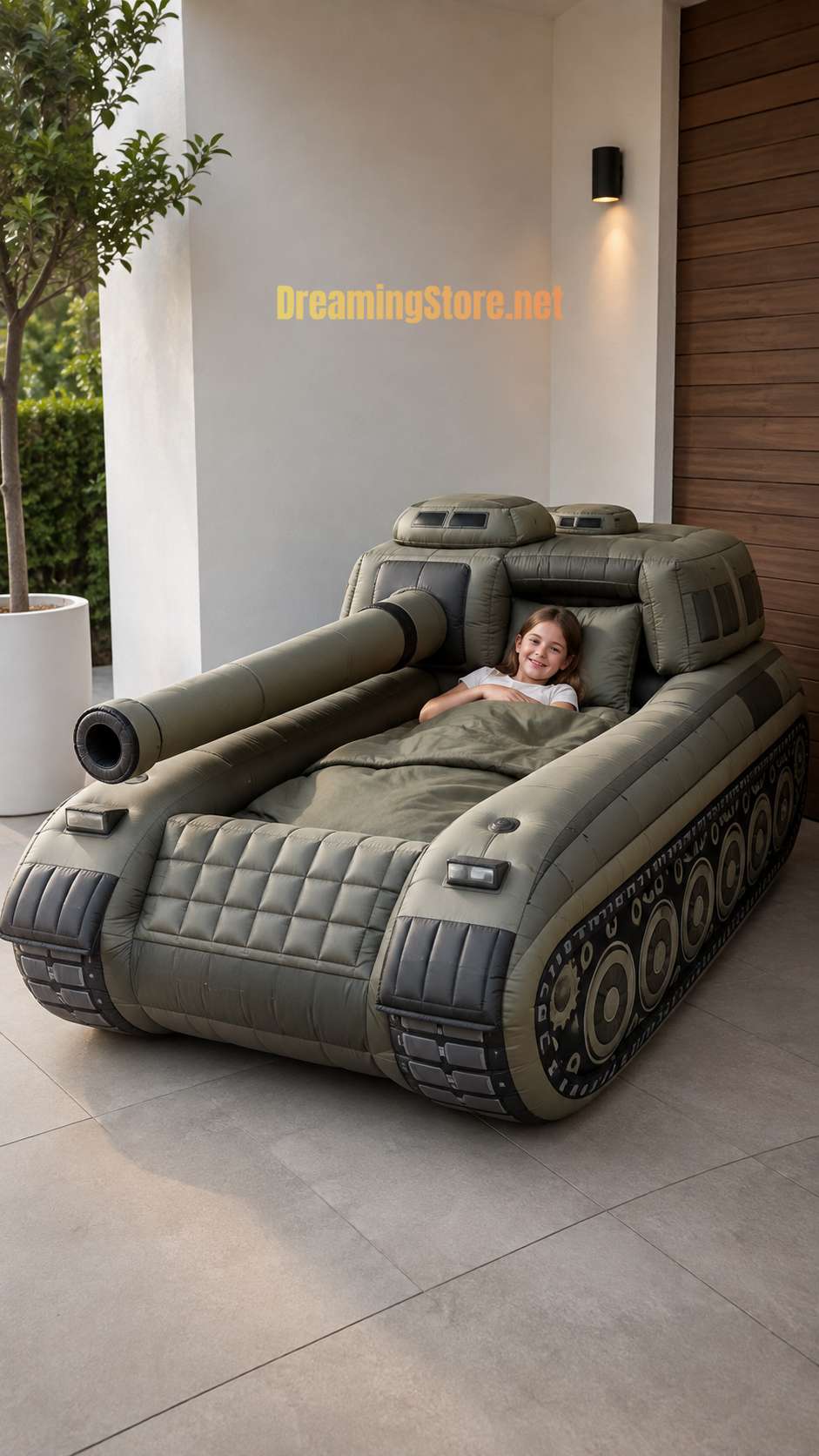
A giant foam tank bed turns an ordinary bedroom or living space into a playful fortress. These oversized, tank-shaped loungers combine soft foam construction with realistic military details—turrets, tracks, and glowing “headlights”—while delivering genuine sleep and rest support. Parents buy them for children who love imaginative play; adults choose them for novelty seating or as conversation-piece daybeds.
Regardless of age, three technical factors decide whether a giant foam tank bed stays comfortable and intact for years: foam density, fabric quality, and overall durability. This article examines each factor in detail so you can select a model that balances fun with long-term performance.
Understanding the Giant Foam Tank Bed Concept
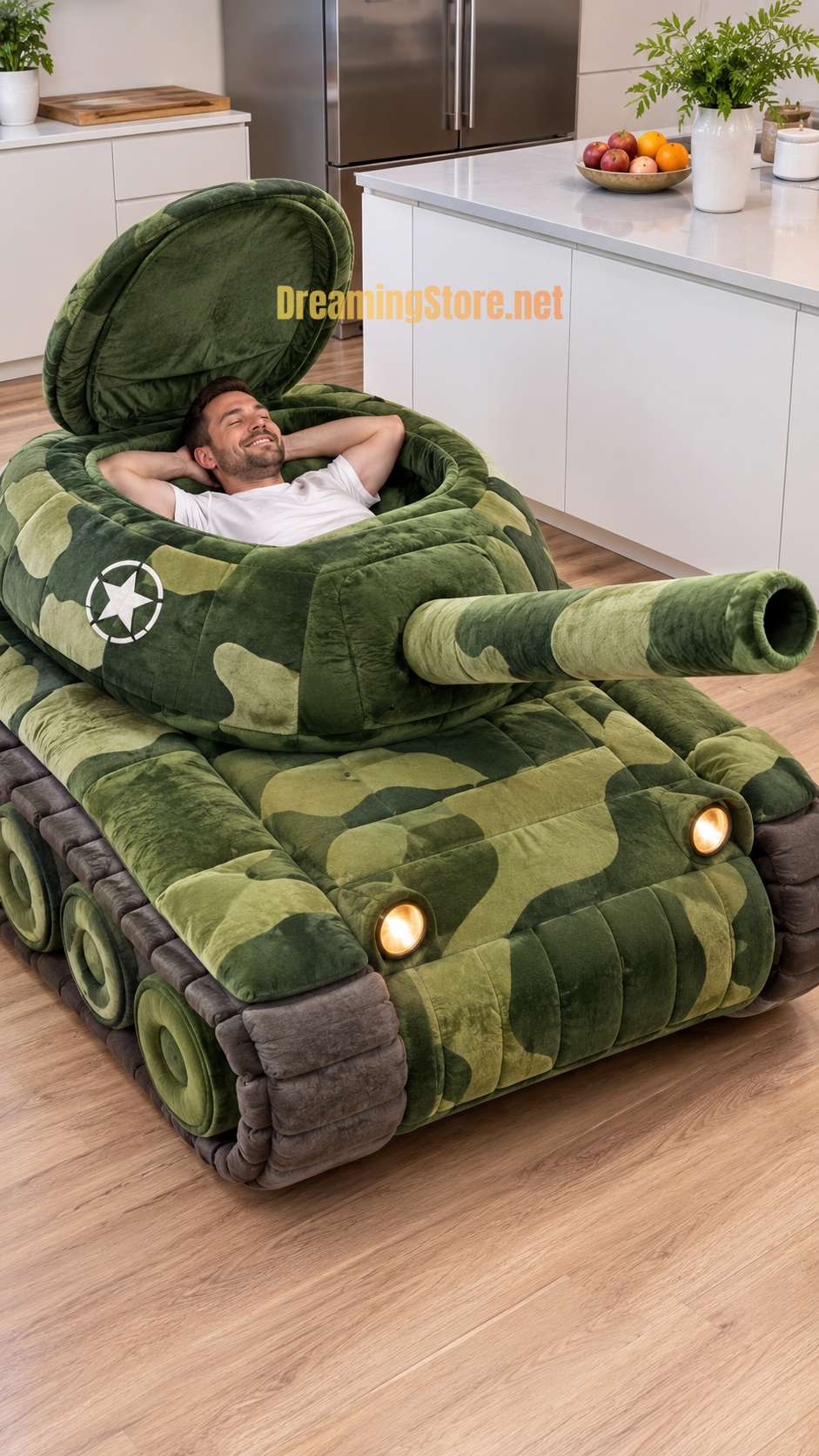
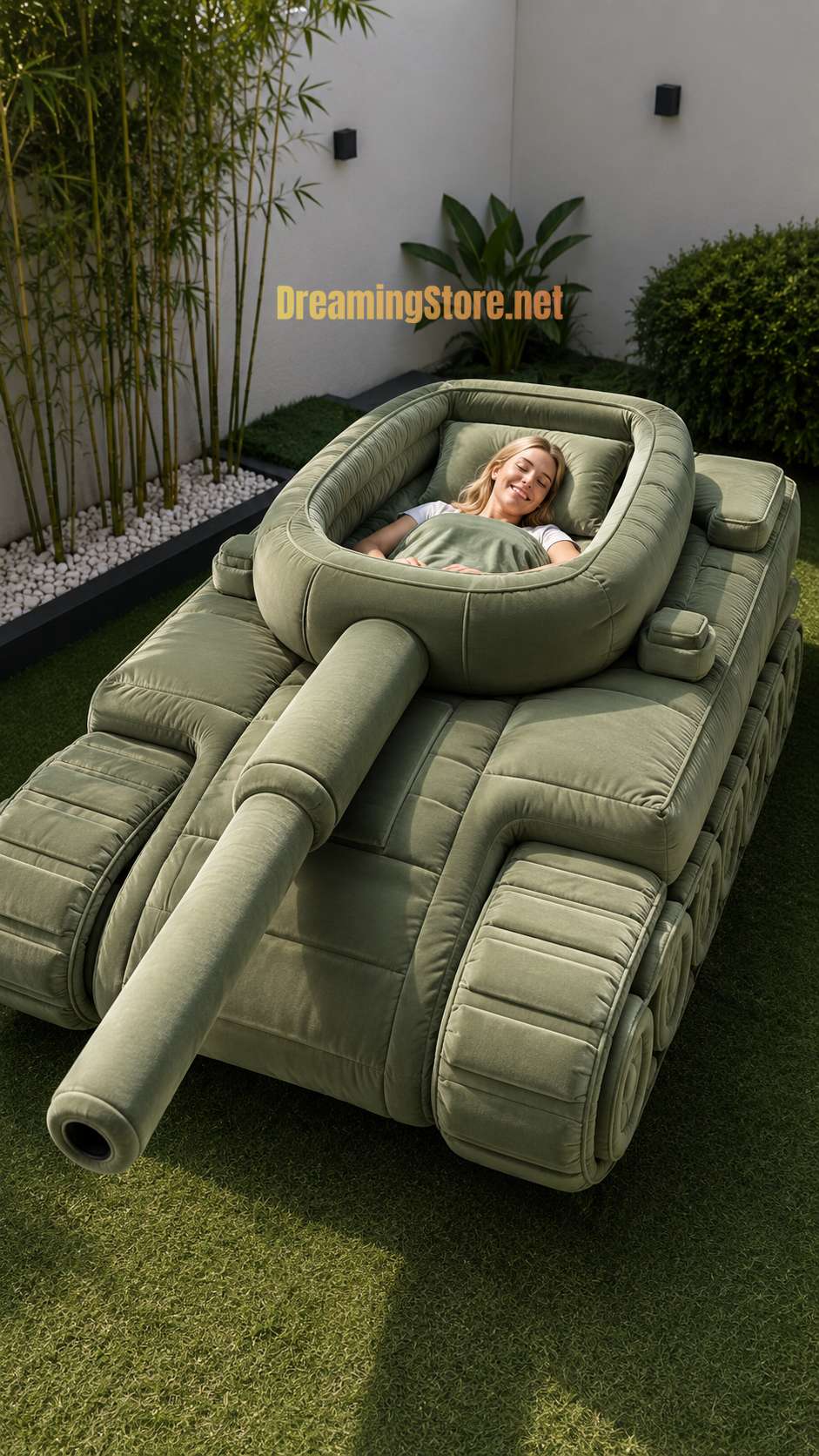
A tank-shaped foam bed is not a traditional mattress with a decorative cover. It is a fully sculpted, three-dimensional foam structure shaped like a military tank. The body, turret, barrel, and tracks are all formed from high-resilience foam and covered in durable fabric.
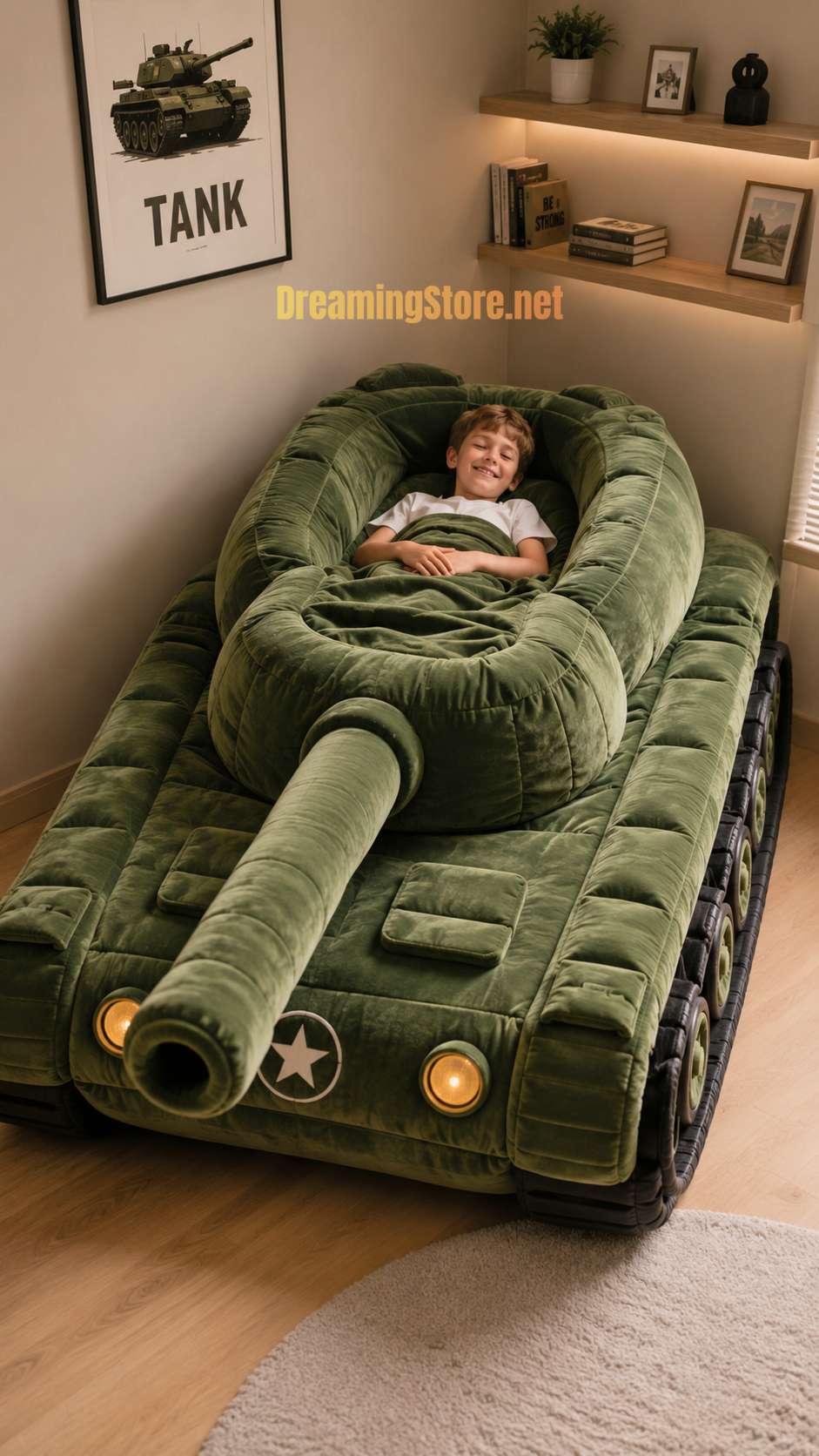
Most designs include a recessed sleeping or lounging area in the turret or hull, complete with integrated pillows or bolsters. Some models feature LED lights in the “headlights,” removable covers, and modular sections that allow easier transport or cleaning.
Because the product must support body weight while maintaining its tank silhouette, material science becomes critical. Soft foam that collapses under pressure ruins the shape. Thin fabric that pills or tears after a few months of play destroys the visual appeal. Understanding density, fabric, and durability helps buyers avoid these failures.
Foam Density: The Foundation of Comfort and Support
Foam density is measured in pounds per cubic foot (PCF) or kilograms per cubic meter. Higher density generally means better support, slower breakdown, and longer life—provided the foam is also resilient.
Why Density Matters in a Giant Foam Tank Bed
A tank-shaped foam bed experiences concentrated pressure points. Children bounce, climb, and roll. Adults sit for long periods. Low-density foam compresses permanently after repeated use, creating dips that ruin both comfort and the tank’s appearance. High-density foam resists this compression and springs back.
Typical density ranges found in quality models:
- 1.5–1.8 PCF: Suitable only for light decorative use or very young children who rarely climb.
- 2.0–2.5 PCF: Good balance for most children’s tank-shaped foam bed models. Offers enough support for nightly sleep without excessive weight.
- 2.8–3.5 PCF or higher: Preferred for adult-sized or multi-user versions. These densities maintain shape under heavier loads and last longer under daily use.
Open-Cell vs. Closed-Cell Foam
Most giant foam tank bed products use open-cell polyurethane foam. Open-cell structures allow air circulation, reducing heat buildup during sleep. Closed-cell foam is denser and more water-resistant but can feel firmer and trap heat. Hybrid constructions sometimes place denser closed-cell layers at the base for structural integrity and softer open-cell layers on top for comfort.
Resilience and Indentation Force Deflection (IFD)
Density alone does not tell the full story. Resilience (the foam’s ability to recover after compression) and IFD (the force needed to indent the foam 25 % or 65 %) determine how the surface feels. A tank-shaped foam bed with medium-high IFD (around 30–45 at 25 %) provides a supportive yet forgiving surface. Too low and the user sinks; too high and the bed feels board-like.
Manufacturers of premium giant foam tank bed models often publish both density and IFD ratings. When those numbers are missing, request them. Consistent density throughout the tank body, turret, and tracks prevents uneven wear.
Practical Density Recommendations by User
- Toddlers and young children: 2.0–2.3 PCF with softer top layers.
- Older children and teens: 2.4–2.8 PCF.
- Adults or shared family use: 2.8–3.5 PCF base with a comfort layer of 2.2–2.5 PCF on the sleeping surface.
These ranges help a giant foam tank bed retain its shape while remaining inviting for long lounging sessions.
Fabric Selection: Protection, Cleanability, and Feel
The outer fabric is the first line of defense against spills, dirt, pet claws, and daily abrasion. Because a tank-shaped foam bed is large and often used in playrooms or living areas, fabric choice directly affects both appearance and hygiene.
Common Fabric Types
- Polyester microfiber or velour: Soft hand-feel, good color retention, and moderate abrasion resistance. Frequently used for children’s models because it feels plush against skin.
- Heavy-duty polyester canvas or ballistic nylon: Higher denier yarns improve tear strength. Better for adult or high-traffic tank-shaped foam bed versions.
- Blended fabrics with spandex or elastane: Allow slight stretch so the cover can conform tightly to complex tank contours without wrinkling.
- Waterproof or water-resistant coatings: Useful if the bed may see outdoor use or frequent drink spills. Look for polyurethane or TPU laminates that remain flexible.
Check similar products here: Click here
Key Fabric Performance Metrics
Abrasion resistance is measured by Martindale or Wyzenbeek cycles. A fabric rated above 25,000–30,000 cycles is suitable for regular use. Tear strength and seam strength matter because the fabric must stretch over curved foam surfaces without splitting at the seams.
Colorfastness to light and washing prevents the military green or camouflage patterns from fading after sunlight exposure or repeated cleaning. A quality giant foam tank bed cover should withstand at least 20–30 home-laundry cycles without significant fading or shrinkage.
Removable vs. Fixed Covers
Many modern tank-shaped foam bed designs feature zip-off covers. Removable covers simplify cleaning and allow seasonal fabric swaps. Fixed covers rely on spot-cleaning and may eventually require professional treatment. When evaluating a product, confirm whether the cover is fully removable and whether replacement covers are available.
Texture and Safety Considerations
Soft, low-pile fabrics reduce the risk of skin irritation for children who sleep in the turret. Avoid fabrics with heavy chemical finishes that could off-gas. Certifications such as OEKO-TEX Standard 100 indicate that the fabric has been tested for harmful substances—valuable information for any giant foam tank bed used by kids.
Durability: How Foam and Fabric Work Together
Durability emerges from the interaction of foam density, fabric strength, and construction quality. A high-density foam core covered in weak fabric will still fail at the seams. Strong fabric over low-density foam will look good initially but develop permanent depressions.
Structural Reinforcement
Premium giant foam tank bed models often incorporate internal baffles, denser foam inserts at stress points (such as the base of the turret or the track edges), and reinforced stitching. Some designs use a fabric “skin” that is glued or heat-bonded to the foam in addition to sewn seams. This dual attachment prevents the cover from shifting or bagging over time.
Edge and Seam Integrity
The tank’s sharp visual lines—barrel tip, track ridges, turret rim—create high-stress edges. Double- or triple-stitched seams with heavy-duty thread, and sometimes binding tape, keep these edges intact. Inspect product photos or specifications for evidence of reinforced construction. A giant foam tank bed that skimps on seam quality will show fraying within months of active use.
Weight Distribution and Base Design
Because these beds are large, the base must distribute weight evenly. Some models sit on a solid foam platform; others include a thin plywood or plastic understructure hidden inside the foam. The latter approach improves dimensional stability and reduces the chance that the entire giant foam tank bed will sag in the middle under adult weight.
Cleaning and Maintenance Impact on Longevity
Regular vacuuming removes abrasive dust. Spot-cleaning with mild detergent prevents stains from setting. For removable covers, following the manufacturer’s wash temperature and drying instructions preserves fabric coatings and elasticity. Avoid harsh solvents that can degrade both foam and fabric adhesives. Proper care can easily double the service life of a tank-shaped foam bed.
Expected Lifespan
With appropriate density (2.5 PCF or higher), quality fabric, and reasonable care, a well-made giant foam tank bed can last 5–8 years in a children’s room and longer in lighter adult use. Lower-spec models may show noticeable compression and fabric wear within 1–2 years.
Additional Design Features That Affect Performance
Beyond the core materials, several secondary features influence how a giant foam tank bed performs day to day.
Modular Construction
Some tanks separate into hull, turret, and barrel sections. Modularity eases shipping, storage, and cleaning. It also allows replacement of individual worn components rather than the entire unit.
Lighting and Electronics
LED headlights add realism but introduce wiring and battery compartments. These elements should be sealed against moisture and protected from impact. Check that the lighting system is low-voltage and easily serviceable.
Size and Scale Options
A true giant foam tank bed can range from child-sized (approximately 150–180 cm long) to adult-scale (over 200 cm). Larger models require higher foam density and stronger fabrics simply because of increased surface area and load. Confirm that density and fabric specifications scale appropriately with size.
Purchase similar fun designs: Click here
Choosing the Right Giant Foam Tank Bed for Your Needs
When comparing options, apply a simple checklist:
- Foam density published and appropriate for intended users
- Fabric abrasion rating and whether the cover is removable
- Evidence of reinforced seams and structural inserts
- Clear care instructions and availability of replacement covers
- Realistic weight capacity matching the size of the tank
A tank-shaped foam bed that meets these criteria will deliver both the playful aesthetic shown in product images and the practical performance required for daily rest.
Prioritize published foam density above marketing claims about “ultra-soft” or “cloud-like” feel. Softness without density leads to rapid breakdown. Equally important is a fabric that can be cleaned without special solvents. When both elements are present and construction is solid, the resulting giant foam tank bed becomes a long-term asset rather than a short-lived novelty.
A well-chosen tank-shaped foam bed delivers years of imaginative play for children and comfortable lounging for adults. By focusing on foam density in the 2.0–3.5 PCF range, abrasion-resistant and preferably removable fabric, and reinforced construction, buyers secure a product that maintains both its tank silhouette and its supportive surface.
The combination of these three factors—density, fabric, and durability—determines whether the bed remains a favorite feature of the room or becomes a discarded toy. Armed with the details above, selecting the right giant foam tank bed becomes a straightforward, evidence-based decision.