When the raw, visceral thrill of highway cruising merges with the practical necessity of mobile lodging, extraordinary engineering concepts come to life. Among the most striking and unconventional creations in modern adventure travel is the Harley-Davidson Camper.
The emergence of a custom Harley Camper bridges this gap, creating a hybrid travel experience that commands attention at every scenic overlook and rally campground.
This guide explores every facet of these unique builds, helping you determine whether adding a towed sleeper rig to your garage is a stroke of touring genius or an impractical novelty.
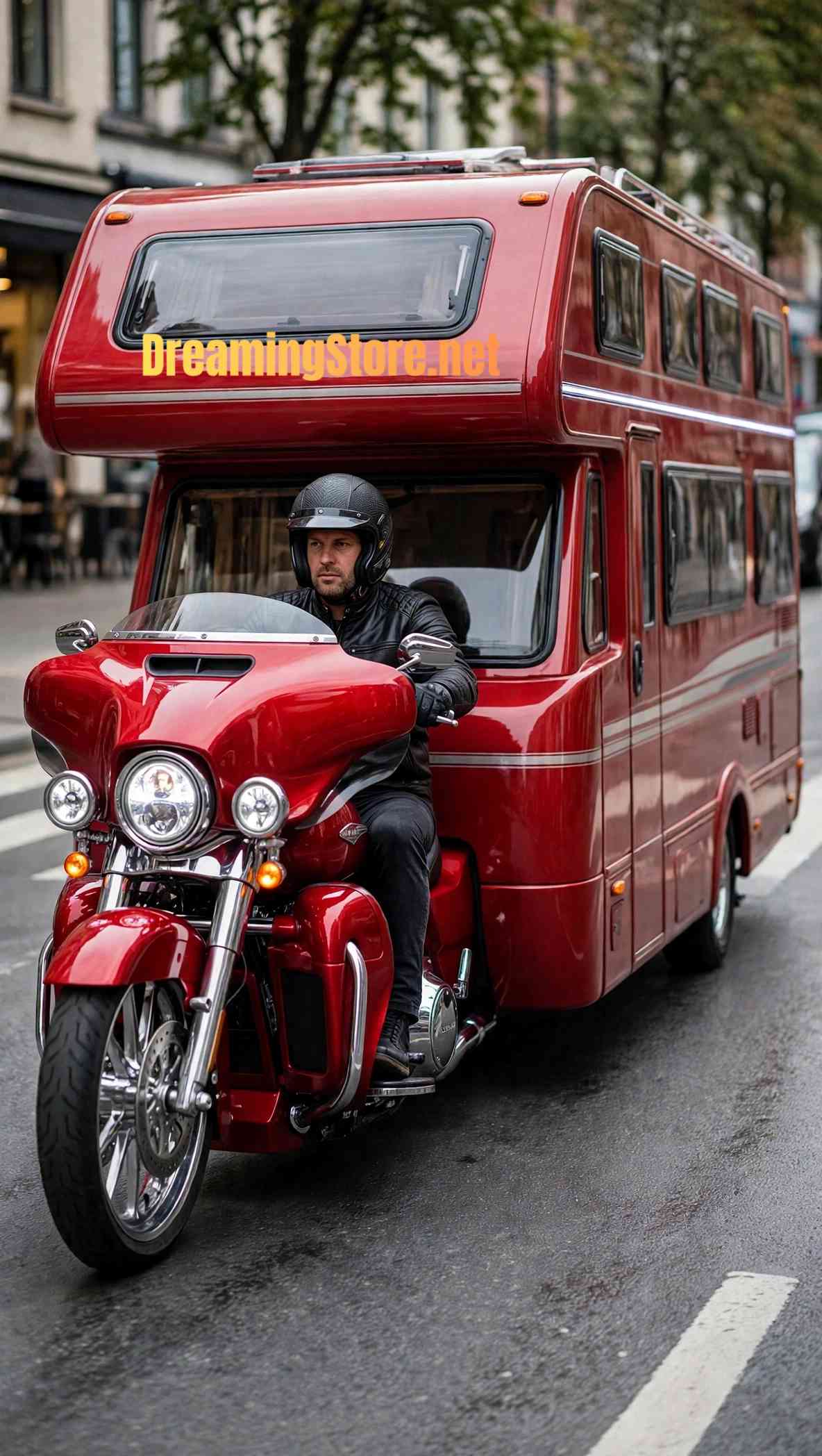
Understanding the Concept of a Harley-Davidson Camper
What Defines a Motorcycle RV?
A motorcycle RV is a specialized lightweight trailer or integrated trike module designed specifically to be towed or propelled by a high-displacement motorcycle. Unlike heavy utility trailers meant for automobiles, a Harley-Davidson Camper is engineered from the ground up to minimize aerodynamic drag and adhere strictly to safe gross vehicle weight ratings.
-
Lightweight Composite Construction: Built using fiberglass shells, aluminum framing, and honeycomb panels to keep overall mass manageable for a two-wheeled machine.
-
Swivel Hitch Integration: Utilizes specialized articulating hitches that allow the motorcycle to lean naturally through curves without placing torsional stress on the frame.
-
Self-Contained Sleeping Bays: Provides an enclosed, lockable mattress platform, ventilation windows, and basic interior storage compartments.
“Check the end of this article to discover where you can buy similar products!”
Origins and Evolution of Custom Towing Rigs
The desire to sleep behind a motorcycle is as old as highway touring itself, but early pioneers relied on crude canvas tents strapped to luggage racks. Over time, fabricators began adapting lightweight aeronautical materials and fiberglass molding techniques to craft aerodynamic sleeping pods.
The modern evolution of a Harley-Davidson Camper reflects a fusion of custom chopper culture and modern micro-RV engineering, appealing to riders who demand both distinctive road style and functional campsite independence.
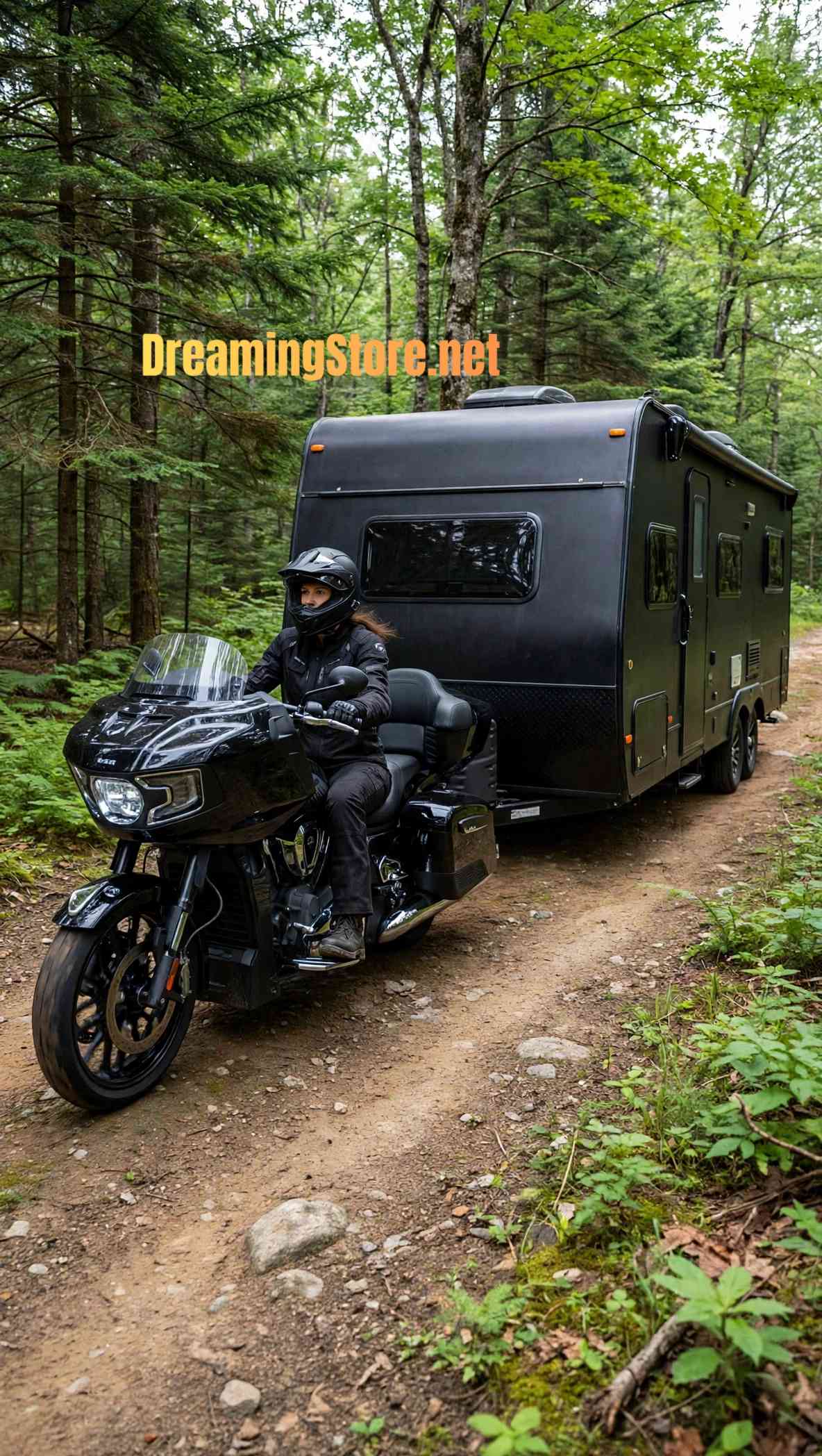
Types & Design Variations of a Harley-Davidson Camper
Teardrop Trailers and Lightweight Pods
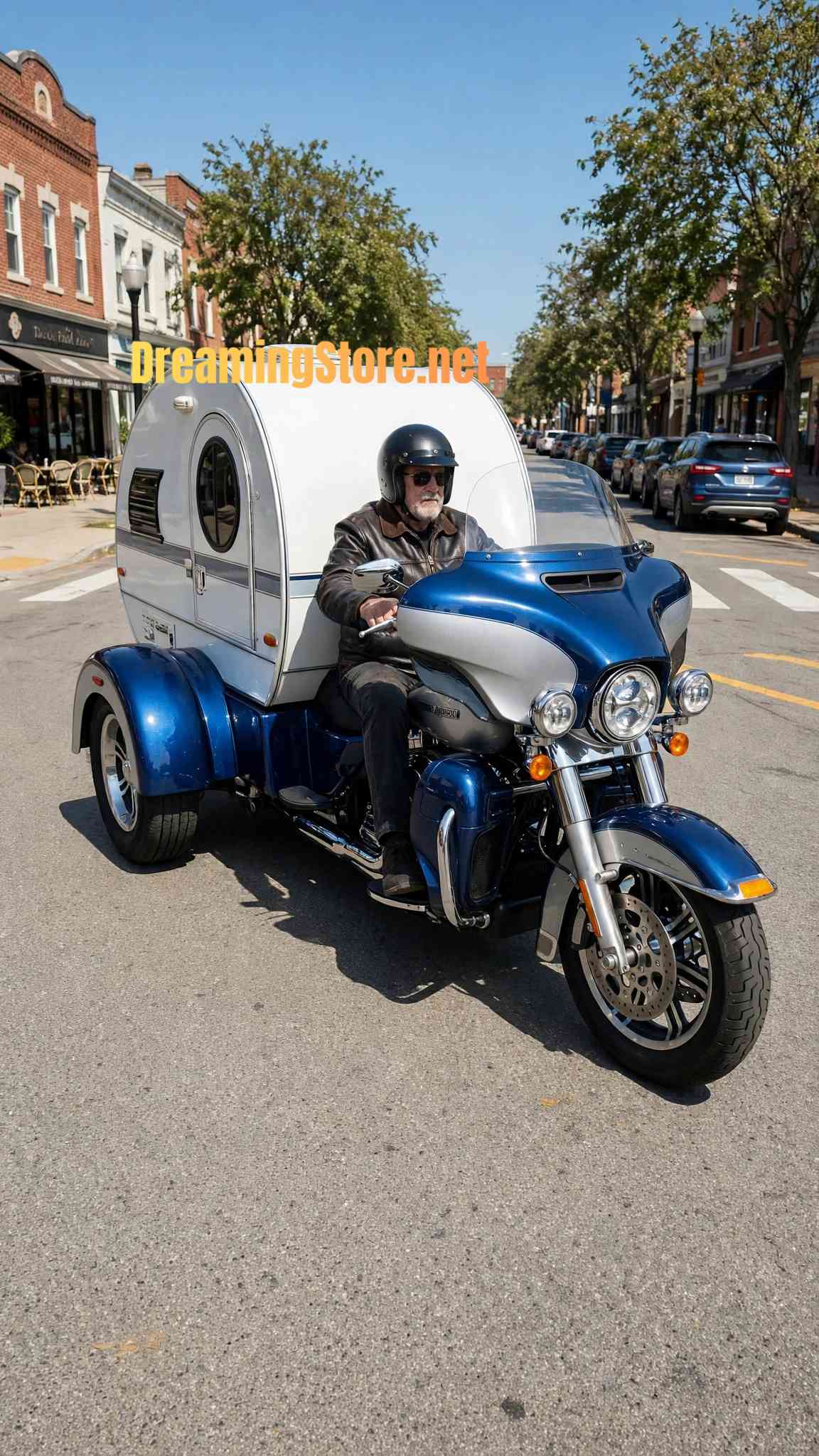
The most popular style of motorcycle-towed lodging is the miniature teardrop trailer. These streamlined units feature a curved roofline that channels wind smoothly over the entire rig, minimizing fuel consumption and handling instability.
-
Aerodynamic Profiles: Sloped contours reduce drag coefficients, preventing the trailer from acting like a parachute at highway speeds.
-
Rear Galley Hatches: Many models open from the back to reveal a compact camp kitchen setup equipped with a small stove, cooler slide, and storage drawers.
-
Compact Interior Layouts: Optimized strictly for sleeping, offering custom foam mattresses, reading lights, and USB charging ports powered by independent deep-cycle batteries.
Pop-Up Camping Units and Soft-Sided Extensions
For riders who prioritize standing headroom and expanded living space at the campsite, folding tent trailers offer a compelling alternative to rigid hard shells.
-
Collapsible Frameworks: Traveling in a low-profile transport mode, then expanding outward and upward upon arrival at the destination.
-
Canvas and Mesh Walls: Provides superior cross-ventilation during warm summer nights while keeping insects and morning dew at bay.
-
Elevated Sleep Platforms: Keeps campers safely off damp ground, rocks, and uneven terrain.
Rigid Micro-Cabins and Custom Trike Conversions
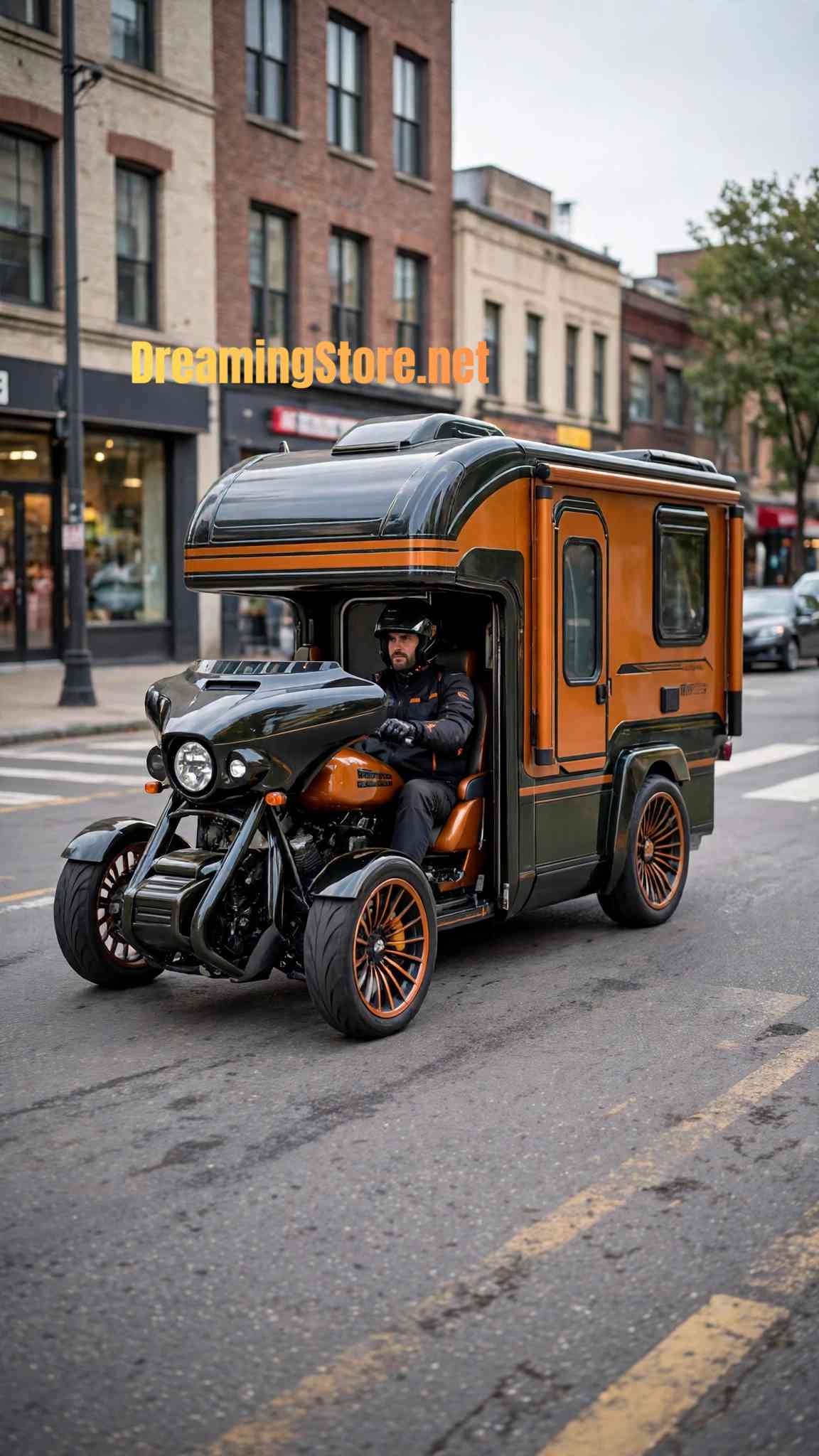
At the extreme end of the spectrum lie fully enclosed micro-cabins and heavy-duty trike-based configurations that resemble miniature Class C motorhomes.
-
Maximum Insulation: Hard-shell composite walls provide excellent thermal regulation during cold-weather expeditions.
-
Enhanced Security: Lockable solid doors give riders peace of mind when leaving valuables inside while exploring local attractions on foot.
-
Integrated Trike Chassis: Eliminates hitch articulation entirely by mounting the living quarters directly onto a heavy-duty three-wheeled platform.
Analyzing the Benefits: Why Riders Want a Harley-Davidson Camper
Unmatched Mobility and Compact Footprint
Navigating tight spaces, crowded state park loops, and congested rally sites with a massive Class A motorhome can be stressful. Operating a Harley-Davidson Camper allows you to slip effortlessly into standard motorcycle parking spaces and tight primitive campsites.
-
Access to Remote Terrain: Easily traverse narrow forest service roads and coastal tracks that prohibit full-sized motorhomes.
-
Agile Maneuverability: Experience the freedom of uncoupling your trailer at camp, allowing you to ride your stripped-down cruiser on winding backroads without extra weight.
Immersive Outdoor Experiences Without Ground Tents
Ground camping on a motorcycle tour often involves wet canvas, rocky soil, and exhausting setup routines after a 400-mile riding day.
-
Weatherproof Shelter: Stay completely dry during torrential rainstorms and sheltered against harsh mountain winds.
-
An elevated, supportive mattress ensures you wake up refreshed and ready for another full day in the saddle rather than stiff and sore.
High Customization and Aesthetic Appeal
Motorcycle culture is deeply rooted in personal expression and custom craftsmanship. Owning a unique Harley-Davidson Camper lets you match your exact aesthetic vision.
-
Color-Matched Gel Coats: Paint and pinstriping designed to mirror your motorcycle’s factory finishes or custom airbrush art.
-
Personalized Storage Compartments: Custom racks, tool holders, and luggage mounts tailored to your exact touring gear requirements.
Cost Savings Compared to Traditional RVs and Hotels
While custom towing rigs require an initial financial outlay, they offer significant long-term savings over decades of touring.
-
Eliminating Hotel Bills: Bypass expensive nightly lodging fees during cross-country road trips.
-
Lower Operating Costs: Drastically better fuel economy compared to towing a heavy travel trailer with a large pickup truck.
The Hidden Challenges and Practical Drawbacks
Complex Handling and Steep Learning Curves
Towing an extended load behind a motorcycle fundamentally alters center-of-gravity dynamics, requiring heightened rider skill and situational awareness.
-
Extended Braking Distances: Stopping heavy loads demands proactive anticipation of traffic flow and upgraded braking components.
-
Trailer Tracking Behavior: Trailers track slightly inside the turning arc of your rear tire, requiring wider cornering lines at intersections and tight hairpins.
Severe Limitations in On-Board Amenities
Unlike luxury camper vans, a compact Harley-Davidson Camper cannot house full bathrooms, running hot water, or indoor kitchen facilities.
-
Reliance on Campground Infrastructure: You must rely on public restrooms, shower blocks, and camp kitchens for daily sanitation and cooking needs.
-
Minimal Living Space: Interiors are strictly meant for sleeping and changing clothes, leaving little room to lounge during bad weather.
Weather Exposure and Element Vulnerability
While you are protected inside the capsule at night, riding through severe weather while towing requires extreme caution.
-
Crosswind Susceptibility: Large side panels act as sails, making high bridges and open plains challenging to navigate safely.
-
Hydroplaning Risks: Reduced rear-wheel traction on slick asphalt demands smooth throttle control and high-quality touring tires.
Physical Setup and Camp Maintenance Demands
After a long, fatiguing day on the highway, pitching camp still requires physical labor.
-
Uncoupling and Leveling: Securing stabilizer jacks, chocking wheels, and adjusting swivel hitch pins.
-
Ongoing Mechanical Checks: Regularly inspecting wheel bearings, tire pressures, lighting harnesses, and suspension mounts.
Road Safety, Towing Dynamics, and Mechanics
Weight Distribution and Center of Gravity
Safety is the absolute priority when combining a heavy touring motorcycle with a towed sleep module. Improper packing can cause catastrophic trailer sway at highway speeds.
-
Axle Loading Principles: Keep heavy items stored low and centered directly over the trailer axle to prevent unsettling the motorcycle’s rear suspension.
-
Tongue Weight Ratios: Maintain an optimal tongue weight—typically 10% to 15% of total trailer mass—to ensure stable tracking behind the rear tire.
Braking Systems, Stopping Distances, and Swivel Hitches
Riding a heavy cruiser loaded with touring gear is demanding enough; adding a trailing module increases kinetic energy exponentially.
-
Electric Trailer Brakes: Integrating proportional electronic brakes or surge brakes ensures the trailer stops its own weight rather than pushing the motorcycle forward.
-
Articulating Hitches: High-quality swivel connections allow smooth banking through turns without putting torque on the motorcycle’s swingarm.
Suspension Upgrades and Structural Reinforcements
Factory motorcycle suspension systems are rarely calibrated to handle continuous downward hitch loads.
-
Heavy-Duty Rear Shocks: Upgrading to air-ride or progressive-rate suspension prevents bottoming out over bumps.
-
Subframe Reinforcements: Ensuring the mounting brackets are securely tied into the motorcycle’s main frame rather than flimsy fender supports.
Explore more options like this: Click here
Financial Breakdown and Ownership Costs
Initial Custom Fabrication and Kit Expenses
Because mass-produced motorcycle RVs are relatively rare, acquiring a custom rig involves significant upfront investment.
Base Unit Costs: Entry-level cargo trailers start around a few thousand dollars, but full custom sleeping conversions range from $8,000 to over $25,000.
Accessory Installations: Wiring harnesses, hitch fabrication, upgraded brakes, and custom paint matching add substantial secondary expenses.
Insurance, Storage, and Ongoing Maintenance
Specialized recreational equipment incurs recurring annual costs that must be factored into your budgeting.
Specialized Insurance Riders: Standard motorcycle policies rarely cover custom towing modules, requiring dedicated recreational vehicle coverage.
Dedicated Storage Space: Due to their unique dimensions, storing a specialized Harley-Davidson Camper requires secure garage space or rented RV storage during off-seasons.
Ultimately, deciding whether a Harley-Davidson Camper is worth buying comes down to balancing your passion for custom motorcycle culture against the practical compromises of towing a micro-dwelling.
For dedicated touring riders who value open-air freedom combined with secure campsite independence, investing in a custom Harley-Davidson Camper unlocks an unforgettable, head-turning lifestyle that traditional RVs and standard motorcycles simply cannot replicate.