The Helicopter Excavator has taken the internet by storm, blending the aerial agility of a helicopter with the raw digging power of an excavator arm. This groundbreaking hybrid machine is not just a tool—it’s a viral phenomenon that’s redefining what’s possible in construction, emergency rescue, and heavy-duty operations.
Whether it’s carving into remote cliffs or performing life-saving maneuvers in disaster zones, the Helicopter Excavator delivers unmatched versatility that traditional equipment simply can’t match.
What is a Helicopter Excavator?
The helicopter equipped with excavator is a specialized aerial vehicle that integrates a powerful excavator boom and bucket directly onto a helicopter chassis. Imagine a rescue or utility helicopter equipped with a full hydraulic excavator arm capable of precise digging, lifting, and material handling while hovering or maneuvering in tight spaces.
This isn’t science fiction—it’s a practical engineering solution that’s gone viral through stunning visuals of these machines operating along dramatic coastlines, cliffs, and inaccessible terrain. The concept combines the vertical takeoff and landing (VTOL) capabilities of helicopters with the earth-moving prowess of tracked excavators.

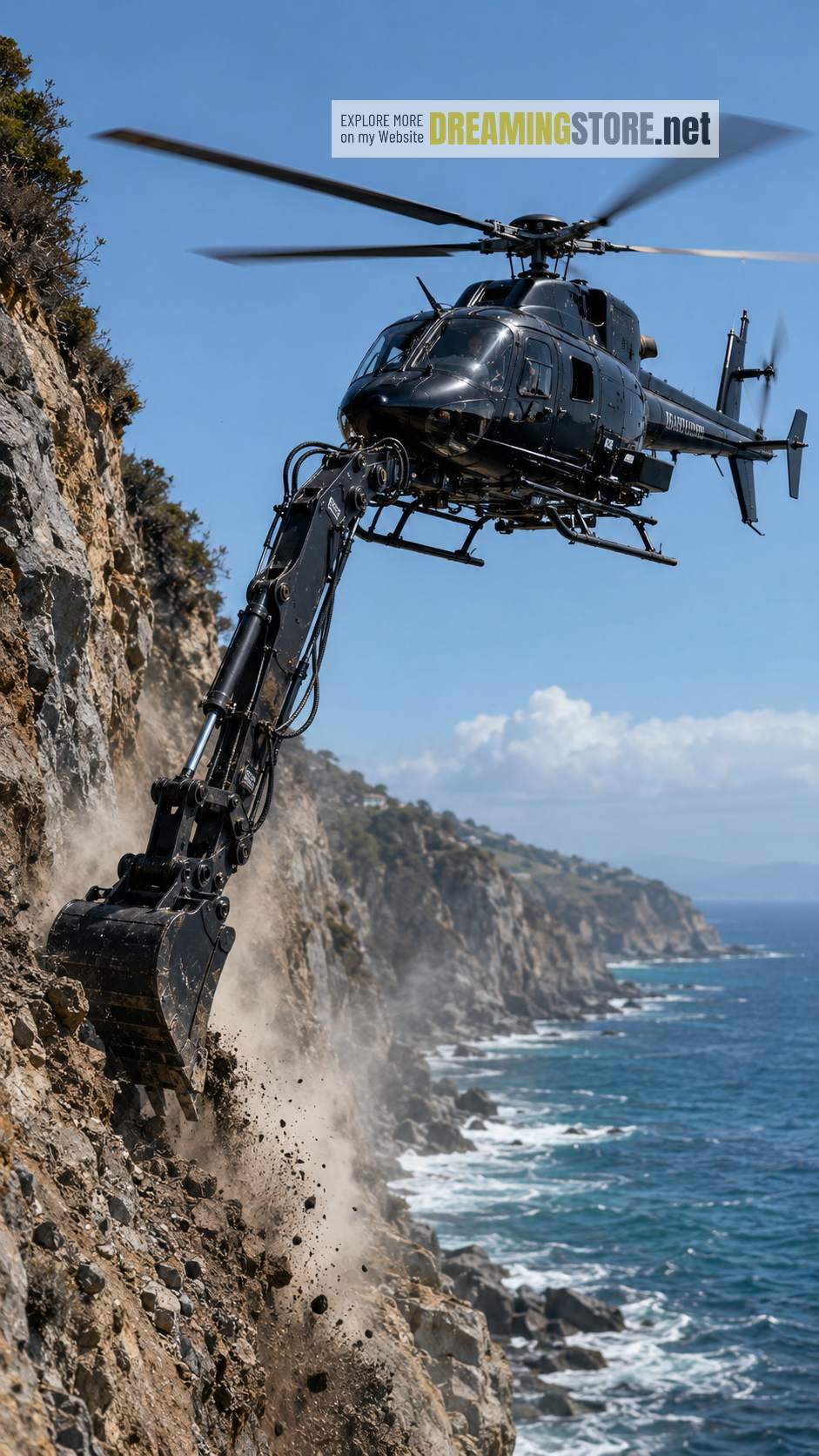
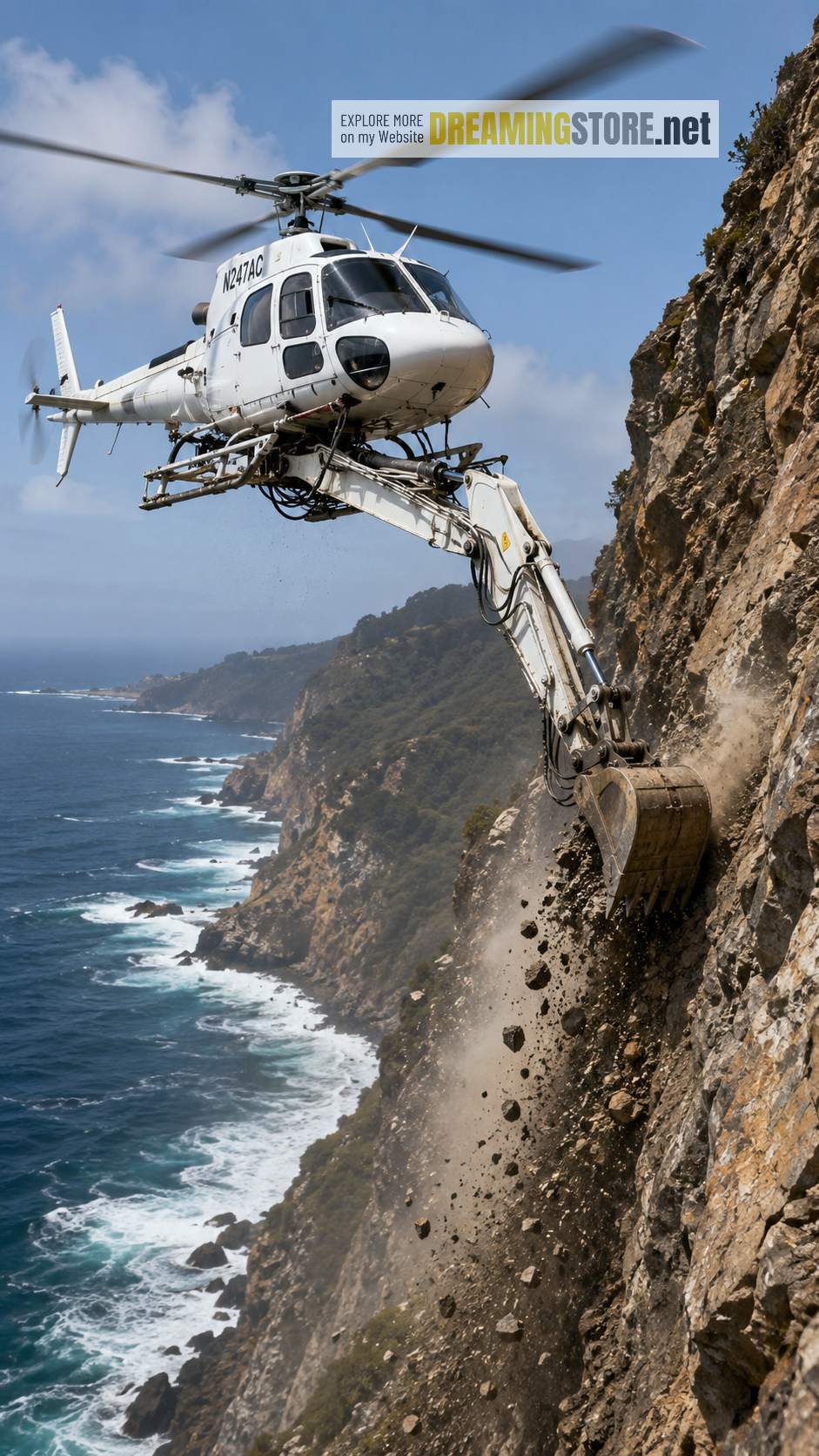
Early prototypes and custom builds have appeared in various colors and configurations: sleek green rescue models with medical markings, rugged black industrial versions, vibrant red heavy-lift units, and clean white utility variants. Each Helicopter Excavator is designed for specific missions but shares core traits of mobility, power, and precision.
For enthusiasts and professionals alike, this machine represents the future of adaptive heavy equipment. It’s particularly appealing for projects where ground access is impossible or too dangerous, turning previously insurmountable challenges into routine operations.
Engineering Marvel: How the Helicopter Excavator Works
At the heart of the helicopter equipped with excavator is a sophisticated integration of aviation and hydraulic systems. The excavator arm is typically mounted under the fuselage or on reinforced hardpoints, using high-strength alloys and vibration-dampening technology to handle the stresses of flight and digging simultaneously.
Powerful turbine engines provide the lift and stability needed to hover while the arm extends. Advanced flight control systems, often aided by AI-assisted stabilization, compensate for the shifting center of gravity as the bucket fills with rock, soil, or debris. Hydraulic lines run through protective conduits, delivering immense pressure to the boom, stick, and bucket cylinders—capable of generating forces comparable to standard mid-size excavators on the ground.
The cockpit features dual controls: aviation instruments for flight and heavy-equipment joysticks for the arm. Operators train extensively in simulators to master the unique coordination required. Visibility is exceptional thanks to large windows and camera feeds from multiple angles, including the bucket tip.
Safety systems are paramount. Redundant hydraulics, emergency release mechanisms for the arm, and reinforced landing skids ensure reliability. Many models include quick-attach systems, allowing operators to swap the excavator arm for other tools like grapples, drills, or rescue baskets—making the Helicopter Excavator incredibly adaptable.
Applications in Construction: Precision Where It Matters Most
Construction professionals are raving about the helicopter equipped with excavator for its ability to access remote or hazardous sites. Traditional excavators require roads, pads, or heavy transport, but this aerial solution arrives directly at the worksite.
Consider cliffside developments, coastal infrastructure, or mountain highway projects. The Helicopter Excavator can hover and excavate foundations, trenches, or drainage channels without disturbing fragile ecosystems below. Its precision reduces the need for extensive scaffolding or blasting, lowering costs and environmental impact.
In urban settings with limited space, it excels at demolition or renovation work on high structures. The arm can reach into tight corners while the helicopter maintains position, minimizing ground disruption in crowded areas.
One standout feature is its material handling capability. The bucket can load debris into sling nets or directly into waiting trucks below, streamlining workflows. Contractors report significant time savings—projects that once took weeks with cranes and ground crews can now be completed in days.
For pipeline or utility installation in rugged terrain, the Helicopter Excavator digs trenches along steep slopes with ease. Its ability to work at various angles and elevations makes it ideal for wind farm foundations, transmission towers, or remote bridge abutments.
Refer to buy similar products: Click here
Life-Saving Power: Helicopter Excavator in Rescue Operations
The rescue applications of the helicopter equipped with excavator are what truly set it apart and fuel its viral fame. Equipped with medical markings and specialized attachments, these machines become airborne first responders in disasters.
After earthquakes, landslides, or floods, ground access is often blocked. The Helicopter Excavator can clear rubble, dig access paths, or stabilize unstable slopes while hovering—creating safe zones for evacuation or further rescue efforts. The green “RESCUE” models in viral images perfectly illustrate this, with their prominent white cross and powerful arm reaching into danger zones.
Search and rescue teams praise the machine’s ability to remove large boulders or collapsed structures without risking additional lives. The operator can precisely control the bucket to lift victims or debris, often faster than traditional methods.
In wildfire scenarios, it can create firebreaks or clear escape routes on steep hillsides. Marine rescue operations benefit too—excavating temporary landing zones on beaches or cliffs for medevac.
The combination of flight endurance and digging force turns the Helicopter Excavator into a versatile rescue platform. Many units feature integrated winches, thermal cameras, and communication hubs, making them command centers in the sky.
Technical Specifications Deep Dive
Diving into the specs reveals why the helicopter equipped with excavator performs so impressively. Typical models feature:
- Aircraft Platform: Medium to heavy utility helicopters with twin-engine redundancy for safety.
- Excavator Arm: Reach of 8-15 meters (depending on model), with breakout force exceeding 10-20 tons.
- Bucket Capacity: 0.5 to 2 cubic meters, with options for specialized teeth or smooth-edge configurations.
- Operating Weight: Varies from 5 to 15 tons, balanced for hover efficiency.
- Flight Performance: Hover capability up to 30-45 minutes under load, cruise speeds of 100-140 knots when ferrying.
- Power System: High-output hydraulics powered by the main engines or auxiliary power units.
- Avionics: Glass cockpit with terrain awareness, stability augmentation, and load monitoring.
- Materials: Lightweight composites and high-tensile steel for the arm to minimize weight penalties.

Variations like the black industrial model emphasize durability for heavy construction, while the red heavy-lift versions boast enhanced payload. The white utility models focus on versatility with modular attachments.
Fuel efficiency is optimized through modern engines, though operators note higher consumption during prolonged hovering. Noise levels are comparable to standard helicopters, with some newer designs incorporating quieter rotor technology.
Advantages and Benefits of the Helicopter Excavator
The helicopter equipped with excavator shines with numerous benefits that justify its growing popularity:
- Unparalleled Access: Reaches locations no ground vehicle can.
- Speed and Efficiency: Dramatically reduces project timelines.
- Safety: Keeps operators and crews away from hazardous areas.
- Versatility: One machine replaces multiple specialized vehicles.
- Environmental Friendliness: Minimal ground disturbance compared to building access roads.
- Cost Savings Long-Term: Lower logistics and setup expenses on remote jobs.
Users consistently highlight the “wow factor” that boosts team morale and client impressions. The viral nature of footage also serves as excellent marketing for companies adopting this technology.
Potential drawbacks include high initial investment and the need for highly skilled pilots/operators. Maintenance requires aviation and heavy equipment expertise, but manufacturers are developing comprehensive training programs.
Real-World Performance and User Experiences
Early adopters in specialized construction firms and rescue agencies report transformative results. One coastal infrastructure project used the Helicopter Excavator to stabilize a failing cliffside road, completing stabilization work in under a week versus months with traditional methods.
Rescue teams in mountainous regions describe successful operations where the machine cleared rockslides, saving trapped hikers. The precise control allows for careful extraction without causing secondary collapses.
Viral videos have showcased everything from dramatic cliff excavation to creative uses like harvesting resources in remote areas or even artistic landscape shaping. These visuals drive public fascination and accelerate adoption.
Comparisons to Traditional Equipment
Compared to standard excavators, the Helicopter Excavator offers mobility that ground-based machines lack entirely. While a traditional excavator might sit idle waiting for site preparation, the aerial version deploys instantly.
Versus cranes or helicopters with slung loads, it provides active digging and manipulation rather than passive lifting. This precision is unmatched.
Of course, it’s not a replacement for all equipment—it’s a specialized complement that excels in niche, high-challenge scenarios. The Helicopter Excavator fills a gap that many didn’t even realize existed.
Maintenance and Care Tips
Proper care ensures longevity for this complex machine. Regular inspections of hydraulic systems, rotor components, and structural integrity are essential.
- Follow manufacturer-recommended flight and operating hours.
- Use high-quality hydraulic fluids rated for extreme conditions.
- Store in hangars when possible to protect from elements.
- Train operators on both aviation and excavation best practices.
- Schedule integrated maintenance combining aircraft and heavy equipment protocols.
With diligent care, the Helicopter Excavator proves reliable and durable, even in harsh coastal or alpine environments shown in viral footage.
Who Should Buy or Invest in a Helicopter Excavator?
The helicopter equipped with excavator is ideal for:
- Large construction conglomerates tackling remote or difficult sites.
- Government rescue and emergency management agencies.
- Specialized demolition or mining companies.
- Infrastructure developers in challenging geographies.
- Innovative rental fleets serving multiple clients.
For smaller operators, leasing or shared ownership models make it accessible. The return on investment comes through faster project completion and access to contracts previously deemed impossible.
Links to purchase similar products: Click here
Future Innovations and Trends
The Helicopter Excavator is just the beginning. Future models may include electric or hybrid powertrains, enhanced autonomy for repetitive tasks, and even drone-swarm coordination for larger operations.
Integration with augmented reality for operators and real-time data analytics will further boost performance. As climate challenges increase the need for rapid response in remote areas, demand for these machines will only grow.
The viral sensation is helping fund research and development, promising even more capable versions ahead.
The Helicopter Excavator stands as a true marvel of modern engineering—a viral sensation that’s proving its worth in construction sites and rescue missions worldwide. Its ability to combine flight with powerful excavation capabilities opens doors to safer, faster, and more efficient operations in places once considered unreachable.
If your work involves challenging terrain, emergency response, or simply pushing the boundaries of what’s possible, the Helicopter Excavator deserves serious consideration. This isn’t just equipment—it’s a revolution in motion, hovering above the competition and digging its way into the future.