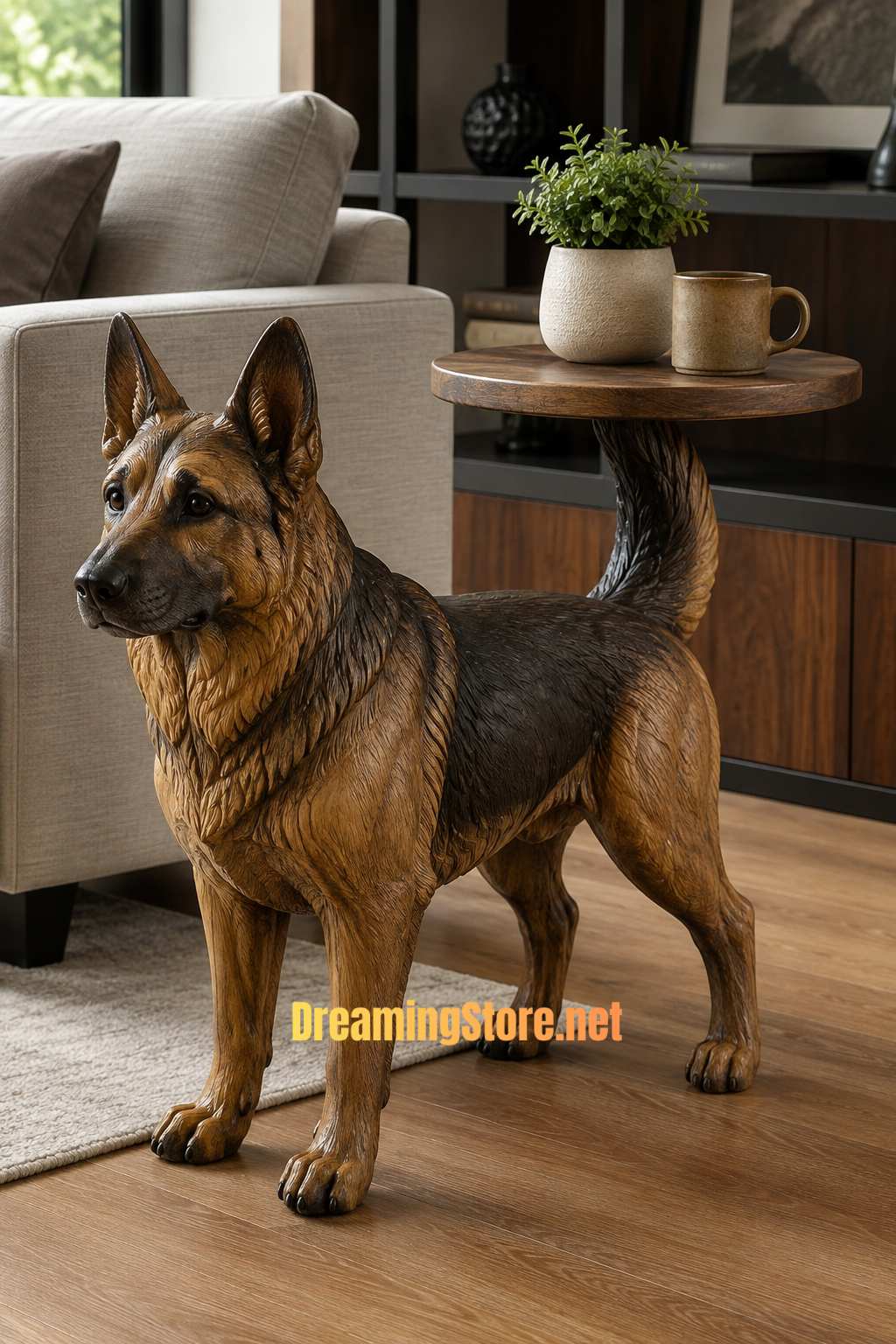
Dog Side Tables have become a distinctive category of functional sculpture for modern homes. These pieces combine realistic canine forms with practical tabletops, turning a beloved pet motif into sturdy furniture that holds books, plants, coffee cups, or remote controls.
Unlike ordinary side tables, dog-shaped tables rely on the strength and balance of a sculpted animal body, so material choice and surface finish directly determine how long the piece lasts under daily use.
This guide examines the materials and finishes that deliver the greatest longevity for Dog Side Tables, explains why certain combinations outperform others, and offers practical selection criteria.
Why Material and Finish Matter for Dog Side Tables?
A typical side table rests on four legs or a pedestal. Dog Side Tables transfer load through a continuous sculpted form—usually the back, hindquarters, and tail of the dog. Any weakness in the material or coating shows up as cracking, warping, fading, or structural failure. Longevity therefore depends on three factors:
- Structural integrity of the core material
- Resistance of the surface finish to abrasion, moisture, and UV light
- Compatibility between the dog form and the attached tabletop
Choosing the wrong combination shortens service life dramatically. The right pairing can keep a piece looking and performing well for decades.
Primary Materials Used in Dog Side Tables
1. Solid Wood
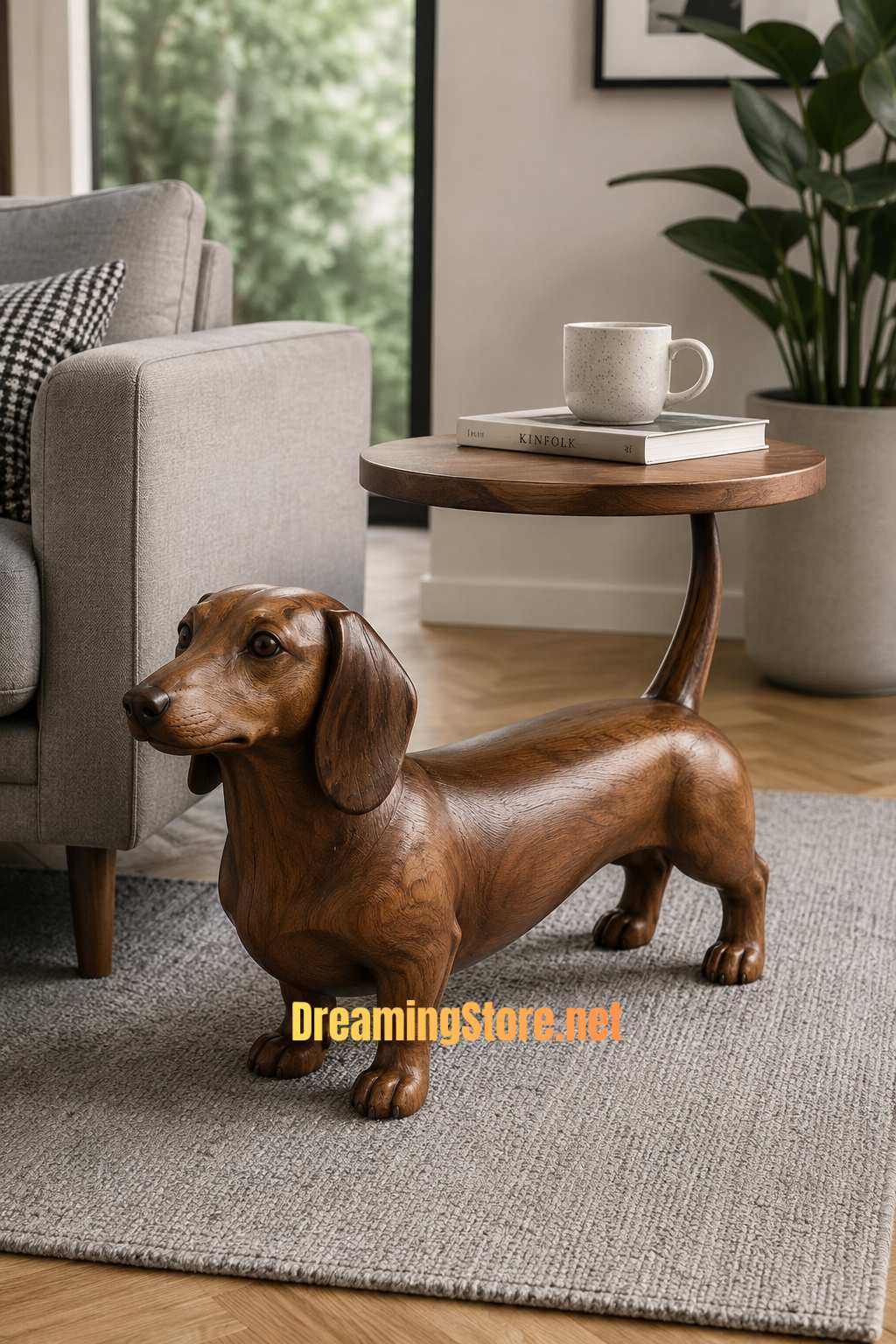
Solid hardwood remains one of the most popular cores for dog-shaped tables. Dense species such as oak, walnut, teak, and maple provide excellent compressive strength and can be carved or CNC-milled into detailed canine shapes.
Advantages
- Natural grain enhances realism
- High load-bearing capacity when properly joined
- Repairable with sanding and refinishing
Limitations
- Susceptible to humidity-related expansion and contraction
- Requires sealed finishes to prevent staining and checking
For maximum longevity, kiln-dried lumber with moisture content between 6–8 percent is essential. Dog Side Tables made from green or poorly dried wood often develop cracks along the spine or legs within the first year.
2. Engineered Wood and Wood Composites
Medium-density fiberboard (MDF), plywood, and laminated veneer lumber appear in more affordable dog-shaped tables. High-quality exterior-grade plywood with waterproof adhesive outperforms standard MDF in humid environments.
Best practices for longevity
- Use marine-grade or exterior plywood
- Apply edge banding or solid-wood facing on all exposed edges
- Avoid particleboard cores; they swell irreversibly when wet
3. Resin and Polyurethane Castings
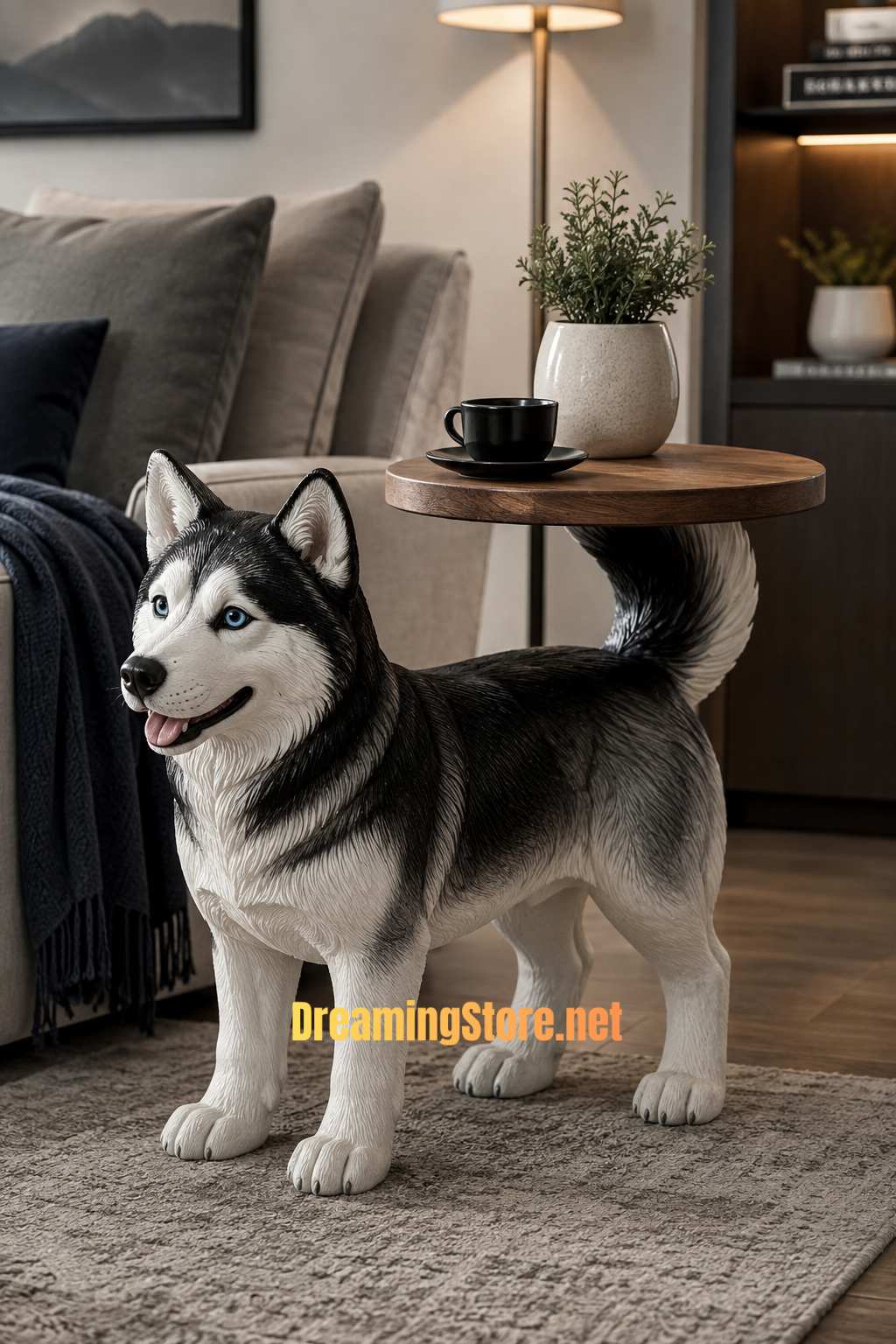
Many contemporary dog-shaped tables start as molds filled with polyurethane resin or polyester resin mixed with mineral fillers. These materials allow fine detail in fur texture, facial features, and muscle definition that would be costly to carve in wood.
Strengths
- Dimensionally stable
- Resistant to insects and rot
- Can incorporate reinforcing fibers for added toughness
Weaknesses
- UV degradation if not properly formulated or coated
- Potential for surface chalking outdoors
- Heavier than equivalent wood pieces
High-quality cast resin dog-shaped tables intended for longevity use UV-stabilized resins and internal steel or fiberglass reinforcement in high-stress areas such as the neck and tail joint.
4. Metal Frameworks with Composite Skins
Some premium Dog Side Tables combine a welded steel or aluminum armature with a resin or fiberglass outer shell. The metal core carries the structural load while the outer layer provides the realistic appearance.
This hybrid approach offers outstanding longevity when the metal is properly protected against corrosion and the outer skin is firmly bonded.
Tabletop Materials and Attachment Methods
The tabletop is usually a separate round or oval disc attached to the dog’s back or raised tail. Common materials include:
- Solid hardwood (walnut, oak, teak)
- Tempered glass
- Stone (marble, granite, or engineered quartz)
- High-pressure laminate over plywood
Attachment methods affect both stability and long-term durability:
- Threaded metal inserts and bolts allow disassembly for shipping or refinishing
- Epoxy bonding creates a permanent joint but complicates future repairs
- Mechanical brackets hidden under the tabletop provide strong, serviceable connections
For longevity, mechanical fasteners combined with a flexible adhesive layer perform best because they accommodate slight movement without cracking the surrounding material.
Find related products to buy: Click here
Surface Finishes That Maximize Longevity
1. Oil Finishes
Natural oils such as tung oil, linseed oil, and hardwax oils penetrate wood and leave a low-sheen, repairable surface. They are ideal for solid-wood dog-shaped tables used indoors.
Pros
- Easy to refresh with additional coats
- Enhance wood grain
- No film to crack or peel
Cons
- Limited water resistance
- Require periodic reapplication
2. Polyurethane and Water-Based Acrylics
Film-forming finishes provide superior protection against abrasion and spills. Oil-modified polyurethane remains popular for its toughness, while water-based acrylics offer faster drying and lower VOC content.
For Dog Side Tables that will see heavy use, a multi-coat system—sealer, two or three build coats, and a final hard topcoat—delivers the best results. Satin or semi-gloss sheens hide minor scratches better than high-gloss finishes.
3. Powder Coating and Industrial Coatings (for Metal Components)
When dog-shaped tables incorporate metal bases or armatures, powder coating or two-part epoxy coatings prevent rust and chipping. These finishes must be applied after thorough surface preparation, including sandblasting or chemical etching.
4. UV-Resistant Clear Coats for Resin
Resin Dog Side Tables need specialized clear coats containing UV absorbers and hindered amine light stabilizers (HALS). Without them, the surface yellows and becomes brittle under window light or outdoor exposure.
Environmental Factors Affecting Longevity
1. Indoor Conditions
- Relative humidity between 40–55 percent minimizes wood movement
- Avoid placing dog-shaped tables next to heat vents or in direct afternoon sun
- Use coasters and felt pads under objects to prevent surface abrasion
2. Outdoor or Semi-Outdoor Use
Only a minority of Dog Side Tables are engineered for exterior placement. Those that are should feature:
- Teak, ipe, or thermally modified wood
- Fully waterproof adhesives
- Marine-grade finishes or powder-coated metal
- Drainage details that prevent water pooling on the tabletop
Even then, covering the piece during prolonged rain or winter extends service life considerably.
Construction Details That Influence Durability
1. Joint Design
In solid-wood Dog Side Tables, traditional joinery (mortise-and-tenon, dovetails, or floating tenons) outperforms simple glue joints. Metal fasteners should be stainless steel or brass to avoid corrosion staining.
2. Reinforcement
High-stress zones—especially the junction between body and tail or the connection to the tabletop—benefit from internal steel rods or carbon-fiber inserts. These reinforcements are usually invisible but dramatically improve longevity.
3. Weight Distribution
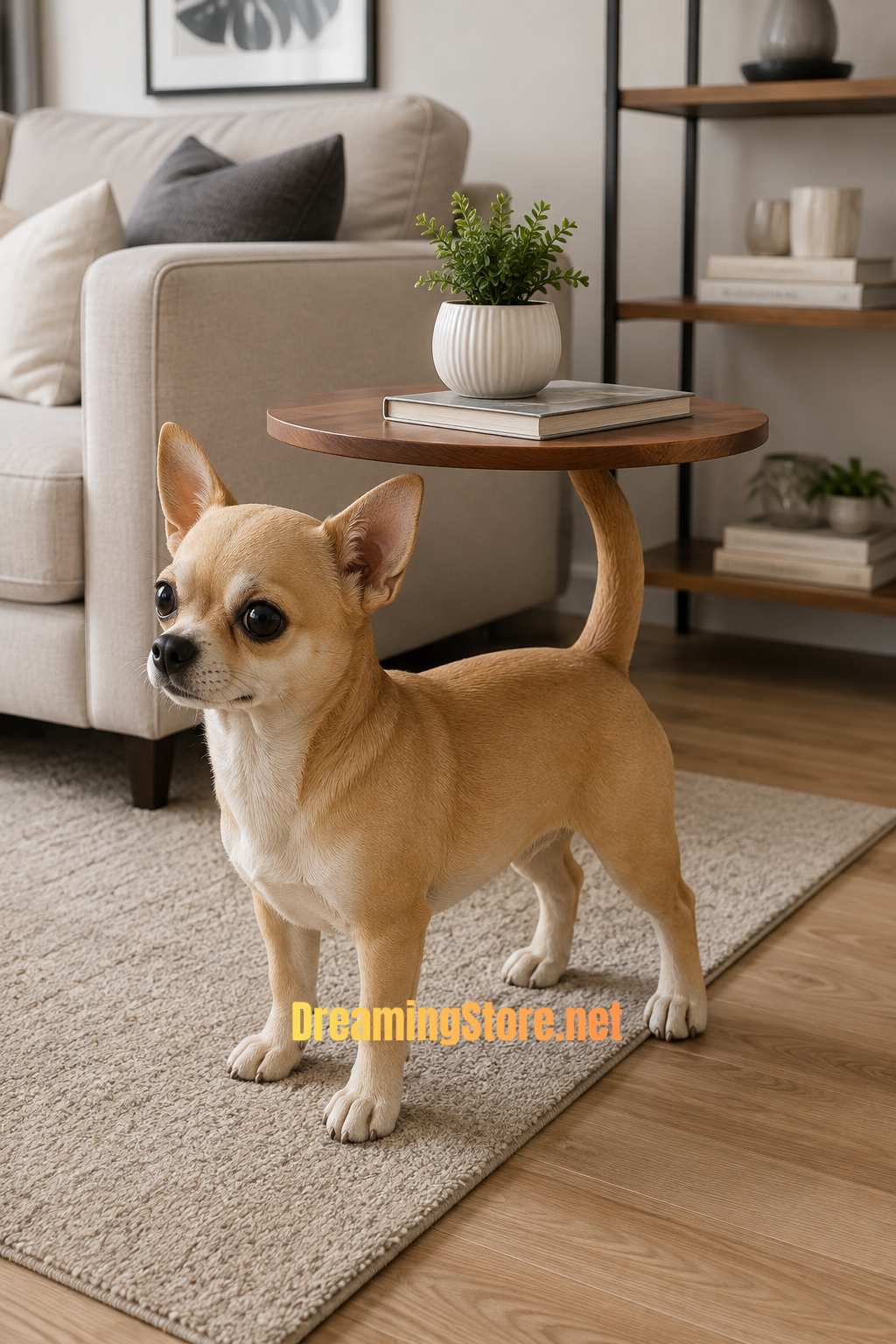
A well-designed Dog Side Table keeps the center of gravity low and the footprint wide enough to resist tipping. Narrow bases or exaggerated poses may look dramatic but reduce practical lifespan if the piece is unstable.
Comparing Longevity Across Price Ranges
Entry-level pieces often use MDF or low-density resin with thin paint finishes. Expect 3–7 years of satisfactory appearance under moderate use.
Mid-range Dog Side Tables typically combine solid wood or quality resin with multi-coat finishes and better reinforcement. Service life of 10–20 years is realistic with proper care.
High-end pieces feature dense hardwoods, UV-stabilized resins, metal armatures, and museum-grade finishes. These can last several decades and often increase in value as functional art.
Selecting Dog Side Tables for Maximum Longevity
When evaluating a piece, examine:
- Density and grain of any visible wood
- Uniformity and thickness of surface coating
- Presence of reinforcement at stress points
- Quality of the tabletop attachment
- Manufacturer’s warranty and care recommendations
Ask whether the finish is designed for the intended environment (indoor only versus covered outdoor). Request information about the resin formulation or wood species if not clearly stated.
Common Failure Modes and How to Avoid Them
- Cracking along the spine or legs: Usually caused by inadequate drying of wood or insufficient reinforcement in resin. Choose kiln-dried stock or fiber-reinforced castings.
- Finish peeling or chalking: Indicates poor surface preparation or lack of UV protection. Prefer multi-coat systems with UV inhibitors.
- Tabletop separation: Results from rigid adhesive joints that cannot accommodate movement. Mechanical fasteners with flexible adhesive layers prevent this.
- Tipping or instability: Stem from poor weight distribution or narrow bases. Test the piece by applying moderate lateral force before purchase.
- Staining from spills: Occurs when the finish is incomplete or worn. Maintain the protective coating and use coasters.
Emerging Materials and Techniques
Recent developments include:
- Bio-based resins derived from plant oils that reduce environmental impact while maintaining strength
- 3D-printed sand molds that allow more complex undercuts and finer detail
- Hybrid wood-resin constructions that combine the warmth of wood with the dimensional stability of polymer
- Nano-ceramic clear coats that offer extreme hardness and chemical resistance
These innovations are gradually appearing in higher-end Dog Side Tables and promise still greater longevity.
Practical Placement and Use Recommendations
Place Dog Side Tables where they will experience moderate rather than constant heavy loads. Ideal locations include living-room seating areas, reading nooks, and bedrooms. Avoid high-traffic hallways where the piece might be bumped frequently.
Pair the tabletop material with expected use: solid wood or laminate for books and plants, tempered glass or stone for beverage service.
Discover comparable items here: Click here
Summary of Best Material and Finish Combinations
For indoor longevity:
- Solid walnut or oak with hardwax oil or multi-coat polyurethane
- UV-stabilized polyurethane resin with clear acrylic topcoat
- Steel-reinforced resin with powder-coated metal elements
For covered outdoor or high-humidity environments:
- Teak or thermally modified wood with marine varnish
- Fiber-reinforced resin with industrial UV-stable coatings
- Aluminum armature with powder-coated finish and composite skin
Dog Side Tables succeed when engineering and aesthetics work together. The most durable examples treat the canine form not merely as decoration but as a carefully calculated structural system.
By selecting dense, stable materials, applying appropriate multi-layer finishes, and maintaining the piece with simple routine care, owners can enjoy both the visual charm and the practical utility of these distinctive tables for many years.
The market continues to expand, offering an increasing range of breeds, poses, and sizes. Regardless of style, the principles outlined here—material density, dimensional stability, protective finishes, and sound joinery—remain the reliable predictors of longevity. When these factors are prioritized, Dog Side Tables move beyond novelty and become lasting pieces of functional art.