Water rescues have always demanded speed, precision, and courage. Traditional methods rely on human lifeguards swimming through rough waves or throwing flotation devices that may miss their target. A new technology is changing that equation: the life preserver drone.
This article explores how the Water Rescue Drone works, the role of AI and autonomy, real-world applications, technical challenges, and the future of aquatic emergency response. Throughout, the focus remains practical and concise.
What Is a Life Preserver Drone?
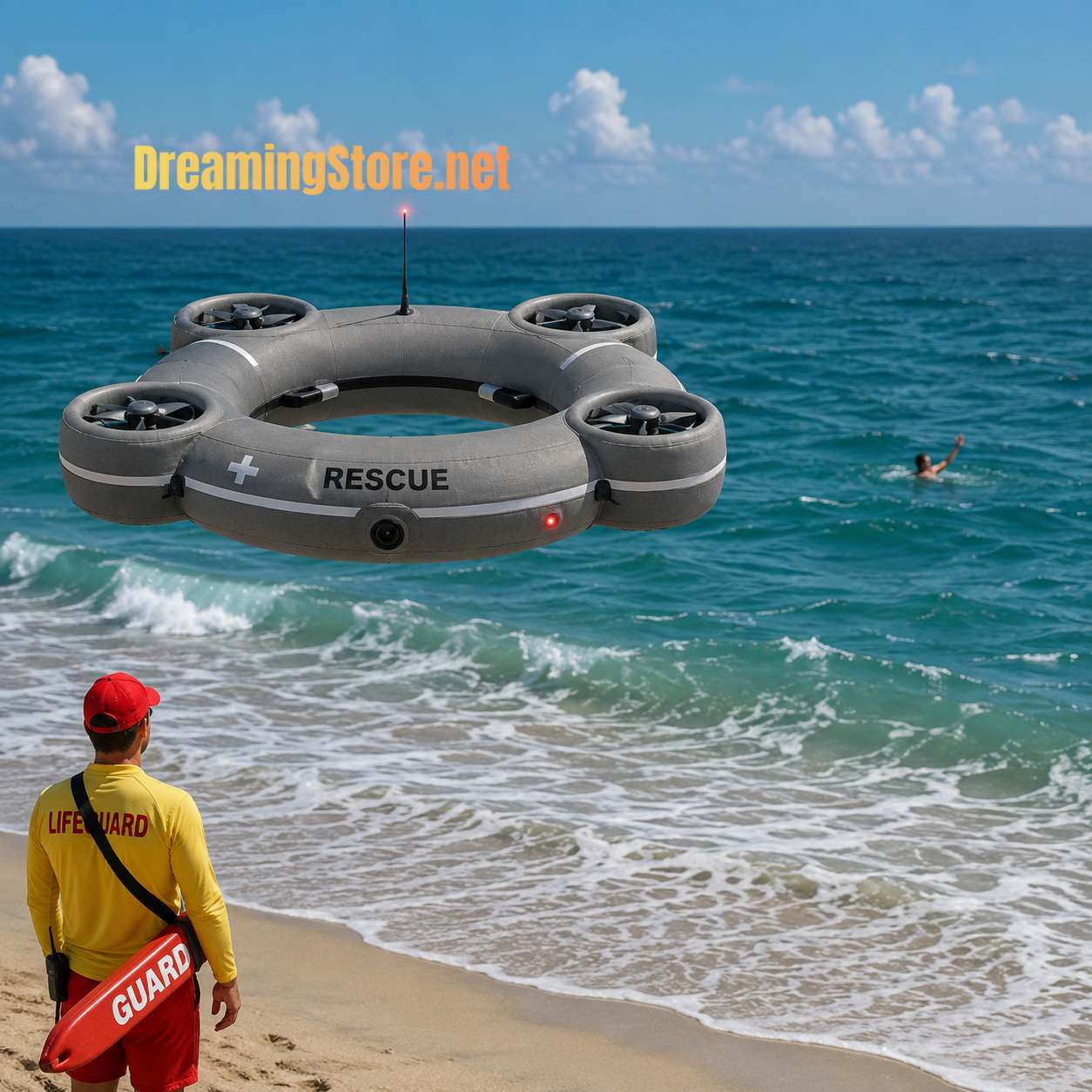
A life preserver drone is an unmanned aerial vehicle shaped like a traditional life ring or buoy. Instead of simply floating, it incorporates electric motors and propellers that allow it to take off, hover, and fly across water. Once it reaches a victim, it lands on the surface and provides immediate buoyancy.
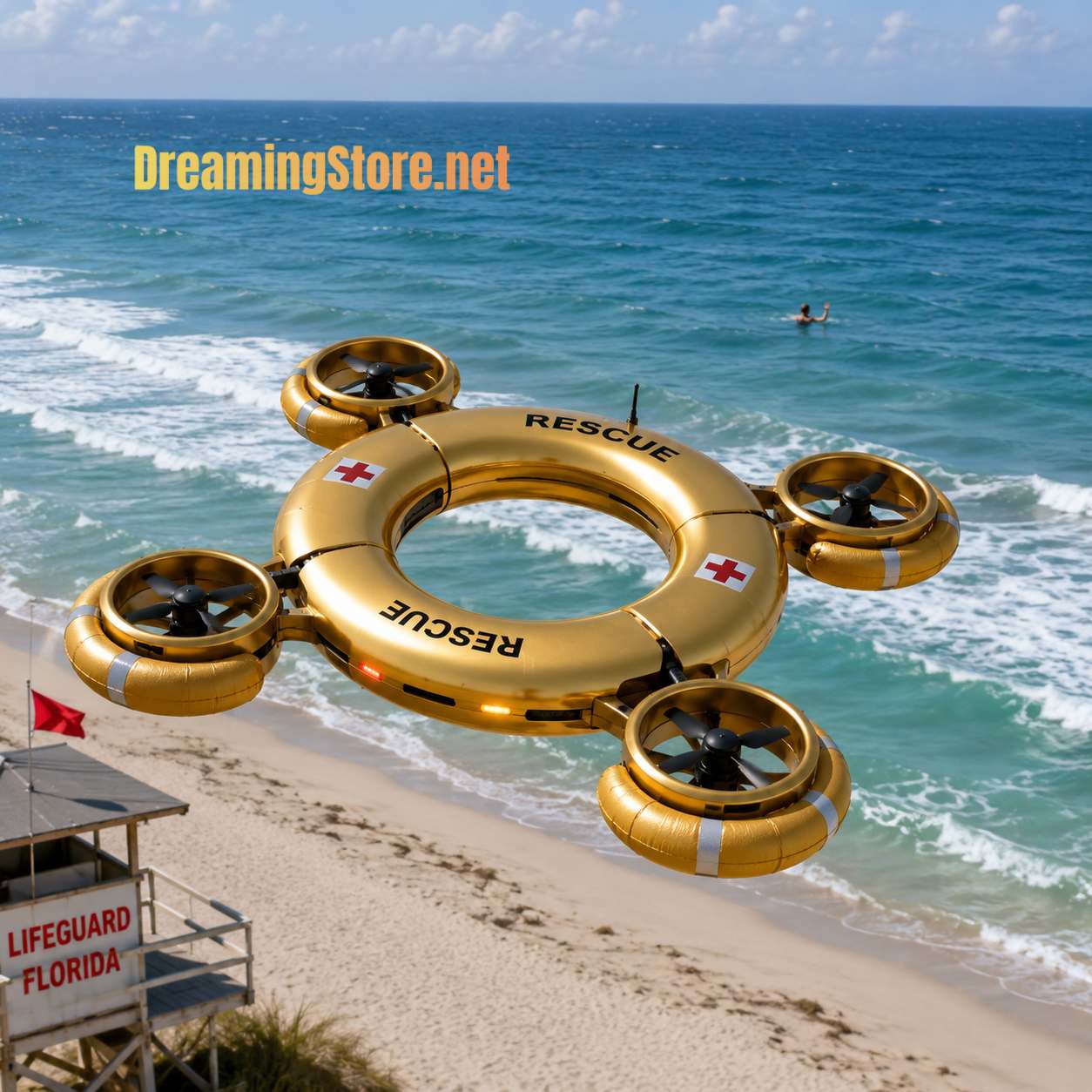
Key physical features typically include:
- A circular or ring-shaped inflatable or rigid flotation body
- Four or more ducted propellers for stable flight
- Waterproof electronics and sealed battery compartments
- High-visibility colors or reflective surfaces
- Integrated cameras, lights, and communication antennas
- Red-cross or “RESCUE” markings for clear identification
Unlike conventional rescue drones that drop a flotation device and fly away, the life preserver drone itself becomes the flotation device. This design eliminates the risk of the dropped object drifting out of reach.
How AI Powers the Life Preserver Drone
Artificial intelligence is the brain of the modern Water Rescue Drone. Without AI, the device would require constant manual piloting—an impractical demand during high-stress rescues. AI enables the system to perceive the environment, make decisions, and adapt in real time.
Computer Vision for Victim Detection
Cameras mounted on the life preserver drone feed video into onboard neural networks trained to recognize human forms in water. These models detect:
- Head and arm positions
- Splashing patterns
- Clothing colors against the water background
- Signs of distress such as vertical bobbing or raised arms
Once a potential victim is identified, the AI assigns a confidence score and calculates the optimal flight path.
Sensor Fusion and Environmental Awareness
A Water Rescue Drone combines multiple data streams:
- Visual cameras
- Thermal imaging for night or low-visibility conditions
- Ultrasonic or LiDAR range finders for altitude and obstacle detection
- GPS and inertial measurement units for precise positioning
- Wind and wave sensors to adjust flight dynamics
Sensor fusion algorithms merge these inputs into a single coherent map of the rescue scene. The AI then decides whether conditions are safe for approach or whether the drone should hold position and await human confirmation.
Decision-Making Algorithms
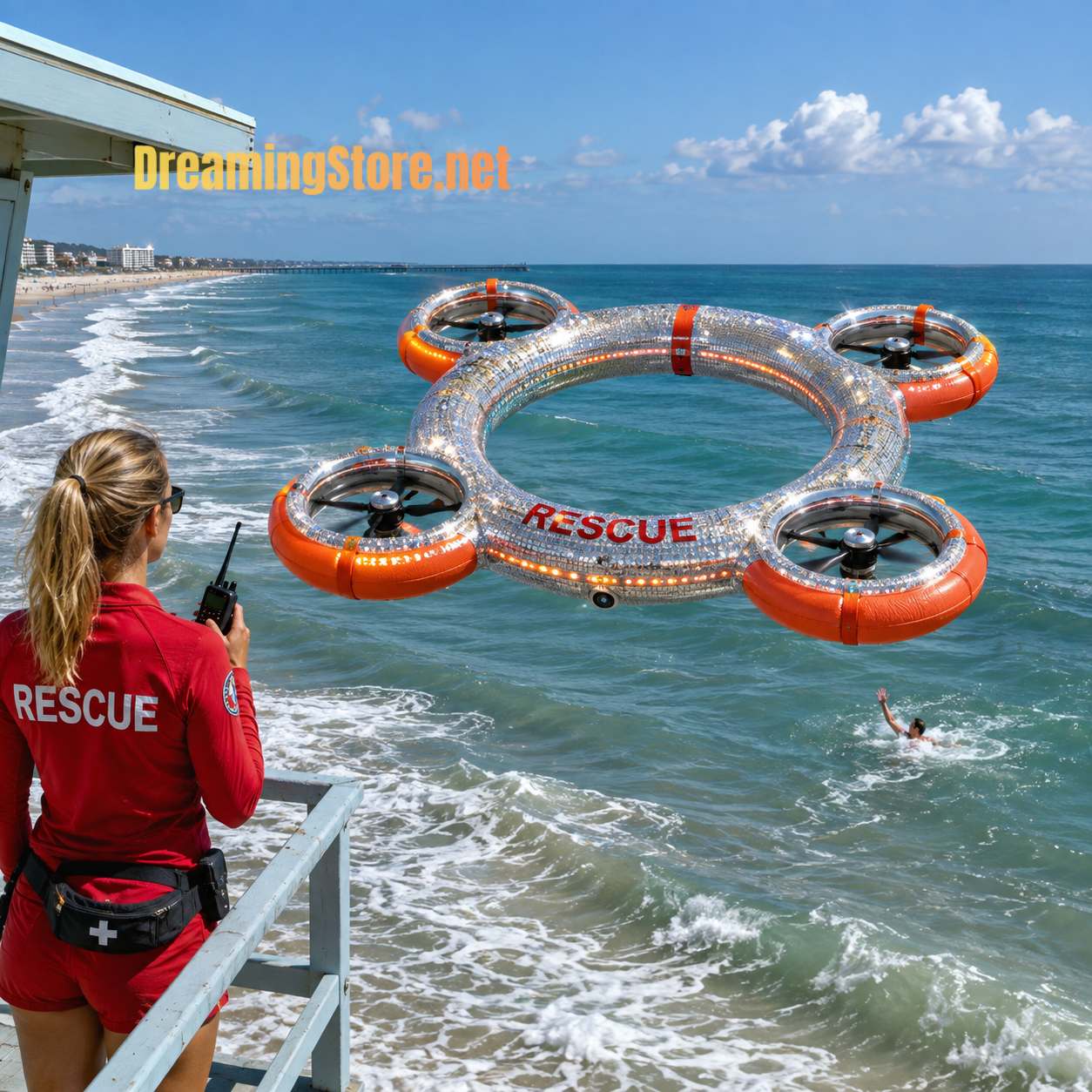
Autonomy levels vary by system, but advanced models can:
- Launch automatically when a distress signal is received
- Navigate around obstacles such as piers or boats
- Adjust hover height based on wave height
- Communicate status updates to the lifeguard station
- Initiate a controlled landing near the victim
These capabilities reduce the cognitive load on human operators and shorten response times dramatically.
Autonomy Levels in Life Preserver Drone Systems
Autonomy is not binary. The Water Rescue Drone operates across a spectrum of control.
Level 1: Assisted Flight
The pilot flies the drone manually while the system stabilizes attitude and maintains altitude. This mode is common during training and in complex environments.
Level 2: Semi-Autonomous Navigation
The operator designates a target on a map or live video feed. The life preserver drone flies to that point, avoids obstacles, and holds position. The human remains responsible for final approach and landing.
Level 3: Conditional Autonomy
Under predefined conditions—clear weather, open water, confirmed victim location—the drone can complete the entire mission with minimal human input. The system still requests confirmation before landing next to a person.
Level 4 and Beyond: Full Mission Autonomy
Future systems aim for complete autonomy from detection to recovery. The life preserver drone would launch, locate the victim, deliver flotation, and either guide the person to shore or wait for a rescue boat. Human oversight would remain available as a safety layer.
Most operational prototypes today function between Level 2 and Level 3.
Check similar products here: Click here
Operational Advantages of the Life Preserver Drone
Speed is the primary benefit. A human swimmer averages 1–2 meters per second in calm water and far less in rough conditions. A Water Rescue Drone can cover the same distance in a fraction of the time.
Additional advantages include:
- Reduced risk to lifeguards who no longer need to enter dangerous currents immediately
- Ability to reach victims beyond swimming distance
- Continuous aerial surveillance while the flotation device is in place
- Night capability with thermal cameras and LED lighting
- Multiple unit deployment for mass-casualty or rip-current events
In crowded beach environments, the life preserver drone can be pre-positioned on towers or mobile carts, ready for instant launch.
Technical Components of a Life Preserver Drone
Building a reliable Water Rescue Drone requires careful integration of several subsystems.
Airframe and Buoyancy Structure
The central ring must remain buoyant even if one or more motors fail. Materials range from reinforced PVC and polyurethane to carbon-fiber composites with foam cores. Some designs use dual-chamber inflation for redundancy.
Propulsion System
Four to eight ducted fans provide lift and directional control. Ducts protect the propellers from water spray and reduce the chance of entanglement with clothing or hair. Motors are typically brushless and sealed against corrosion.
Power and Battery Management
High-capacity lithium-polymer or solid-state batteries supply both flight and electronics. Smart power management prioritizes propulsion during the approach phase and switches to lower-power modes once the device is floating.
Communication and Control
Redundant radio links, including 2.4 GHz, 5.8 GHz, and cellular fallback, maintain contact with the operator. Some systems include satellite communication for offshore use.
Real-World Deployment Scenarios
The Water Rescue Drone is suited to multiple environments.
Public Beaches and Lifeguard Stations
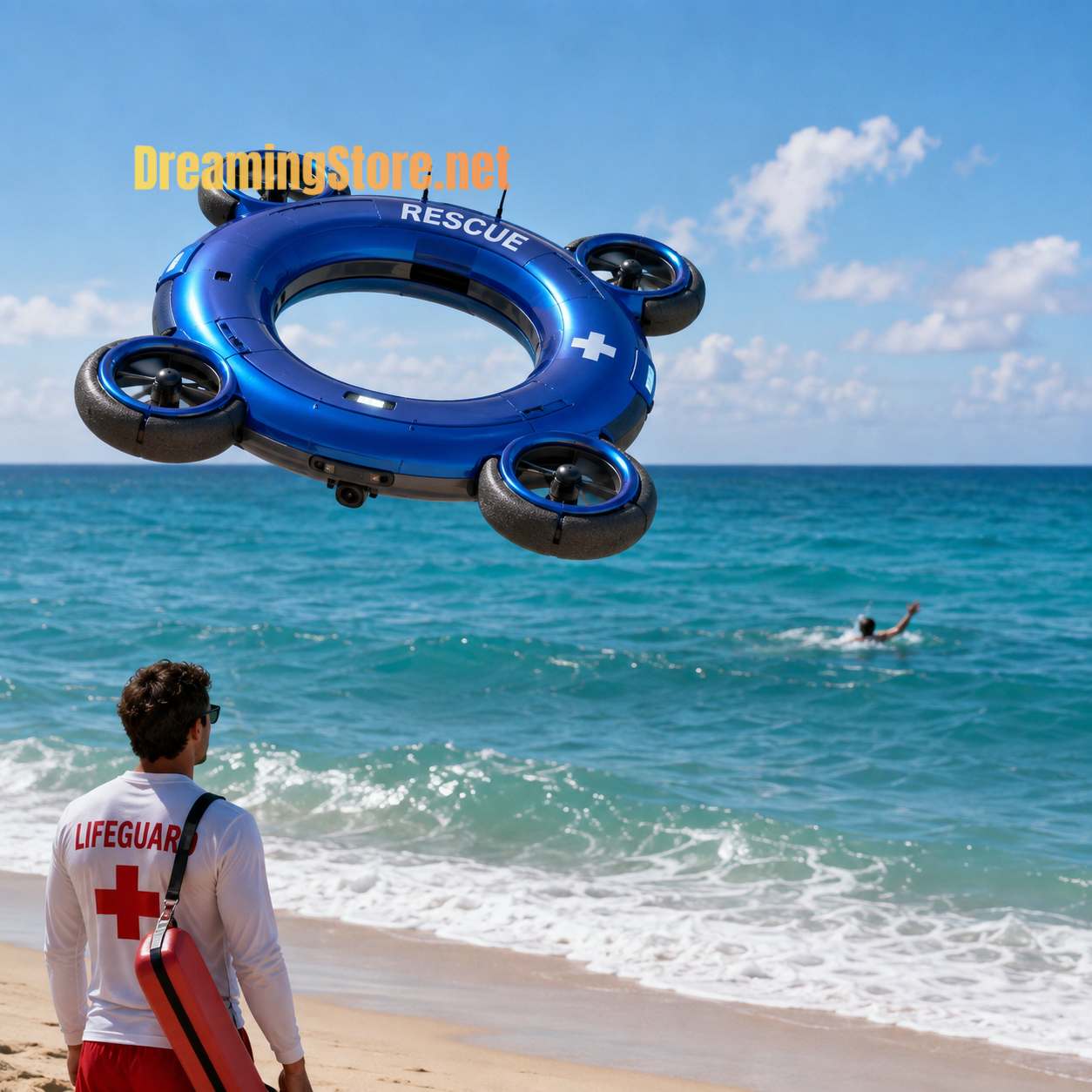
Lifeguards monitor crowded shorelines. When a swimmer is observed in difficulty, the nearest life preserver drone launches within seconds. The device reaches the person, provides flotation, and maintains position while a rescue swimmer or boat arrives.
Offshore and Maritime Operations
Commercial vessels, oil platforms, and research ships can carry compact Water Rescue Drone systems. In a man-overboard event, the drone is launched immediately, reducing the time the person spends in cold water.
Search and Rescue in Lakes and Rivers
Currents and limited visibility make river rescues especially dangerous. A Water Rescue Drone equipped with thermal imaging can locate a person quickly and deliver support before divers enter the water.
Disaster Response
After floods or tsunamis, traditional access routes may be blocked. Multiple life preserver drones can be deployed from helicopters or high ground to locate and assist survivors.
Challenges and Limitations
No technology is perfect. Current Water Rescue Drone systems face several constraints.
Weather and Sea State
High winds, heavy rain, and large waves reduce flight performance and increase the risk of water ingestion into motors. Most prototypes have operational limits around Beaufort force 5 or 6.
Battery Life and Range
Flight times typically range from 15 to 30 minutes depending on payload and conditions. Range is limited by line-of-sight radio or cellular coverage.
Regulatory Approval
Aviation authorities require certification for beyond-visual-line-of-sight operations, especially near populated beaches. Water safety agencies must also approve the device as a recognized flotation aid.
Human Factors
Victims in panic may not understand that the approaching object is meant to help. Clear visual markings, voice announcements, and gentle approach profiles are essential.
Cost and Maintenance
A fully equipped life preserver drone costs more than traditional equipment. Saltwater exposure demands rigorous cleaning and component replacement schedules.
Training and Integration with Existing Rescue Teams
Successful adoption depends on seamless integration. Lifeguard organizations must develop new protocols that cover:
- When to launch a Water Rescue Drone versus traditional methods
- Communication between drone operators and water-based rescuers
- Maintenance and pre-flight checks
- Debriefing after every mission to improve procedures
Simulation training and tabletop exercises help teams practice coordination before real emergencies occur.
The Role of Data and Continuous Improvement
Every flight of a Water Rescue Drone generates valuable data: flight paths, environmental conditions, victim response, and system performance. Machine-learning teams use this information to refine detection models and improve autonomy algorithms.
Over time, the system becomes better at distinguishing between a person in distress and a playful swimmer, reducing false launches and increasing reliability.
Future Developments in Life Preserver Drone Technology
Several research directions promise further gains.
Swarm Capability
Multiple Water Rescue Drones could coordinate automatically. One unit delivers flotation while others provide lighting, communication relays, or medical payload delivery.
Medical Integration
Future models may carry automated external defibrillators, oxygen canisters, or even small first-aid kits that the victim or a nearby rescuer can use.
Extended Endurance
Hybrid power systems—combining batteries with small fuel cells or solar panels—could extend mission times significantly.
Underwater Transition
Some experimental designs explore the ability to submerge briefly or operate as surface craft after landing, increasing versatility.
Global Standardization
International standards for performance, marking, and communication protocols will accelerate adoption across countries and agencies.
Purchase similar fun designs: Click here
Case Studies and Concept Validation
Although full-scale commercial fleets are still emerging, multiple research groups and startups have demonstrated working prototypes. Beach trials have shown successful delivery of flotation within one to two minutes of launch in moderate conditions. Maritime tests have confirmed the ability to locate and support a floating mannequin in open water.
These early results validate the core concept: a Water Rescue Drone can close the critical time gap that often determines survival.
The life preserver drone merges two proven technologies—flotation devices and multirotor aircraft—into a single rapid-response platform. AI and autonomy transform it from a simple flying object into an intelligent partner for lifeguards and rescue teams.
While challenges remain in weather tolerance, regulation, and cost, the trajectory is clear. As batteries improve, algorithms mature, and standards solidify, the Water Rescue Drone will become a common sight at beaches, marinas, and offshore facilities.
The next generation of water rescue is already taking shape—circular, propelled, intelligent, and ready to fly. The life preserver drone is not just another tool. It is a fundamental shift in how we respond when lives are on the line in the water.